Brave and outspoken: the great Helen Thomas.
Thomas: Israel should get out of Occupied Territories; White House Correspondents Association were out of line.
Brave and outspoken: the great Helen Thomas.
Thomas: Israel should get out of Occupied Territories; White House Correspondents Association were out of line.

IMPORTANT: Pro-Palestine activists and ordinary Americans who want their country back have an ideal opportunity to strike against Israel and its fifth column in the United States. Rep Eric Cantor recently promised the Israeli government that he would do everything in his power to undercut his own president on behalf of Israel, statements which are demonstrably felonious under the Logan Act of 1799. Even the rightwing Examiner was moved to write that
Cantor’s comments take away from American prestige, and set a dangerous precedent for future United States foreign policy. Cantor and his Republican colleagues have every right to support the nation of Israel, but their ultimately loyalty should be to the United States and not the country of Israel. If Israel’s interests conflict with that of the United States, the Israeli government should theoretically not be able to call on Republicans in Congress to “check” the foreign policy of the Obama administration.
Should someone take this case to court, it will be an open and shut case. Veteran journalist and blogger Helena Cobban is already rallying Virginians to confront Cantor. If you are one, this campaign could really use your support.
The following two posts are a must read, one by Helena Cobban and the other by Glenn Greenwald.
Continue reading “Virginia standing up to the Fifth Column”
Reporting for Al Jazeera, writer and PULSE co-editor Robin Yassin-Kassab writes:
I saw Haneen al-Zoabi giving a lecture. She is the knesset member who sailed with the Gaza Flotilla and was so shabbily abused while attempting to give her account of events to Israel’s parliament. In Nablus, she spoke emotionally about the situation of Palestinian-Israelis, the descendants of those few who escaped ethnic cleansing in 1948.
Citizens but not nationals of the state (nationality is for Jews only), Palestinian-Israelis receive a fraction of the services offered to Jews, are forbidden from teaching Palestinian history in schools and are as likely to be victims of land confiscation as fellow Palestinians in the West Bank. Ninety-three per cent of Israel’s land is off-limits to non-Jews and half of Palestinian-Israeli families live below the poverty line.
I heard Jamal Hwayil speak. He was the leader of the Fatah-affiliated al-Aqsa Martyrs Brigade in Jenin at the time of Israel’s 2002 massacre there and now he is an independent member of the Palestinian parliament. He took a clear position on Palestinian division: “Political arrests are wrong. Wrong in Gaza and wrong in the West Bank. Political arrests have no place in a liberation struggle.”
A little later he added: “There can be neither meaningful negotiations nor productive armed resistance so long as the political leadership is divided.”
Read all of Yassin-Kassab’s “Too late for two states” here.
Israel-Turkey relations may survive the Flotilla flap, but lets see if they can survive this. Kurtlar Vadisi is the immensely popular Turkish series which was first turned into a Rambo-style big budget film attacking the US occupation of Iraq (at a time when relations between the US and Turkey were otherwise cordial). In the forthcoming film, the same Turkish team infiltrates Israel (or Palestine, as the film’s hero insists on calling it) to exact revenge for the flotilla murder. Here’s the trailer:
Riz Khan Show with Robert Baer and Amitava Kumar. Baer is refreshingly forthright about the terrorism industry, and its investment in amplifying fear.
Glenn Greenwald predictably shines in this panel discussion at the NYU Law School along with NYU Law Professor Burt Neuborne, Chicago Law Professor Geoffrey Stone, and FBI Joint Terrorism Task Force Supervisory Agent Niall Brennan, moderated by Time‘s Barton Gellman. See Greenwald’s post here.
Residents of the largest slum in Haiti’s capital Port-au-Prince have been demonstrating over the country’s response to the cholera outbreak. The protesters in Cite Soleil said the government and the UN have failed to protect them, as the number of people killed by the highly contagious water-borne disease soared to 724. In the meantime, the US Congress continues to block the delivery of the $1.15 billion in reconstruction money it promised to Haiti back in March.
The Pan American Health Organisation, the regional office of the UN’s World Health Organisation, has warned Haiti to expect hundreds of thousands of cases now that the disease appears to have taken hold.
They also vented their anger at NGOs operating in the country, where a devastating earthquake on January 12 killed more than 250,000 people and destroyed homes, forcing more than one million people to seek shelter in cramped makeshift camps.
Continue reading “If you give us cholera, we will give you fire”
by Andy Worthington
 They came from all over the country, creating a 50,000-strong throng of students and University lecturers that filled Whitehall. Peaceful but vocal, the protestors were armed only with banners and placards, but at times the noise, as they chanted their opposition to the government’s planned £2.9 bn cut in university funding, was deafening.
I attended the demo for about an hour and a half, and was heartened that so many had turned up. To be frank, every single student in the country should have been there, or they might as well have had ministers turning up at their door asking them to agree that, from today, they will start paying up to £9,000 a year in fees — as opposed to the current rate of £3,290.
There was anger too, as some protestors smashed up Tory HQ on Millbank, while others took to the roof of the building. Some were students, others were not, but predictably, the violence overshadowed the main events of the day in the majority of media reports, and in much of the hand-wringing commentary today. In truth, however, both the massive peaceful demo and the considerably smaller group of violent protestors were indicative of much more unrest to come — and for good reason.
On university education, as on welfare, the coalition government is mounting nothing less than a full-scale assault on the State and on fundamental notions of how British society operates. Critics — either the usual suspects whining about students’ privileges, or the new breed of middle class hypocrites ignoring the fact that their own university educations were subsidized — seem content to accept that university education is not something that contributes to the good of society as a whole, and also to accept, without a murmur, that as a result the axemen of Downing Street should be allowed to impose the most swingeing cuts imaginable.
Continue reading “London student revolt a sign of things to come”
Finally, something stirs.
Tens of thousands of students are protesting against plans by the British government to raise university tuition fees, smashing windows and lighting fires in London, the capital. Wednesday’s protest near the houses of parliament is the largest street demonstration in the country since the government announced tough austerity measures to curb public deficit. Students attempted to force their way into the party headquarters of David Cameron, the prime minister, forcing the building to be evacuated.
 by Adrienne Pine
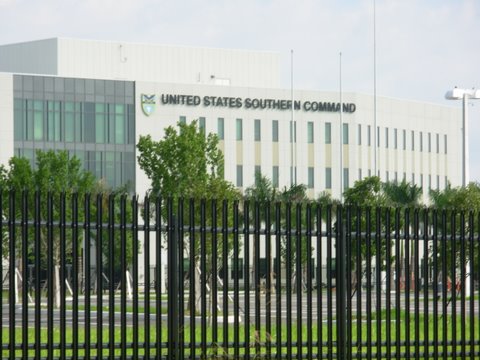
As it has done with great success throughout the past century, the U.S. military continues to find ways to use the academy and anthropological concepts to whitewash its imperialist actions in the service of U.S. corporate profits. In Latin America from 1963-1965, Project Camelot set a dark precedent for the use of social science to abet and legitimate counterinsurgency operations including psychological warfare. Now, the U.S. Military’s Southern Command (SOUTHCOM), the Pentagon’s arm in Latin America and responsible for all U.S. bases the region, and Florida International University (FIU) have partnered in the creation of a so-called “Strategic Culture” Initiative, a center that hosts workshops and issues reports on the “strategic culture” of different Latin American countries. At present, reports have been issued from Argentina, Bolivia, Brazil, Chile, Colombia, Cuba, Ecuador, El Salvador, Guatemala, Haiti, Nicaragua, Peru, and Venezuela.
On its website, the FIU-SOUTHCOM initiative defines strategic culture as “the combination of internal and external influences and experiences – geographic, historical, cultural, economic, political and military – that shape and influence the way a country understands its relationship to the rest of the world, and how a state will behave in the international community.” However, from a look at their reports it is clear that a more accurate definition would be “strategic propaganda for the creation of hegemonic political ideology favorable to U.S. economic and military interests.” Here is an excerpt from the Peru report:
The elements of the new strategic culture, if it continues to emerge, will be to end or reduce the plaintive note of victim-hood in discussion of the nation’s role in world affairs. Ironically, Chile will become the model for the new Peruvian strategic culture – focused on the successes of economic growth, political stability, and an honest effort to incorporate peripheral regions and marginal groups into national life. Peru, more than Chile, can base its national pride on multi-ethnic assimilation. This new national integration, along with the openness to trade and investment will be the principal components of Peru’s new soft power…Peru will join Brazil and Chile as bulwarks of democracy and open economies, set as an example against the archaic rhetoric and self-defeating economic autarchy of the Bolivarian alliance.
 P U L S E