Gaza Freedom March Updates

Sam Husseini speaks to Paul Jay of the Real News from Cairo. He is also liveblogging here.

Also check out Kirstie and Angus MacLean’s updates and the always excellent coverage by our good friends at Mondoweiss. Ali Abunimah is also liveblogging from Cairo. Stephen Walt has written about the absence of coverage in the US media (here and here). This is what presumably prompted the New York Times to give some coverage today (albeit on page A8). Democracy Now, as always, has the best coverage of all.

Roger Waters in solidarity with the Gaza Freedom March

Roger Waters is an outspoken critic of Israel's apartheid wall

UPDATE: A video message by Waters added below.

27 December 2009 — My name is Roger Waters. I am an English musician living in the USA. I am writing to express my great admiration for and solidarity with the 1360 men and women from 42 different countries around the World who are gathering in Egypt, preparing for The Gaza Freedom March. We all watched, aghast, the vicious attack made a year ago on the people of Gaza by Israeli armed forces and the ongoing illegal siege. The suffering wrought on the population of Gaza by both the invasion and the siege is unimaginable to us outside the walls. The aim of The Freedom March is to focus world attention on the plight of the Palestinian people in Gaza in the hope that the scales will fall from the eyes of all, ordinary, decent people round the world, that they may see the enormity of the crimes that have been committed, and demand that their governments bring all possible pressure to bear on Israel to lift the siege.

I use the word ‘crimes’ advisedly, as both the siege and the invasion have been declared unlawful by United Nations bodies and leading human rights organizations. If we do not all observe international law, if some governments think themselves above it, it is but a few short, dark, steps to barbarism and anarchy.

Continue reading “Roger Waters in solidarity with the Gaza Freedom March”

Arms Possession for the Victim who Collects the Remains of the Assault Weapon

An exhibition of spent tear gas grenades and projectiles in the village of Bil'in for which Abu Rahmah was indicted on. Picture credit: Oren ZivActiveStills*

Yesterday, I got the following message from The Popular Struggle Coordination Committee:

23 December 2009 

Display of used tear gas canisters shot by the army earns Bil’in activist an arms charge in Israeli military court 

Abdallah Abu Rahmah, a school teacher and coordinator of the Bil’in Popular Committee Against the Wall, was indicted in an Israeli military court yesterday. Abu Rahmah was slapped with an arms possession charge for collecting used tear gas canisters shot at demonstrators in Bil’in by the army and showcasing them in his home. 

Continue reading “Arms Possession for the Victim who Collects the Remains of the Assault Weapon”

PULSE: 20 Top Global Thinkers of 2009

On 30 November 2009 Foreign Policy magazine published its ‘Top 100 Global Thinkers’ list. We were naturally skeptical since the selection included Dick Cheney, General Petraeus, Larry Summers, Thomas Friedman, Bernard-Henri Lévy, David Kilcullen, Ayaan Hirsi Ali, Salam Fayyad, The Kagan Family (yes, all of them) and Ahmed Rashid among others.  We don’t consider any of these people thinkers, let alone having global significance, and we couldn’t help but notice that the main thrust of all their work aligns with the global military and economic agenda of the US government. In response we asked twelve of our writers and editors to nominate their Top 20 global thinkers of 2009.  Our criteria included choosing those who inspire critical thinking, as well as those who have been able to buck received wisdom and shape public debate.  Always agreeing with their statements and positions was not a requisite, but in all cases our selections involved nominating those who have spurred people to challenge or enhance their own thinking in different ways.  The following is our unranked list.

Update: See Foreign Policy’s response, our rejoinder, and our reflections on the debate. (Also see our 20 Top Global Media Figures of 2009)

Arundhati Roy

The top nominee when it came to number of votes among PULSE contributors, Indian writer and activist Arundhati Roy is as much known for her non-fictional political work as she is for her award-winning fiction. She is a spokesperson of the alter-globalization movement and a critic of hegemonial US foreign policy, as well as vocal on behalf of the anti-nuclear and environmental movements both in India and abroad. She is also a staunch critic of the repressive Indian policies in Kashmir. Most recently a contributor to We Are One: A Celebration of Tribal Peoples (October 2009), Roy continues to be passionately engaged and eloquently outspoken in building a social movement towards developing alternatives. Her latest book is Listening to Grasshoppers: Field Notes on Democracy.

Continue reading “PULSE: 20 Top Global Thinkers of 2009”

Copenhagen, Danish Hospitality and The Elements

It took some time, almost a whole week, but Danish riot police have finally been given the chance to greet the thousands of climate justice activists visiting Copenhagen with some traditional elements of Scandinavian hospitality – a mass pre-emptive arrest of almost 1,000 people and the ‘kettling’ of hundreds of others, forcing some to “urinate themselves while detained on the ground.” The churnalists who have converged upon Copenhagen seem satisfied too, eagerly engaging in the media ritual of filling the headlines with the standard litany of cliches about “anarchists running street battles with the police. Sadly, it seems beyond their intellectual capacity to use the occasion to even mention the existence of a parallel People’s Climate Summit – the Klimaforum 09 – taking place in Copanhagen at the moment. But if the arguments and policy alternatives presented by the likes of Naomi Klein (see video below the fold) are too rational for the mainstream press to digest, perhaps they’ll find this wonderful bit of creative subversivness produced by artists at the Klimaforum more palatable.  Here’s episode 5 of The Elements, where our hereos take on the The Paramount Public Opinion Distortion and Confusion Data Processor:

Continue reading “Copenhagen, Danish Hospitality and The Elements”

Utopia as Alibi: Said, Barenboim and the Divan Orchestra

by Raymond Deane

As a classical musician involved in pro-Palestinian activism, I frequently encounter the assumption that I am an unconditional admirer of the West-Eastern Divan Orchestra (WEDO). My reservations on this score tend to produce shocked disapproval: How could I not enthuse about such an idealistic project, particularly since it was co-founded by the late Edward Said, a figure for whom I have frequently expressed respect and admiration?

In truth, I have always been a little wary of Said’s veneration for the eighteenth/nineteenth century canon of European classical music. I look in vain in his writings on the subject[1] for a historical and political contextualisation of music comparable of that to which he so perceptively subjected literature in his indispensable Culture and Imperialism.[2]

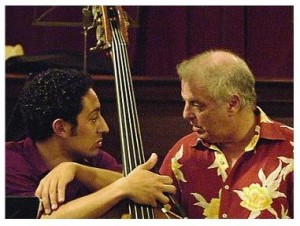
In his 2002 speech accepting the Principe de Asturias Prize, Said claimed that he and his friend the Israeli pianist and conductor Daniel Barenboim founded the WEDO “for humanistic rather than political reasons”. This surprising dualism implies that music belongs to a utopian sphere somehow removed from the dialectical hurly-burly of hegemony and resistance.

The paradoxes of Said’s position have been ably dissected by the British musicologist Rachel Beckles Willson.[3] She quotes her colleague Ben Etherington’s critique of Said’s tendency “to assert the intrinsic value of Western elite music without really exploring how that tradition escapes mediation.” Paraphrasing Said’s critique of literary scholars in his Humanism and Democratic Criticism[4] she convincingly claims that he “omitted to make ‘a radical examination of the ideology of the [musical performance] field itself.’” (Willson’s chain brackets).

Continue reading “Utopia as Alibi: Said, Barenboim and the Divan Orchestra”

Loach and Laverty Support Aminatou Haidar

Aminatou Haidar is known as the “Sahrawi Gandhi”

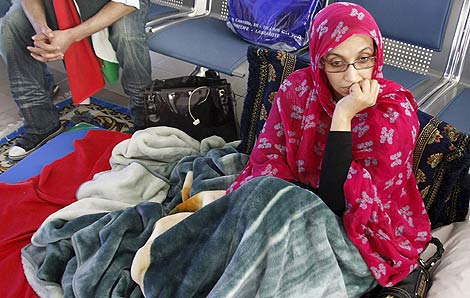
Scottish writer Paul Laverty and British director Ken Loach issued a joint statement on December 1st (commemorating the anniversary of Rosa Park’s refusal to give up her bus seat for a white passenger) in support of Western Saharan human rights activist Aminatou Haidar.  Haidar is in the third week of a hunger strike after being deported against her will by Moroccan authorities occupying her homeland.  You can watch Democracy Now!’s coverage of Haidar’s plight here.

Statement concerning Sahrawi human right’s activist Aminatou Haidar 

Haidar’s boarding card and Rosa Parks’s seat

On the 1st December 1955, in Montgommery, Alabama,  Rosa Parks refused to obey a bus driver and give up her seat to a white passenger.  On Friday the 13th of November 2009 Aminatou Haidar refused to fill out her boarding card as instructed by the authorities in Laayoun (where she lives)  in Morocco controlled Western Sahara.  

Continue reading “Loach and Laverty Support Aminatou Haidar”

Bay Area Premier of “My Name is Rachel Corrie”

by Charlotte Silver

On November 19, 2009, My Name is Rachel Corrie made its Bay Area premier at Stanford University.  Amanda Gelender, senior at Stanford University, produced a staged reading of the play as a part of her senior thesis at Stanford University. Amanda is my friend. She was also my college classmate and we worked together in several campus political organizations, including the student-led Israel divestment campaign.

I attended opening night and along with a sold-out audience was struck by the poignancy of the play and Amanda’s subtle and deeply moving performance. Rachel Corrie was a 23 year-old American woman who traveled to Gaza in 2003 during the Second Intifada. She was killed by a Caterpillar bulldozer driven by Israeli Defense Forces as she attempted to prevent the IDF from demolishing the home of a Palestinian family. My Name is Rachel Corrie consists entirely of words written by Corrie herself, recorded in diary entries and emails from Rachel’s early childhood until a few days before her death. Gelender breathes vivid life into Rachel’s words, which themselves reveal the keen sensitivity and eloquence of a poetic nature.

Amanda Gelender, the lead and visionary behind this production, had been waiting to obtain the rights for the play for nearly two years. But obtaining rights is not always the only hurdle to securing a production of Rachel. Since its London premier in 2005, several professional American and Canadian theaters have seen their efforts to mount a production of this one-woman show quashed by vigorous opposition from powerful forces.  The charge is always the same: the play is anti-Semitic. Gelender’s successful production reflects the changing tide that is occurring within the American public’s relationship to Israel and anti-Semitism.

Continue reading “Bay Area Premier of “My Name is Rachel Corrie””

Struggles Against Commodification of the Mind

The free play of the mind has been managerialised. Holding our way of life to account has yielded to accountancy. The logic of the commodity has now penetrated into the sphere of human needs and nurture, breeding pathological symptoms there. In universities, as in transnational corporations, a largely disaffected labour force confronts a finance-obsessed managerial elite (Terry Eagleton, 2009).

Student occupation at the University of Vienna

November 17th marked the twentieth anniversary of the popular uprising in former Czechoslovakia, when thousands of students marched through the streets of Prague on International Students’ Day. Though officially sanctioned by the government, the occasion was used by the student movement to protest against the stale orthodoxy of the Czechoslovak regime, one of the last remaining Communist outposts in Central Europe. Hours later, when news spread of the violent suppression of the demonstration by security forces, the fate of the increasingly hollow regime was effectively sealed, as the event ushered in a remarkable period of popular mobilisation and mass civil disobedience which ultimately led to the regime’s downfall. Twenty years later, with the Czech student body thoroughly depoliticised, one had to look elsewhere however to find traces of the legacy of the International Students’ Day.

Continue reading “Struggles Against Commodification of the Mind”

The Buycott Campaign

Do you support Israel? Are you fed up with calls to boycott Israeli goods and services? Want to do something about it? NOW YOU CAN. Sign up for BUYCOTT ALERTS today.We’ll alert you when a boycott initiative needs to be countered, and we’ll let you know the results of every BUYCOTT action.

In a twilight zone, where an established state needs protection from grassroot communities, we have the Buycott campaign. Who are these people and how have they sprung up over night?

Encouraging Consumerism and Faking Tolerance
I got to the official Buycott page through Wikipedia, where two lines and two links were thrown together in haste, in order to give the campaign more Google juice. The site has a clean Getty Image-esque design, and considering how quickly this whole campaign was erected, I say touché to my opponents- you may not be worthy, but you know your shit.

Continue reading “The Buycott Campaign”