Bamiyan Diaries – Day One

by David Smith-Ferri

Editor’s Note: American peace activists Kathy Kelly, Jerica Arents and David Smith-Ferri are part of a 3 person delegation currently travelling in Afghanistan. This is Smith-Ferri’s article written about their first day in Bamiyan province.

Bamiyan Province in Afghanistan, a stunningly beautiful mountainous region, is located in the center of the country, roughly 100 miles from Kabul. Most people here live in small, autonomous villages tucked into high mountain valleys, and work dawn to dusk just to scratch out a meager living as subsistence farmers, shepherds, or goatherds. The central government in Kabul and the regional government in Bamiyan City exercise little or no control over their lives. They govern themselves, and live for the most part in isolation.

Given this, who would imagine that Afghan youth from small villages across Bamiyan Province would come together to form a tight-knit, resilient, and effective group of peace activists, with a growing network of contacts and support that includes youth in other parts of the country and peace activists in the U.S. and in Palestine? I certainly wouldn’t have. In the United States, we may find it hard to believe that anything good can actually come out of Afghanistan, or we may have fallen into a trap of thinking that Afghans cannot accomplish anything useful without foreign aid and assistance. I confess that I struggle to live outside the shadow of this narrow-mindedness and ethno-centrism. Certainly, if the scope of our imaginations is limited by CNN and Fox News, we would not be likely to imagine an indigenous peace group forming in Bamiyan Province. But this is exactly what has happened.

Calling themselves the Afghan Youth Peace Volunteers (AYPV), they range in age from eight to twenty, and they have been active for over two years, translating their camaraderie and the horror of their families’ experience of war and displacement into a passionate and active pacifism. At an invitation from AYPV, three American peace activists from Voices for Creative Nonviolence have arrived in Bamiyan for five days to build bridges of friendship and support with these youth and their families. Over this time, we will write a daily diary of our experiences and interactions with the Afghan Youth Peace Volunteers.
Continue reading “Bamiyan Diaries – Day One”

More Afghan Casualties of War in Laghman Province

On September 25 the NATO-led International Security Assistance Force (ISAF) claimed that they had killed at least 30 “insurgents” in Afghanistan’s eastern Laghman province with an air and ground assault. After widespread reports from villagers that the “insurgents” were actually civilians, consequent investigations are expected to reveal that the villagers were telling the truth.

“Only the mood music has changed”: Tariq Ali on Obama’s presidency

OK… here’s the PULSE exclusive I’ve been working on. Hope you enjoy.

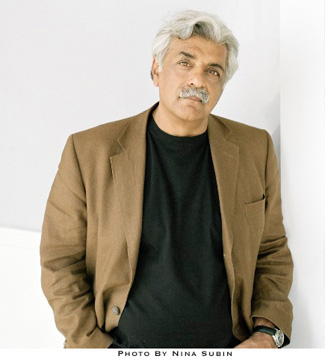
Is president Barack Obama the change America has been waiting for or is he another corporate Democrat representing elite interests?  According to Tariq Ali, very little has chanced between Obama and former president George W. Bush.  In his latest book “The Obama Syndrome: Surrender at Home, War Abroad,” Ali argues that Obama is carrying on the reckless policies of the Bush regime.  If Obama continues down this path, the Democratic Party not only face the prospect of the House & Senate in 2010 but also the presidency in 2012.  This should be a cause for concern.

I caught up with Ali during his American book tour and here’s what he had to say about the Obama presidency.

Where did the idea for this book emanate from? Why did you want to write a book about “The Obama Syndrome” and what does that refer to?

The idea occurred because I speak a lot on the United States. People ask me questions after each talk and increasingly in the past two to three years, the talk has been about Obama.  I thought a short book which essentially provided a balance sheet from the left on the mid-term would be a useful exercise. Given that he’s being attacked nonstop for being a socialist, a leftist, being a Muslim and all this nonsense that comes from the Tea Party-Fox Television alliance, I thought it was better to have a hard-headed realistic account about who the guy really is.  So my book is a critique of him, but it’s also by implication a very sharp critique of people who claim that everything Obama is doing is so radical that they can’t take it anymore.

Continue reading ““Only the mood music has changed”: Tariq Ali on Obama’s presidency”

Spend 4 days inside Guantánamo

YOU DON’T LIKE THE TRUTH – 4 days inside Guantánamo is a documentary based on security camera footage from the Guantánamo Bay prison.

This encounter between a team of Canadian intelligence agents and a child detainee [Omar Khadr] in Guantánamo has never before been seen. Based on seven hours of video footage recently declassified by the Canadian courts this documentary delves into the unfolding high-stakes game of cat and mouse between captor and captive over a four day period. Maintaining the surveillance camera style this film analyzes the political, legal and scientific aspects of a forced dialogue.

Continue reading “Spend 4 days inside Guantánamo”

Honduran Taliban Vows to Protect Sharks

Music shop owner in Jalalabad, where Taliban has yet to express concern for marine life. (Photo: Hashim Shukoor/McClatchy)

by Jesse Freeston

Lots of news came out of Afghanistan this month, but perhaps the most terrifying is evidence that the pre-invasion ban on music is being implemented in the eastern city of Jalalabad. McClatchy journalist Hashim Shukoor reported attacks and threats against the city’s music vendors. The story was reprinted hundreds of times, and rightfully so, because editors and readers alike understand the importance of music to any society. But what if a similar attack was taking place somewhere else? Would we know about it?

Honduran percussionist Carlos Roman, from the group Montuca Sound System, explained to me in a recent interview that “what musicians and poets say is a reflection of their reality” and added that “music is one of the ways that societies have developed over time.”

Roman understands very well the significance of a regime that sees music as a threat. He is currently recovering from a joint attack by the Honduran military and police that left him with his head split open and his equipment destroyed or confiscated.

Continue reading “Honduran Taliban Vows to Protect Sharks”

Obama Loses to Military Brass

Robert Dreyfuss discusses Obama’s wars on the Alyona Show.

Bob Woodward’s new book, “Obama’s Wars”, released today points out, Obama, during the review of the war in Afghanistan at the end of last year, wanted out. Politically, his advisors, wanted out but the military branch of his national security team wanted more and didn’t give the president another option. Robert Dreyfuss contributing editor at The Nation explains that the problem lies with Obama being so inexperienced when it comes to the military that he didn’t know how to properly ask to end the war.

Reese Erlich: “Stop using the word ‘terrorist'”

Defining what a terrorist is and isn’t is a major dilemma. What one may consider terrorism, another may consider resistance. So where does one draw the line? Reese Erlich tackles that topic in his latest book “Conversations with Terrorists: Middle East Leaders on Politics, Violence, and Empire.” Erlich is a veteran journalist who has covered U.S. foreign policy for decades. He has freelanced for National Public Radio, Radio Deutsche Welle, the Australian Broadcasting Corp. Radio, the Canadian Broadcasting Corp. Radio, and writes for The San Francisco Chronicle and The Dallas Morning News.
Drawing on firsthand interviews and original research, Erlich argues that yesterday’s terrorist is often today’s national leader and that today’s freedom fighter may become tomorrow’s terrorist. By branding all of American’s opponents as “terrorists,” it makes it more difficult to look beyond the individual or the political group and understand what they are really all about. I caught up with Erlich recently and here’s what he had to say.

Continue reading “Reese Erlich: “Stop using the word ‘terrorist’””

Omar Khadr has lost one third of his Life in US Custody

by Andy Worthington

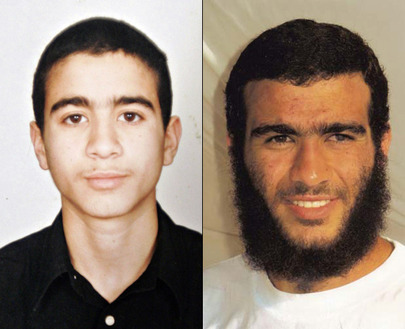
Omar Khadr, the only Canadian citizen in Guantánamo, was seized in Afghanistan on July 27, 2002, when he was just 15 years old. On September 19 he turned 24, and has grown, physically, into a man during the eight years and two months he has spent in US custody, first at Bagram airbase in Afghanistan, and, since October 2002, at Guantánamo. At heart, however, he remains a child, whose youth has been stolen from him by the US authorities responsible for detaining him, and by the Canadian government, which has refused to demand his return.

I don’t want you to reflect, however, particularly on the abuse to which he has been subjected throughout his detention, or on the US government’s shameful refusal to rehabilitate him, rather than punishing him, as required by its obligations under the Optional Protocol to the UN Convention on the Rights of the Child on the involvement of children in armed conflict, which includes the agreement that all States Parties who ratify the Protocol “[r]ecogniz[e] the special needs of those children who are particularly vulnerable to recruitment or use in hostilities,” and are “[c]onvinced of the need [for] the physical and psychosocial rehabilitation and social reintegration of children who are victims of armed conflict.”

I don’t want you to reflect particularly on the Canadian government’s shameful refusal to demand his return to his homeland, despite severe criticism by the Canadian courts, or on the Obama administration’s shameful refusal to cancel his scheduled trial by Military Commission, on war crimes charges that — even if the allegations are true — are not war crimes at all, as Lt. Col. David Frakt, the military defense attorney for another former child at Guantánamo, Mohamed Jawad (who was released last August), has explained.

Continue reading “Omar Khadr has lost one third of his Life in US Custody”

Drones on Trial: Narrowing the Gap Between Law and Justice

by Jerica Arents

I received an education yesterday.

I wasn’t in a classroom.  I wasn’t laboring over a paper, strategizing in a small group, poring over a textbook or hustling across campus.  I was sitting as a spectator in the front row of Judge Jansen’s courtroom in Clark County, Nevada.

Fourteen peace activists were on trial for trying to hand-deliver a letter to the base commander at Creech Air Force Base in April of 2009. Their letter laid out concerns about usage of Unmanned Aerial Vehicles, or drones, for surveillance and combat purposes in Afghanistan. The Creech 14 believe that the usage of remote aerial vehicles to hunt down and kill people in other lands amounts to targeted assassination and is prohibited by international and U.S. law.  Soldiers carrying M16s stopped them after they had walked past the guardhouse at the base entrance and a few hours later Nevada state troopers handcuffed the Creech 14 and took them into custody.

The next day, they were charged with trespass to a military facility and released.  The charges were later dropped, then reinstated. Defendants, upon learning of a September 14, 2010 court date, had ten months to plan for their trial. They decided to represent themselves pro se and to call, as expert witnesses, former U.S. Attorney General Ramsey Clark, Colonel Ann Wright and Professor Bill Quigley, the Legal Director of the Center for Constitutional Rights.  What were the chances that a Las Vegas court that normally handles traffic violations and minor offenses would admit three expert witnesses to testify on behalf of defendants charged with a simple trespass?  Slim to zero in the view of most observers.

In an opening statement, Kathy Kelly summarized what defendants would prove regarding their obligations under international law and their exercise of rights protected by the U.S. constitution.  The judge told her, quite firmly, that any testimony unrelated to the charge of trespass would be disallowed.

Continue reading “Drones on Trial: Narrowing the Gap Between Law and Justice”

Banning Slaughter

by Kathy Kelly

In the early 1970’s, I spent two summers slinging pork loins in a Chicago meat-packing factory.  Rose Packing Company paid a handful of college students $2.25 an hour to process pork.  Donning combat boots, yellow rubber aprons, goggles, hairnets and floor length white smocks that didn’t stay white very long, we’d arrive on the factory floor. Surrounded by deafening machinery, we’d step over small pools of blood and waste, adjusting ourselves to the rancid odors, as we headed to our posts.  I’d step onto a milk crate in front of a huge bin full of thawing pork loins.  Then, swinging a big, steel T-hook, I’d stab a large pork loin, pull it out of the pile, and plop it on a conveyor belt carrying meat into the pickle juice machine.  Sometimes a roar from a foreman would indicate a switch to processing Canadian pork butts, which involved swiftly shoving metal chips behind rectangular cuts of meat. On occasion, I’d be assigned to a machine that squirted meat waste meat into a plastic tubing, part of the process for making hot dogs. I soon became a vegetarian.

But, up until some months ago, if anyone had ever said to me, “Kathy Kelly, you slaughtered animals,” I’m sure I would have denied it, and maybe even felt a bit indignant.  Recently, I realized that in fact I did participate in animal slaughter. It’s similar, isn’t it, to widely held perceptions here in the United States about our responsibility for killing people in Afghanistan, in Pakistan, in Iraq and other areas where the U.S. routinely kills civilians.

Continue reading “Banning Slaughter”