I ended my last post like this:
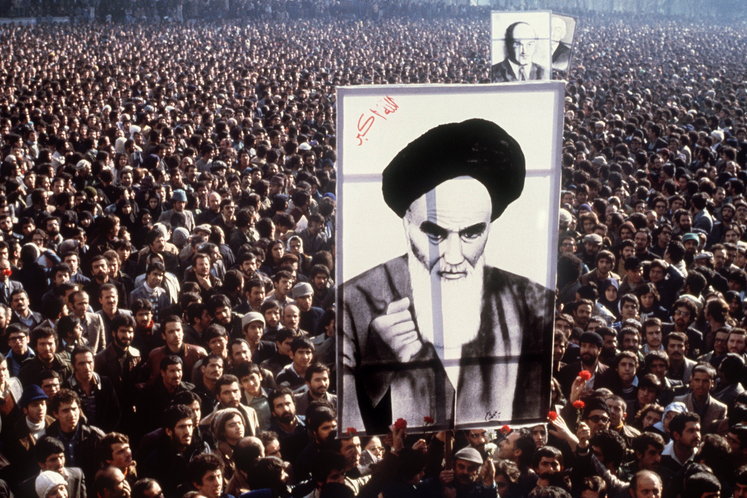
“Perhaps in six months’ time non-Arab commentators will decide that the Tunisian revolution was a mere anomaly in an eternally stagnant Arab world. But they’ll be wrong. The revolution will exert a long-term pervasiveness throughout Arab culture, as the Iranian revolution did before it. It will change the air the Arabs breathe and the dreams the Arabs dream.”
Well, it seems I was wrong on the timescale. I should have said six minutes. Today several commentators are indeed arguing that the Tunisian revolution is anomalous. Robert Fisk is pessimistic, contending that the Tunisian people are no match for the combined forces of the Tunisian elite and Western imperialism. Perhaps events will prove him right. Steve Walt fears that those expecting immediate regime change from the Ocean to the Gulf will be rapidly disappointed.
His point is a good one. In the frontline states with Israel, foreign policy issues increase in importance because they have the potential to immediately translate into security issues. The Syrian regime, for instance, may be unpopular for its corruption, bureaucracy, and stifling of dissent, but its foreign policy is broadly in line with Syrian opinion – and in Syria this matters a great deal. The Western clients are more vulnerable to protest, not least because they’re more linked into the ‘globalised’ economy and are thus more vulnerable to dramatic fluctuations in the price of essential goods. Yet even in Jordan legitimate fears of an Israeli intervention (perhaps an attempt to fulfill the Jordan-is-Palestine fantasy) could damp down effervescence. The public in many countries seems too split by sect, ethnicity or tribe to coordinate unified protest. And of course the regimes will now be battening down for fear of Tunisian contagion.

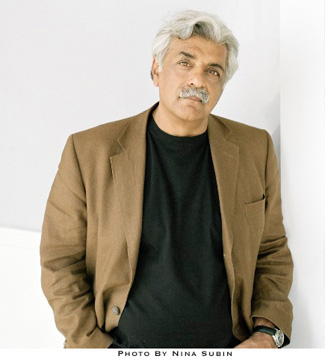 Is president Barack Obama the change America has been waiting for or is he another corporate Democrat representing elite interests? According to Tariq Ali, very little has chanced between Obama and former president George W. Bush. In his latest book
  Erlich is a veteran journalist who has covered U.S. foreign policy for decades. He has freelanced for National Public Radio, Radio Deutsche Welle, the Australian Broadcasting Corp. Radio, the Canadian Broadcasting Corp. Radio, and writes for The San Francisco Chronicle and The Dallas Morning News.

 P U L S E