On 18 July 2012, P. Sainath talked about “Slumdogs vs. Millionaires” at the Centre for Modern Indian Studies (CeMIS) of Göttingen University. P. Sainath is a distinguished journalist and critical observer of society and politics in today’s India. He is Rural Affairs Editor at the English-language newspaper “The Hindu”, but also publishes extensively in other media worldwide.
Category: India
Arundhati Roy: Capitalism – A Ghost Story
This is a recording of a speech made by Arundhati Roy as a part of the 4th series of lecture under the Anuradha Ghandy Memorial Trust Lecture that was delivered on the 20th of January, 2012 at Xaviers college, Mumbai, India.
Panacea
by Arif Ayaz Parrey
This piece first appeared in the Honour newsmagazine.

Every night, when she drops the slightly bluish liquid into a glass of water, Nisaare feels pride more than embarrassment, or even disgrace. The liquid is a sedative drug. The glass of water is meant for her husband. She feels reassured that she has dealt with the loss of their son much better than he has.
Nine years have passed since the death of their only child in an ‘encounter’ with the Rashtriya Rifles. He had been a bashful young man; not the kind you would easily associate with militant revolution. He had gone ‘across’ for ‘training’ simply because everybody in his peer group had, and he did not want to be the only one left behind. Any other motives he had are buried with him and will surely be summoned back to life one day. On his return, he was of little help to the group because he would not shoot to kill. He had been barely audible when he had expressed his ideological opposition to ambush. He had stated that he would much rather fight the soldiers openly. The commanders assigned him the role of a donation collector during the day and a patrol at night.
Counter-terrorism?
Our friend Paul Woodward of the indispensable War in Context asks some pertinent questions about the attacks on Israeli diplomats in India and Georgia:
Have we reached a quite predictable moment where counter-terrorism needs redefining? In other words, that when car bombings initiated by one state-sponsor of terrorism provoke a counter-attack of the same kind, that we should call such an attack an act of counter-terrorism?
Only last week there was confirmation from U.S. government officials that Israel is a state-sponsor of terrorism, having trained and deployed Iranian dissidents to conduct car bombings killing civilians in Iran. By internationally accepted definitions of terrorism and state-sponsored terrorism, there’s no question these were acts of terrorism and Israel’s role in instigating them makes it a state-sponsor of terrorism.
Now it would appear that Israel is reaping the reward for its own actions as Israeli diplomats have been targeted in India and Georgia. The attack in Delhi appears to have involved the use of the same method favored by Mossad — a magnetic bomb attached to the Israelis’ car by a passing motorcyclist.
Indians Against Democracy
by Pankaj Mishra

Growing up in India in the 1970s and 80s, I often heard people in upper-caste middle class circles say that parliamentary democracy was ill-suited to the country. Recoiling from populist politicians who pandered to the poor, many Indians solemnly invoked the example of Singapore’s leader Lee Kuan Yew. Here was an Oxbridge-educated and suitably enlightened autocrat, who suffered no nonsense about democracy, and, furthermore, believed firmly in the efficacy of publicly caning even minor breakers of the law. Devising his wise policies with the help of experts and technocrats, he simply imposed them on the population. Lee Kuan Yew’s success in transforming a city-state into a major economic power was apparent to all: clean, shiny, efficient, and prosperous Singapore, the very antithesis of corrupt and squalor-prone India.
Such yearnings for technocratic utopia may seem to have little in common with the middle class protests against “corruption” that recently gained much attention before abruptly losing steam at the end of the year. Led by Anna Hazare—an army veteran described in the foreign press as a “simple man in a Gandhian cap” when he went on a hunger strike last summer— the movement was presented by sections of the media in both India and the West as a long overdue political awakening of the middle class, even as India’s “second freedom struggle.” With his unambiguous denunciations of venality in public life, Hazare seemed to have alerted tens of millions of otherwise apolitical Indians to the possibilities of civil society, mass mobilization, and grass-roots activism.
On the ‘Precision’ of Language: Why the Term ‘Genocide’ is So Wrong, or Who Can Use the Term
This essay is a response to the emerging discussions over the ‘appropriateness’ of the use of the word ‘genocide’ in the context of the Indian military occupation in Kashmir on PulseMedia and elsewhere on Facebook.
by Mohamad Junaid
[This essay is a response to the emerging discussions over the ‘appropriateness’ of the use of the word ‘genocide’ in the context of the Indian military occupation in Kashmir on PulseMedia and elsewhere on Facebook.]
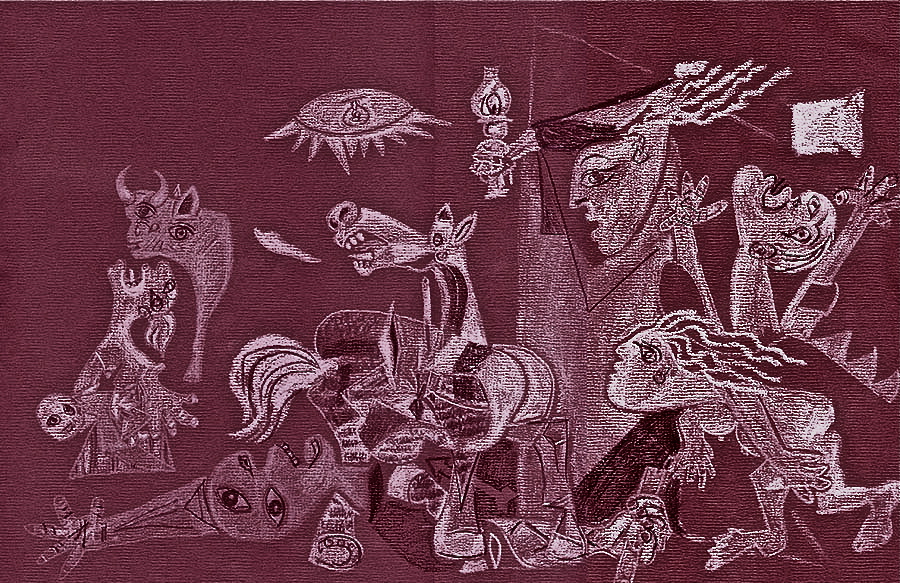
But, which language? Which one language expresses all joyous, exhilarating, or traumatic experiences?
When Kashmiris are told to be precise in their language there are largely two positions involved: one, a sympathetic (if inadequate and self-censorious) one, which suggests that following ‘the convention’ will allow for legalistic interpretation and some form of retributive or ‘restorative’ justice. Often such a position traps itself in legal discourse, and by seeking to bottle people’s experiences into tight categories, fetishizes those categories, and in the end reduces the depth of traumatic experiences to mere data points on the grid of classification. This compliant and self-disciplining position forgets the origins of law in violence (and the inverse), and how ‘law’ serves to maintain ‘order’—which is, in other words, the systematized, legally endorsed structure of oppression. The peculiar claim to universalism (to create a universal system of law) that drives this position pays no heed to where, and for whom, these supposedly ‘universal’ categories of law are created, and what connection law has with power or ‘international’ law with the empire. Continue reading “On the ‘Precision’ of Language: Why the Term ‘Genocide’ is So Wrong, or Who Can Use the Term”
Re-Membering Toba Tek Singh: Looking for Manto
Between works censored for “obscenity” and those pirated and then censored for nationalism, which censorship is more obscene?
by Huma Dar
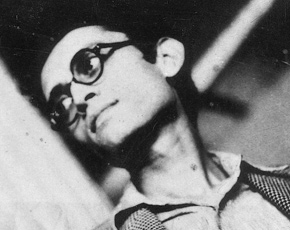
In today’s edition of Dawn.com, Jan 1, 2012, the renowned feminist poet, Fahmida Riaz has an article, “Understanding Manto,” about Urdu literature’s enfant terrible, Sa’adat Hasan Manto. This year will mark Manto’s birth centenary. Thank you, Fahmida Apa, for writing this moving tribute! Sad indeed is the day when Pakistan cannot or does not publish Manto’s work, uncensored, unedited. Despite justified indignation, knowing our “guardians of morality and piety,” it aches my heart to confess, I am not surprised.
Ironically, the “Indian pirated edition”—even if we overlook the immense ethical difficulties with the issue of piracy, and the direly-needed resources that were (and are) thus withheld from Manto and his family—is still no guarantee of accessing the “original, uncensored text.” Christine Everaert in her book, Tracing the Boundaries between Hindi and Urdu: Lost and Added in Translation (Brill, 2009) painstakingly records many elisions, omissions, and additions in just a few of Manto’s stories as they’re carried from their original Urdu to the [pirated] Hindi versions. Some of these transformations are, of course, to ease the transmission of the literary register in Urdu to Hindi; others to simply make things more palatable for Indian nationalism. (Please especially see the Chapter II of this book for many examples…)
London 2012 and the Bhopal Disaster
by Saffi Ullah Ahmad
 As the 2012 London Olympics approach, a furore has erupted surrounding the £7m sponsorship of the games by the controversial Dow Chemical Company, which is connected with the world’s worst industrial catastrophe, in the Indian city of Bhopal. Lingering effects of the disaster continue to kill and maim people trapped by poverty.
The company has been commissioned to produce a specialized decorative wrap for the Olympic stadium. Members of Parliament from across the political spectrum, former Mayor of London Ken Livingstone, and leading human rights groups including Amnesty International have expressed dismay at the London 2012 Organising Committee (LOCOG)’s decision and rumours have circulated regarding a possible Indian boycott. In protest to the deal, thousands of survivors of the disaster burned effigies of the chairman of London 2012, Lord Sebastian Coe, on Friday. A larger group of protestors blocked five of Bhopal’s train lines on Saturday 3 December, the 27th anniversary of the disaster, in the face of fierce police beatings.
Gross negligence on the part of the Union Carbide Corporation, now a wholly owned subsidiary of Dow, culminated in a fatal explosion in a pesticide factory on 2-3 December 1984, releasing 40 tonnes of highly toxic gas which laid waste to one of the poorest regions in India.
Anatol Lieven: how to end the US dust-up with Pakistan
Anatol Lieven, author of the excellent Pakistan: A Hard Country, on Christopher Lydon’s indispensable Radio Open Source, discussing the recent dust up between Pakistan and the US.
Anatol Lieven is explaining how the so-called allies in the so-called War on Terror have come to pot-shotting each other on the Pakistani side of the border with Afghanistan. In the Financial Times last May (“How American folly could destroy Pakistan“) Lieven was warning of the perverse logic of confrontation in US policy. The killing last weekend of 24 Pakistani soldiersin a NATO air strike for which President Obama is refusing to apologize can be taken as confirmation of the hazard. Ever since the US Navy swoop on OBL early in May, the risk in Lieven’s eyes was that the US would overplay its hand with demands on the thoroughly alienated Pakistani Army. The American demand-too-far (Lieven is saying emphatically today) is that the Pakistani Army go to war on the Taliban home bases in the Pashtun tribal wilderness. That demand cannot, will not, be met: (a) because the Taliban is a big part of the network that Pakistan counts on to protect and project its interest in Afghanistan when the US forces shrivel, then leave; and (b) because the big majority of Pakistanis — army, elite and masses — see the Taliban in Afghanistan as a legitimate resistance force fighting foreign occupation, like the mujahedeen who fought the Soviets, or Communist guerillas who fought Nazis in Europe. When Pakistan under Pres / Gen Musharraf undertook a half-way offensive against the Taliban in the border wilderness, “they set off an Islamist rebellion inside Pakistan which continues to this day… The Pakistanis do have a case: thanks to the U.S., they have a civil war inside Pakistan which has claimed far more Pakistani lives than Americans killed on 9.11. … We keep talking about wanting to support democracy. Well, the democratic majority in Pakistan wants us to go to hell.”
Continue reading “Anatol Lieven: how to end the US dust-up with Pakistan”
Poem: Dry Fruit and Nuts
by Amjad Majid
When you are away
I see the night running
away with my days
In oblivion seasons change
and tell me it is time
to harvest and gather.
From orchard to orchard,
I strain my poise in gloom,
branches pat my head,
consoling me obtrusively,
as I garner what they bear,
morosely I am stealing
what some call taking
for the giving,
but not for the sale…
 P U L S E