Friday Night Lights: American and Israeli human rights activists disrupt ballet performance in Vermont

BURLINGTON, VT- Greetings from the Green Mountain State! I want to give a shout out to those who participated in a successful night of activism. Several activists leafleted 249 people attending last night’s Israeli Ballet performance at the Flynn Theater.

The leaflet asked “Would you like some information about Don Quixote and the Israel Ballet?” — which was an accurate presentation of last night’s performance. “Israel’s ‘Golden Helmet of Mambrino’ — which makes one invisible, thus capable of all actions — is slowly turning into Don Quixote’s version of it — a upside-down shaving bowl plopped on the head — incapable of nothing but making its wearer more obvious and actionable to the world. Brand Israel will continue to call forth increasing protests as audiences realize they are being used,” said author and activist Marc Estrin.

The headline said “A Modern Don Quixote.” Estrin said almost all ballet-goers accepted it, even those glancing at the opening before continuing into the theater. There are no trash cans inside the actual theater, so he assumes most flyers made it to people’s seats for reading before the show began. Estrin said one elderly man “came all the way out again to present us with a crumpled up ball with instructions to ‘shove this up your ass,’ but the other 249 copies all made it in.”

The other highlight was one Israeli and three Vermonters unfurled a banner during the performance. Check out the YouTube Vimeo below the fold!


Continue reading “Friday Night Lights: American and Israeli human rights activists disrupt ballet performance in Vermont”

Raymond Deane’s Open Letter to the Heinrich Böll Foundation on Norman Finkelstein

UPDATE: It now appears that the Rosa Luxemburg House has also cancelled the lecture. For shame.

Raymond Deane, renowned composer and founding member and former chairperson of the Ireland-Palestine Solidarity Campaign, sent this open letter to the Heinrich Böll Foundation after they cancelled Norman Finkelstein’s scheduled lecture in Berlin under the pretense that Finkelstein is a “controversial” figure.  PULSE is the first site to publish this letter in English.  The letter is also being translated into German, and will be appearing on several German websites shortly.  Finkelstein’s talk will still take place, but will be hosted by the Rosa Luxembourg Foundation.

Continue reading “Raymond Deane’s Open Letter to the Heinrich Böll Foundation on Norman Finkelstein”

The Only Democracy in the Middle East: 12.2.2010

Bil’in makes big waves, locally and worldwide, with their reenactment of Avatar, creatively edited by popular committee members into this short:

Continue reading “The Only Democracy in the Middle East: 12.2.2010”

The New York Times and the Israeli-Palestinian Conflict: The Bronner Affair

By Jerome Slater

The New York Times has now confirmed that the son of Ethan Bronner, for the past two years its chief correspondent in Israel, has enlisted in the Israeli army. On January 25, the website Electronic Intifada picked up on what was then still a rumor and pointed out that the internal policies of the Times state that journalists might have to be reassigned if the activities of family members create apparent conflicts of interest. The policy guidelines provide an example: “A brother or a daughter in a high-profile job on Wall Street might produce the appearance of conflict for a business reporter or editor….”

Electronic Intifada sent a message to Bronner asking if the rumor was true. Bronner did not respond but turned the message over to Susan Chira, the Times foreign editor, who did. With the usual brisk arrogance, evasiveness, or non-responsiveness of the Times whenever its coverage of the Israeli-Palestinian conflict is criticized, Chira dismissed the question of whether Bronner’s family ties (he is also married to an Israeli woman) constituted a conflict of interest: “Mr. Bronner’s son is a young adult who makes his own decisions. At the Times we have found Mr. Bronner’s coverage to be scrupulously fair and we are confident that will continue to be the case.”

No doubt the Times hoped that would dispose of the issue, but thanks to the internet, it was not to be.

Continue reading “The New York Times and the Israeli-Palestinian Conflict: The Bronner Affair”

Sut Jhally on US Culture and Media

Sut Jhally

I have used several Media Education Foundation films in my classes and have found them to be an excellent resource for teaching. Jhally also has some perceptive comments on US media coverage of the Israel-Palestine conflict.

Sut Jhally is Professor of Communication at the University of Massachusetts at Amherst and Founder and Executive Director of the Media Education Foundation (MEF). He is one of the world’s leading scholars looking at the role played by advertising and popular culture in the processes of social control and identity construction. The author of numerous books and articles on media(including The Codes of Advertising and Enlightened Racism) he is also an award-winning teacher (a recipient of the Distinguished Teaching Award at the University of Massachusetts, where the student newspaper has also voted him “Best professor”). In addition, he has been awarded the Distinguished Outreach Award, and was selected to deliver a Distinguished Faculty Lecture in 2007.

New York Times: No conflict of interest — with the conventional wisdom

by Robert Jensen

The New York Times’ public editor wrestled this week with conflict-of-interest charges sparked by the revelation that Jerusalem bureau chief Ethan Bronner’s son had joined the Israeli army.

The executive editor of the paper responded with a sensible defense of the paper’s decision to keep Bronner in that position.

Although it had the appearance of a spirited exchange, the “debate” was a tired old diversion that keeps us from facing more important questions, not just about the Israel/Palestine conflict but about U.S. journalists’ coverage of the world. As is typical in mainstream journalists’ discussions of journalistic neutrality and objectivity, the focus on an individual obscures more important questions about the institutions for which individuals work and the powerful forces that shape those institutions’ picture of the world.

The question posed by the Times officials is framed in the narrowest terms: Could Bronner maintain his neutrality and objectivity given those family circumstances, or was that indirect connection to one side of the war “still too close for comfort,” in public editor Clark Hoyt’s words. In his Sunday column, Hoyt described Bronner as a “superb reporter” but concluded that the paper should reassign him to avoid the appearance of a conflict of interest. Executive editor Bill Keller argued that such a policy would disqualify many reporters from assignments that draw on their specialized knowledge and diminish the quality of the reporting in the paper, and concluded there is no reason to reassign Bronner.

Continue reading “New York Times: No conflict of interest — with the conventional wisdom”

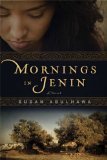
Mornings in Jenin

This review was published in today’s Times.

According to the Zionist story, Palestine before the state of Israel was ‘a land without a people awaiting a people without a land.’ Writers from Mark Twain to Leon Uris, as well as Hollywood studios and certain church pulpits, retell the tale. But Palestinians, in the West at least, lack a popular counter-narrative. Palestinians are reported on, met only on the news.

Perhaps this is changing. As the land disappears from under their feet Palestinians have been investing in culture, and an explosion of Palestinian talent is becoming visible in the West, in films, hip-hop, poetry and novels. And now Susan Abulhawa’s “Mornings in Jenin” is the first English language novel to fully express the human dimension of the Palestinian tragedy.

The story begins with the Abulheja family at home in the village of Ein Hod near Haifa, marrying, squabbling, trading, and harvesting the olives. It’s a touching and sometimes funny portrait of rural life with hints of the city (notably the Jerusalem-based Perlsteins, refugees from German anti-Semitism) and the Beduin tribes.

Then comes the Nakba, or Catastrophe, of 1948. Driven from their shelled village, the family suffers loss, separation, and humiliation, ending up in a camp in Jenin where “the refugees rose from their agitation to the realisation that they were slowly being erased from the world.” By now we care very much about the key characters, and through them we experience “that year without end”, the interminably drawn out Nakba which stretches through some of the bloodier signposts of Palestinian history – the Naksa or Disaster of 1967, the Lebanese refugee camp massacres, until the 2002 Jenin massacre.

Continue reading “Mornings in Jenin”

Ethan Bronner’s Conflict With Impartiality

by Alison Weir

Ethan Bronner, New York Times Jerusalem Bureau chief

Ethan Bronner is the New York Times Jerusalem bureau chief. As such, he is the editor responsible for all the news coming out of Israel-Palestine. It is his job to decide what gets reported and what doesn’t; what goes in a story and what gets cut.

To a considerable degree, he determines what readers of arguably the nation’s most influential newspaper learn about Israel and its adversaries, and, especially, what they don’t.

His son just joined the Israeli army.

According to New York Times ethics guidelines, such a situation would be expected to cause significant concern. In these guidelines the Timesrepeatedly emphasizes the importance of impartiality.

This is considered so critical that the Times devotes considerable attention to “conflict of interest” (also called “conflict with impartiality”) problems, situations in which personal interest might cause a journalist to intentionally or unconsciously slant a story.

Continue reading “Ethan Bronner’s Conflict With Impartiality”

Canada’s pandering to Israel

By Ian Williams (MEI)

In January, Canada stopped contributing to the United Nations Relief and Works Agency (UNRWA). It is the latest in a series of decisions that have seen Ottawa ‘out-Israeling’ Washington. It had previously stopped funding KAIROS (Canadian Ecumenical Justice Initiatives), an NGO that had been supporting human rights groups in Israel and the Occupied Territories. In each case, the government of Stephen Harper seemed to be responding to, or rather pandering to, rabidly pro-Israeli Jewish groups in Canada. Israel itself has certainly never encouraged an end to the funding of UNRWA, an institution that for decades has, in effect, been paying some of the bills for the occupation.

Although camouflaged internationally by a similar drift in British and Australian policy, Ottawa has moved far from its own earlier positions, and possibly farther than either London or Canberra. Indeed, the Obama administration’s muted criticisms of Israeli policy sound relatively ferocious compared with Canada’s gestures towards the administration of Binyamin Netanyahu.

Once upon a time, Canada was a paragon of international virtue: supportive of the UN and happily putting distance between itself and its southern neighbour on the Middle East. Then came Stephen Harper. Ottawa did not join the Iraq war, but that was more a function of strong Canadian public opinion and Harper’s parlous electoral position than any considered choice.

Continue reading “Canada’s pandering to Israel”

What CNN forgot to mention about ‘the Middle East’s only democracy’

The following extracts are taken from an email update (4 Feb 2010) by Yeela Raanan for the Regional Council for the Unrecognized Villages in the Negev (they have a website here and a Wikipedia entry here):

On Tuesday this week the Government of Israel destroyed crops in the Bedouin village of Al-Mazraa. “Crops” hardly defines the one inch high wheat that the community has managed to grow in the desert land. The Bedouin farmers do not have water allocations like their Jewish counterparts, and are dependent on rain. The annual average is 2 inches of rain.. This year was a better year, but even on a good year the wheat does not grow tall enough to be harvested and is used as grazing for the sheep of the residents of this village – one of the poorest communities in Israel. But the government officials were not pleased that this year was blessed with rain – and re-plowed the land to make sure the meager crop will be destroyed. The excuse – the land is not owned by the residents of the village (the land is disputed land – historically belonging to the Bedouin, but the government claims it belongs to the state).  But the real reason is – they are Arabs. As Arabs – even though they are citizens of Israel – they are seen as our enemies.

And:

The village of Twail Abu-Jarwal was destroyed completely three times. On October 26th, January 6th and again on January 21st.

In the village of El-Araqib homes have been demolished four times! On October 29th – two tents, on December 7th – 7 huts, on January 6th and 21st two huts each time.

Continue reading “What CNN forgot to mention about ‘the Middle East’s only democracy’”