2. Ghazal from Ghalib

translation by M. Shahid Alam

.
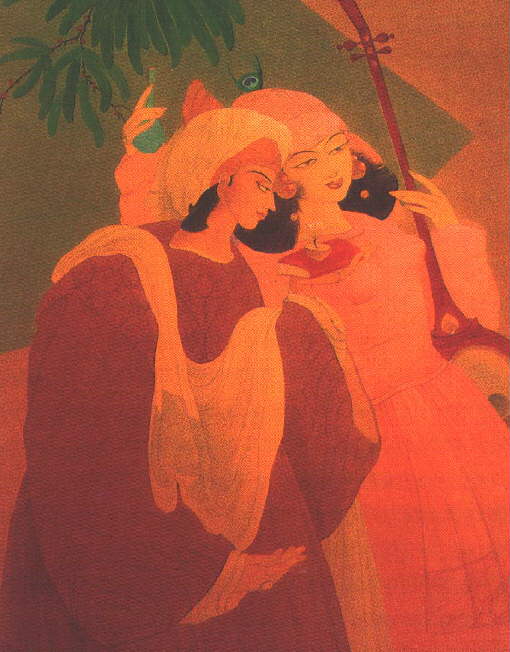
کہتے ہو نہ دینگے ہم دل اگر پڑا پایا
دل کہاں کہ گم کیجئے ‘ ہم نےمدُعا پایا

.

I can’t have it – you say – if you find my heart.
Once – it was mine. Now I know who has it.

Love is easily the best part of life. This pain
cures life’s itch: there is no cure for it.

She is coy & cunning, sweet – exacting too.
She is testing me when I do not know it.

The plain truth about my heart is this.
Every time I look for it, she says she has it.

My mentor likes to rub salt in my wounds.
Sir Tormentor, I ask, what is your reason for it?

.

.
Continue reading “2. Ghazal from Ghalib”

Berbera al Somali

by JKS Makokha

The body of the ancient sea city
bathes daily in the Gulf of Aden.
Memories from the Holy Books
of the wide open wounds of Job
loom large in you as you behold
scores upon scores of pot holes
afflicting the torn and tired lanes
criss-crossing the old Somali port.

Broken minarets tower the town
with houses made of coral stones
crumbling under memories of war
holding on to each other so close
like families of frightened refugees
sometimes separated from others
by shacks of nylon on dried sticks
under which shelters some citizens
drinking sugary tea with camel milk
or smoking with their kettles on fire
or cleaning russian rifles with jeep oil.

Herds of camels crowd around town
listening in silence as the gulf sings
or following their old thoughts slowly
in tune with their cud-filled mouths.
Underneath them doze lazy hounds
that sometimes snap at buzzing flies
or stand up, shake and eat their tails
spitting ticks into the scorched sand
before trotting off to unknown places.

Continue reading “Berbera al Somali”

She

She
sits on the smaller square gravestone
throwing tiny pebbles of fine firestone
at me as she recites Quranic quatrains
after a pause that follows each throw.

She
looks at the azure horizon in the West
whispering of the agony in her hearts
one under her breast another in womb
after my plea for a midnight flight fails.

She
draws mud circles on the graveyard soil
calling each by a hundred names of God
each an invocation for my safe passage
after night falls and death comes for us.

She
leaves me standing on the grave of hope
moving towards a distant cliff in the dark
to end the two lives and a love despised
after she opts for shame rather than him.

JKS Makokha is a Kenyan writer living in Berlin, Germany. He is the author of Reading M.G. Vassanji: A Contextual Approach to Asian African Fiction (2009).  His poetry has been published in the Atonal Poetry Review, African Writing, The Journal of New Poetry and the Postcolonial Text and Stylus Poetry Journal.

Fragments: Indexing Memory

A collection of ‘fragments’ on memory, history and mourning in commemoration of Gaza

And the dead –
What time are they due back?  

– Joe Bolton, In Search of the Other World

Continue reading “Fragments: Indexing Memory”

Allama Iqbal, God’s Command To Angels

translated by – M. Shahid Alam

 اٹھو میری دنیا کے غریبوں کو جگا دو

Marshall the meek of my world. Arise, set them free.
Seize the towers of the rich. Shake their tyranny.

Lift the slaves. Ignite them. Instill a faith that rocks.
Teach the feeble sparrow to fight the taloned hawk.

Power belongs to the people: their kingdom has come.
Burn the totems of tyranny: their history is done.

Why do toiling peasants reap death and misery?
Capture the gilded castles. Seize the granaries.

These minders, meddlers, ushers play for a fee.
I do not need priests to parse my words for me.

I have no use for painted walls and ornamented frieze.
Build me a tabernacle with mud, thatch and leaves.

This age of smoke and mirrors: is this modernity?
Move the poet. Make him rage. Hitch him to Eternity.

_________________________________________________

— M. Shahid Alam is professor of economics at Northeastern University. He is author of Israeli Exceptionalism: The Destabilizing Logic of Zionism (Palgrave Macmillan: 2009).

Cry Out by Fares Khouri

Reposted from Occupation Magazine 15/11/09.

Cry Out

— Fares Khouri

Cry out in Arabic, Ahmed, and contaminate their ears
Stand at Habima square, and cry out to your friend, who’s on Hertzel street, to bring you the shovel
Disturb all those sitting in Rothschild boulevard with their coddled dogs
Disturb them as they speak about yesterday’s party
About this evening’s Macabi Tel-Aviv match
About the (stinky) orthodox Jew that just got on the bus
About the right-wing government that they aren’t a part of
And about the intelligent Arab they met lately
Cry out, ya Ahmed
Defile their ears with your language
They don’t like it
They fear it
They don’t like to hear your friend’s name
It scares them, disturbs them as they read the leftist paper
Cry out Ahmed, with all the voice that god gave you
Cry out, don’t fear, cry out!
Continue reading “Cry Out by Fares Khouri”

A Ghazal from Ghalib

translated by M. Shahid Alam

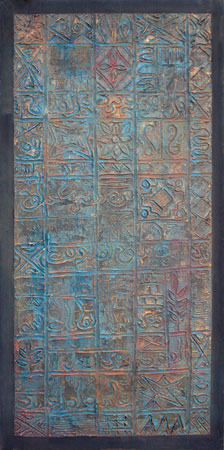
Chughtai painting

نقش فریادی ہے کس کی شوخیِ تحریر کا
کاغذی ہے پیرہن ہر پیکرِ تصویر کا

Where is the Artist whose art they protest? Every
prop, every player, dreads his part in the play.

Hard, it is hard, digging through granite nights.
It takes a thousand sparks to break into day.

The heat is intense when lovers pine for death.
When she lifts her sword, the edge strips away.

Go, weave your snares with logic and design.
The arc of my flight will take your breath away.

The irons on my legs are like braids over fire.
Ghalib, I walk on cinders to pass my prison days.

–first published in Chicago Review, Summer 2003.

Genghis Khan

M. Shahid Alam

“I think this is a very hard choice,
but the price, we think the price is worth it.”

Madeliene Albright


When Genghis Khan swept through
Samarkand, he did not shrink

from the hard choices. His men carried out
a general carnage, not sparing women

or children. Afterwards, when Genghis
inspected the mounds of dead bodies,

skulls piled into pyramids, he knew
instinctively (he had been honed for it)

that the price was worth it. Genghis
did not care for carnage – he did not always

see the point of it. But it was Mongol mothers
he had to answer to. If the terror

in Samarkand produced one fewer body bag,
he thought, the price was worth it.

first published in Black Bear Review (January 2001)

Shoe Jihad: A Satire

The time has come, the Walrus said,
To talk of many things:
Of shoes—and ships—and sealing wax—
Of cabbages—and kings…

Lewis Carroll

M. Shahid Alam

These kleptocrats throw themselves at the feet
of Western plutocracies: they spurn

the real source of power – their own people –
seeking clientage under Western boots.

Lesser rogues gravitate to bigger ones:
this is the law of global hegemony.

This tendency emerges again and again
as long as its victims stay hidebound.

These lesser rogues – Zardari, Karzai,
Abdullah, Mubarak, Abbas –

will get their marching orders from DC,
hold down their own people for a fee,

unless the people, every one of them,
pick up their shoes, sandals, chappals

(any old footwear will do),
and point them at these scoundrels,

a shot across the bow of their kleptocracies.
If this does not work (and it might not),

ask the shoe-throwing Iraqi.
He knew better what to do with a shoe.

Maghut’s Shade and Noon Sun

maghutSyrian writer Muhammad al-Maghut was born the son of a peasant farmer in the dusty town of Salamiyah in 1934, during the French occupation. As a young man he joined the Syrian Social Nationalist Party, the second biggest mass party in Syria after the Ba’ath. Like the Ba’ath, the secular SSNP appealed to religious minorities – al-Maghut was of Ismaili origin. Unlike the pan-Arabists of the Ba’ath, it envisaged a fertile crescent state including Syria, Lebanon, Palestine, Jordan, Iraq, Kuwait and even Cyprus. Al-Maghut was locked up on several occasions for SSNP membership. During his first imprisonment – in Mezzeh prison in 1955 – he met the influential poet Adonis and started writing poetry himself.

As a poet he deserves to be much more widely known. Along with Adonis and Nizar Qabbani he was a modernist, using free verse instead of the traditional Arabic forms. Like Qabbani he aimed to be accessible to the ordinary people, but his ‘lover narrator’ is perhaps better suited to our twisted times than Qabbani’s. Certain verses sum up the decadent atmosphere very well indeed. The following remind me of those Gulf Arabs and others who profit from the prostitution of refugee women from occupied Iraq:

Lebanon is burning – it leaps, like a wounded horse, at the edge of the desert/ and I am looking for a fat girl/ to rub myself against on the tram/ for a Beduin-looking man to knock down somewhere. My country is on the verge of collapse/ shivering like a naked lioness/ and I am looking for two green eyes/ and a quaint café by the sea/ looking for a desperate village girl to deceive.”

Continue reading “Maghut’s Shade and Noon Sun”