All roads lead to Palfest

An edited version of this article was published in The National.

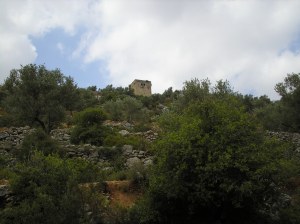
Palestine 045We entered Palestine from Jordan, across the Allenby Bridge and over the trickle which is what’s left of the diverted, overused, and drought-struck river. The Dead Sea glittered in the hollow to our left. Jericho, the world’s oldest city, shimmered through heat haze to our right. The site where Jesus was baptised was a stone’s throw away. Palestine is most definitely part of bilad ash-Sham, in the same cultural zone as Syria, Lebanon and Jordan, but it is also most definitely like nowhere else on the planet. Suddenly the superlatives were coming thick and fast.

Palestine feels as large as a continent – but one that’s been crushed and folded to fit into the narrow strip of fertile land between the river and the sea. The Jordan Valley depression is the lowest point on earth, part of the Rift Valley which stretches from east Africa, and it’s as hot as the Gulf. But only a few miles up from the yellowed, cratered desert into the green hills before Jerusalem, and the weather is very different. As we left our performance in Ramallah a couple of nights later, gusts of fog blew in on an icy wind. If a Palestinian in the West Bank manages to find an unoccupied hilltop – which isn’t at all easy – he can look all the way to the forbidden Mediterranean, and perhaps he’ll pick out the fields of his ancestral village.

Continue reading “All roads lead to Palfest”

The Essential Marcuse

Andrew Feenberg discusses his new collection of essays by Herbert Marcuse. The most influential radical philosopher of the 1960s, Marcuse’s writings are noteworthy for their uncompromising opposition to both capitalism and communism.

The Violence of Illusion

Amartya Sen on Identity and Violence. In his otherwise thought provoking lecture, Sen appears to assume that identities are only determined, discovered or assumed. He overlooks the fact that sometimes they are imposed. He also appears to overlook the relations of power which accentuate identity, or for that matter the functional, defensive necessity of identity as a means of resisting domination. (thanks Eric)

Nobel laureate Amartya Sen is widely recognized for his ability to join economics and philosophy, reflected in his work through ethics and a sense of common humanity. In this Hitchcock Lecture from UC Berkeley he explores the violence of illusion.

PULSE Announcement

Friends,

radio_microphonePULSE is maintaining a different posting schedule in the coming months. While for the past seven months we have been daily posting both original material from our contributing editors as well as aggregating press picks, our focus for the remainder of the year, before we make a decision about migrating to a self-hosted CMS site, will be on original material and less frequent commentary, perhaps on a weekly basis.

As we have found — with many of our valued contributors completing books and doctoral theses — a website that maintains a regular daily posting schedule like this requires time and resources. While it costs little to run the platform itself, it does take time away from employment which sustains us. If you like what you see and might suggest funding options to be able to provide a more full-time service, we’d be interested in hearing from you.

Thanks for supporting PULSE, and we look forward to bringing you more great reading.

How to Write about Africa

Kenyan literary critic Binyavanga Wainaina offers some handy tips for all would-be saviours of Africa.

UNICEF does more good

Always use the word ‘Africa’ or ‘Darkness’ or ‘Safari’ in your title. Subtitles may include the words ‘Zanzibar’, ‘Masai’, ‘Zulu’, ‘Zambezi’, ‘Congo’, ‘Nile’, ‘Big’, ‘Sky’, ‘Shadow’, ‘Drum’, ‘Sun’ or ‘Bygone’. Also useful are words such as ‘Guerrillas’, ‘Timeless’, ‘Primordial’ and ‘Tribal’. Note that ‘People’ means Africans who are not black, while ‘The People’ means black Africans.

Never have a picture of a well-adjusted African on the cover of your book, or in it, unless that African has won the Nobel Prize. An AK-47, prominent ribs, naked breasts: use these. If you must include an African, make sure you get one in Masai or Zulu or Dogon dress.

In your text, treat Africa as if it were one country. It is hot and dusty with rolling grasslands and huge herds of animals and tall, thin people who are starving. Or it is hot and steamy with very short people who eat primates. Don’t get bogged down with precise descriptions. Africa is big: fifty-four countries, 900 million people who are too busy starving and dying and warring and emigrating to read your book. The continent is full of deserts, jungles, highlands, savannahs and many other things, but your reader doesn’t care about all that, so keep your descriptions romantic and evocative and unparticular.

Continue reading “How to Write about Africa”

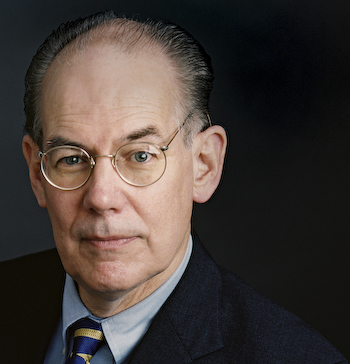
John Mearsheimer on Israel National Radio

John Mearsheimer
John Mearsheimer

John Mearsheimer, during his 2008 visit to Israel, interviewed on Arutz Sheva‘s Israel National Radio show.

John does a great job arguing for his positions yet his extremist pro-settlement hosts seem determined to paint him as an anti-Semite. All Mearsheimer really argues is that he wants it to be possible to criticise Israel’s bad policies in the United States – it’s difficult to see why any sensible person could have a problem with this.

Toward the end, after they’ve ditched John, they even claim the next Holocaust will be in America and that it’s being brought about by a new sophisticated anti-Semitism, contained in Mearsheimers & Walt’s book The Israel Lobby, and this new anti-Semitism is the “most dangerous thing on the market today.”

Mearsheimer on Israel National Radio (48:31) | MP3

Continue reading “John Mearsheimer on Israel National Radio”

Germany: why did Marwa al-Sherbini die?

On 1 July, Marwa al-Sherbini, an Egyptian woman who wore the headscarf and was three months pregnant, was brutally murdered in a Dresden courtroom by a German man of Russian descent who declared ‘you have no right to live’. Liz Fekete of the Institute of Race Relations investigates the climate of tacitly sanctioned bigotry within which this murder happened.

Marwa al-Sherbini and husband Elwi Ali Okaz

Marwa al-Sherbini was stabbed eighteen times in the space of thirty seconds. It was a frenzied attack, clearly motivated by racism and Islamophobia. Yet the German state and media, have been in a state of denial. The press reported it as a neighbourhood dispute, with headlines such as ‘Murder over quarrel over swing’. Amidst widespread anger in Egypt, the press officer at the German embassy in Cairo declared the murder an isolated case and a ‘criminal act. It has nothing to do with persecution against Muslims’.

As the funeral of Marwa al-Sherbini took place in the northern Egyptian city of Alexandria and attracted huge attention in the Middle East, the German public and media have woken up to the anger that the murder, and its apparent denial, was causing in the Muslim world.

Continue reading “Germany: why did Marwa al-Sherbini die?”

The quality of sacrifice

Don’t miss Democracy Now’s coverage of the passing of Robert McNamara which includes a discussion on his later qualms about the massive human suffering that he had inflicted on Japanese and Vietnamese civilians. Geoffrey Wheatcroft here reflects on the true scale of the tragedy of modern wars that is concealed by the mealy mouthed tributes to dead soldiers. ‘Tributes to soldiers killed in action only underline that the victims of today’s wars are mainly civilians’, he writes .

A week ago, on 1 July, Lieutenant Colonel Rupert Thorneloe, the commanding officer of the Welsh Guards, was killed in Afghanistan. He and Trooper Joshua Hammond, who was killed with him, were returned to RAF Lynham on Monday with full military honours. As they were borne off the aircraft, did any of those watching remember another date, and other deaths in action?

Ninety-three years ago, on 1 July 1916, the battle of the Somme began. By the day’s end, almost 20,000 British soldiers had been killed, among them no fewer than 30 officers of the rank of lieutenant colonel or above. “Equality of sacrifice” can be a dishonest phrase, but it had some meaning then.

But then the army, and the nation, knew to expect terrible casualty lists, filled with soldiers of all ranks. Thorneloe was the first commanding officer of an infantry battalion to have been killed in either Afghanistan or Iraq during nearly eight years’ combat, in fact the first of his rank to be killed since the Falklands war. In general, what’s so remarkable about “coalition” casualties in these wars is not how high they have been but how low.

Continue reading “The quality of sacrifice”

The womb-like psychological warmth that is submission to power

Medialens is an absolutely indispensable resource for intellectual self-defense and unmasking the ‘necessary illusions’https://i0.wp.com/homepage.mac.com/leperous/.Pictures/reporter.jpg within which power envelops itself. Here is their latest media alert, focusing on UK media coverage of Iran, Gaza and the MPs’ expenses scandal. (You can pre-order their new book Newspeak in the 21st Century here.)

In a recent alert, we described how the modern corporation is an inherently predatory, even psychopathic, entity. We noted that business managers are legally obliged to subordinate human and environmental welfare to profit.
(See: http://www.medialens.org/alerts/09/090615_the_guardian_climate.php)

Inevitably, then, corporations do not restrict themselves merely to the arena of economics. Rather, as John Dewey observed, “politics is the shadow cast on society by big business”. Over decades, corporations have worked together to ensure that the choices offered by ‘representative democracy’ all represent their greed for maximised profits.

This is a sensitive task. We do not live in a totalitarian society – the public potentially has enormous power to interfere. The goal, then, is to persuade the public that corporate-sponsored political choice is meaningful, that it makes a difference. The task of politicians at all points of the supposed ’spectrum’ is to appear passionately principled while participating in what is essentially a charade.

Continue reading “The womb-like psychological warmth that is submission to power”