BDS: Calling all Geographers

What follows is an open letter in response to the International Geographical Union’s (IGU) refusal to relocate its July 12 – 16, 2010 regional conference outside of Tel Aviv in support of the internationally supported Boycott, Divestment and Sanctions campaign aimed at Israel.  The IGU was initially confronted by the Palestinian Campaign for the Academic and Cultural Boycott of Israel in November 2009.  This letter was printed on the US Campaign for the Academic & Cultural Boycott of Israel’s website today.

Geographers and other academics can sign the letter here.

As geographers, faculty, students, and people of conscience, we are profoundly dismayed by IGU’s decision to hold its July 2010 regional conference in Tel Aviv, in violation of the widely endorsed Palestinian civil society call for Boycott, Divestments, and Sanctions (BDS) against Israel. We are equally troubled by IGU’s response [1] to the open letter issued by the Palestinian Campaign for the Academic and Cultural Boycott of Israel (PACBI), which urged the Executive Committee to relocate the upcoming regional conference out of Israel [2].

Continue reading “BDS: Calling all Geographers”

Murderers at Large

These people murdered the Palestinian leader Mahmoud al-Mabhouh in Dubai. According to British officials, the death squad was sent by the Israeli spy agency Mossad. An international arrest warrant is out for them. Report them to your nearest police station if you come across them.

Offensive in Marja directed at US public opinion

The reported arrest of Mullah Abdul Ghani Baradar by US forces in cooperation with Pakistan is significant. He was a key member of the Quetta Shura, the central command of the Afghan Taliban. Pakistan sees the Afghan Taliban as a strategic asset in its struggle against regional rivals. It would be odd therefore to hand over such a key figure to US forces. I therefore suspect three possible scenarios: 1) The reported negotiations that Baradar had been conducting with  coalition forces were unauthorized by the shura, and therefore they chose to throw him under the bus with Pakistani cooperation to preempt any possible betrayal; 2) Baradar has already cut a deal and the ‘arrest’ is staged to make his coming in from the cold appear more respectable; 3) Pakistan is trying to signal its indispensability to the Taliban who in recent months had been growing increasingly recalcitrant. Either way, it is unlikely that Baradar’s arrest will do much to diminish the gains that the Taliban have been making in recent year. Here I would also like to recommend one of the best, most comprehensive, books on the Afghan Taliban: Antonio Guistozzi’s Koran, Kalashnikov, and Laptop: The Neo-Taliban Insurgency in Afghanistan 2002-2007.

In related news, one of the world’s finest investigative reporters, Gareth Porter of the Inter Press Service is just back from Afghanistan. He notes that the attack on Marja is meant to prepare Americans to accept negotiations with Taliban.

Mughniyeh Martyred

Imad Mughniyeh

It’s two years now since the assassination of top Hizbullah operative Imad Mughniyeh in Damascus. Hizbullah is still promising retaliation ‘at a time of its choosing’. Meanwhile, Israel’s assassinations of resistance figures continue – most recently Hamas’s Mahmoud al-Mabhouh was murdered in Dubai. The Emirati regime has taken no retaliatory action. I wrote the following in the immediate aftermath of Mughniyeh’s killing.

In this post I will jettison my chances of ever being granted an American visa (update: I have since been granted an American visa), by committing imperially-defined thought crime and supporting the strategy, if not all the tactics, of the martyred resistance leader Imad Mughniyeh. In today’s sad world you can be demonised, even prosecuted, for refusing to sing the ideological chorus with Israel (specifically Danny Yatom) that assassinations of resistance fighters represent “a great achievement for the free world in its fight against terror.” But I believe it is important not to be cowed by such hypocrisy and intimidation.

Continue reading “Mughniyeh Martyred”

The Only Democracy in the Middle East: 12.2.2010

Bil’in makes big waves, locally and worldwide, with their reenactment of Avatar, creatively edited by popular committee members into this short:

Continue reading “The Only Democracy in the Middle East: 12.2.2010”

National mission

Commenting on the proposed building of a “Jews-only” building in Jaffa, the head of the development company in question was reported as saying: “We will continue to build throughout the Land of Israel. The national mission today is to bring rabbis and educators to every city in Israel, in order to strengthen Jewish identity in Israel.”

The phrase ‘national mission’ felt familiar – here are just a few other examples of this kind of language.

In the Negev

“After the cornerstone laying ceremony, in which Joseph Hess of JNF America participated, Mr. David Raisch, the local CEO, said that he was very excited to see the guests from the USA: “When we were evacuated from Gush Katif, we insisted on staying together as a community. We asked the government for a national mission, we told them we wanted a place no one else wanted to live in, and that’s how we ended up in Shomeria. It’s exciting for me to see you here today, because it makes me realize that building the eastern Negev is not just our personal goal, you are our partners to this task…””

“The significance of the Disengagement Plan is not only the evacuation of the Gaza Strip – it is also an increased effort to develop the Negev, the Galilee and greater Jerusalem. The Government of Israel, which I head, considers developing the Negev, the Galilee and greater Jerusalem a primary national mission – and views settlement as the number-one tool for doing so.” [PM Ariel Sharon] Continue reading “National mission”

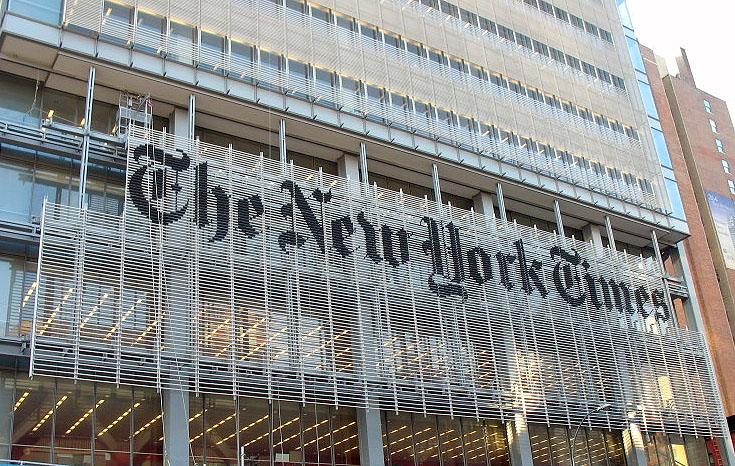
The New York Times and the Israeli-Palestinian Conflict: The Bronner Affair

By Jerome Slater

The New York Times has now confirmed that the son of Ethan Bronner, for the past two years its chief correspondent in Israel, has enlisted in the Israeli army. On January 25, the website Electronic Intifada picked up on what was then still a rumor and pointed out that the internal policies of the Times state that journalists might have to be reassigned if the activities of family members create apparent conflicts of interest. The policy guidelines provide an example: “A brother or a daughter in a high-profile job on Wall Street might produce the appearance of conflict for a business reporter or editor….”

Electronic Intifada sent a message to Bronner asking if the rumor was true. Bronner did not respond but turned the message over to Susan Chira, the Times foreign editor, who did. With the usual brisk arrogance, evasiveness, or non-responsiveness of the Times whenever its coverage of the Israeli-Palestinian conflict is criticized, Chira dismissed the question of whether Bronner’s family ties (he is also married to an Israeli woman) constituted a conflict of interest: “Mr. Bronner’s son is a young adult who makes his own decisions. At the Times we have found Mr. Bronner’s coverage to be scrupulously fair and we are confident that will continue to be the case.”

No doubt the Times hoped that would dispose of the issue, but thanks to the internet, it was not to be.

Continue reading “The New York Times and the Israeli-Palestinian Conflict: The Bronner Affair”

USA and USSR: Accidental Parallels?

M. Shahid Alam

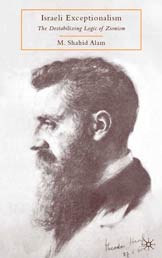
Cover Image GIFIs the question of parallels between the USA and the USSR idle, even mischievous? Perhaps, it is neither, but, on the contrary, deserves our serious consideration.

During the Cold War, the USA and USSR were arch rivals, each the antipodes of the other. For some four decades, they battled each other for ‘survival’ and global hegemony, staring down at each other with nuclear tipped missiles, ready at the push of a button to consummate mutually assured destruction. What parallels could there possibly exist between such irreconcilable antagonists?

Dismissively, the skeptic might retort that their similarities start and end with the first two letters in their names. The USA won and the USSR lost the Cold War. With all four of the letters in its name, the USSR is dead and gone. Its successor state, Russia, now ranks a distant second behind the USA in military power, a position it retains only by virtue of its nuclear arsenal. Measured in international dollars, the Russian economy ranked eighth in the world in 2009, trailing behind its former client, India.

On the other hand, the USA still believes it can ride roughshod over much of the world like a Colossus. It came close to doing this for a few years after the collapse of communism. In the years since its occupation of Iraq, that image has been deflated quite a bit. Haven’t the events of the last decade – the growing challenge to its hegemony in Latin America, the economic rise of India and China, and the recovery of Russia from its collapse of the previous decade – downsized the Colossus of the 1990s? Indeed, the near collapse of its economy in 2008 appears to have brought the Colossus down on its knees.

Continue reading “USA and USSR: Accidental Parallels?”

Sut Jhally on US Culture and Media

Sut Jhally

I have used several Media Education Foundation films in my classes and have found them to be an excellent resource for teaching. Jhally also has some perceptive comments on US media coverage of the Israel-Palestine conflict.

Sut Jhally is Professor of Communication at the University of Massachusetts at Amherst and Founder and Executive Director of the Media Education Foundation (MEF). He is one of the world’s leading scholars looking at the role played by advertising and popular culture in the processes of social control and identity construction. The author of numerous books and articles on media(including The Codes of Advertising and Enlightened Racism) he is also an award-winning teacher (a recipient of the Distinguished Teaching Award at the University of Massachusetts, where the student newspaper has also voted him “Best professor”). In addition, he has been awarded the Distinguished Outreach Award, and was selected to deliver a Distinguished Faculty Lecture in 2007.

The Coming Revolt of the Guards

Thoughts from Dane County Jail
 
by Joshua Brollier
 
Entering Fort McCoy

On entering the Dane County Jail, the first holding cell that Brian Terrell and I were placed in had only one other person. We previously saw this man outside the cell during our initial booking. He was a man with dark black skin and a full beard. I thought I heard one of the officers say he was from Gambia. When we entered the cell, the man was in mid-ritual in what appeared to be a Muslim’s midday prayer. A young white guard, who had the accent of a Midwesterner, looked disdainfully at the man and then somewhat positively at Brian and me. The guard said, “Just ignore that,” as if the man was insulting or threatening us by his peaceful act of prayer. To which I replied, “It’s fine with me.”

This experience was contrasted by the next encounter I had with another officer who made digital copies of my fingerprints and pictures. As this middle-aged man placed my hand on the machine, I made a remark that I was surprised that he did not already have my information handy. (This was the third time I was fingerprinted and pictured for this same charge.) He said, “Oh yeah? You arrested a lot? What are you in for?” I told him that I was arrested with a group who engaged in civil disobedience at Ft. McCoy. Getting the sense that this man may have previously been in the armed services, I explained that we were not against the men and women in the military personally, but that our goals were to enter the base to talk to the rank and file soldiers about ending the wars in Iraq and Afghanistan and to make certain the soldiers were aware of their right to refuse illegal and immoral orders.

Continue reading “The Coming Revolt of the Guards”