Why Academic Boycott?

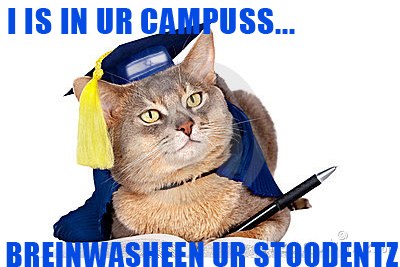
Last week I thoroughly dealt with the not-so-scholarly and o-so-fallacious Nobel Laureates’ statement on BDS.  In almost pure cosmic irony I just got a link from a friend to a Prime Minister’s Office “non-tender”: Request for information about improving Israel’s image on U.S.A campuses.
Now that those talkback-esque arguments are out of the way, let’s get into the direct cynical use the Israeli government makes of the academia, in order to further its propaganda.

[Limited by my translation]:

Continue reading “Why Academic Boycott?”

Careless Words and Callous Deeds

by David Bromwich

It has lately become usual for right-wing columnists, bloggers, and jingo lawmakers to call for the assassination of people abroad whom we don’t like, or people who carry out functions that we don’t want to see performed. There was nothing like this in our popular commentary before 2003; but the callousness has grown more marked in the past year, and especially in the past six months. Why? A major factor was President Obama’s order of the assassination of an American citizen living in Yemen, the terrorist suspect Anwar al-Awlaki. This gave legal permission to a gangster shortcut Americans historically had been taught to shun. The cult of Predator-drone warfare generally has also played a part. But how did such remote-control killings pick up glamor and legitimacy? Here again, the president did some of the work. On May 1, at the White House Correspondents dinner, he made an unexpected joke: “Jonas Brothers are here tonight. Sasha and Malia are huge fans. But boys, don’t get any ideas. Two words: predator drones. You will never see it coming.” The line caught a laugh but it should have caused an intake of breath. A joke (it has been said) is an epigram on the death of a feeling. By turning the killings he orders into an occasion for stand-up comedy, the new president marked the death of a feeling that had seemed to differentiate him from George W. Bush. A change in the mood of a people may occur like a slip of the tongue. A word becomes a phrase, the phrase a sentence, and when enough speakers fall into the barbarous dialect, we forget that we ever talked differently.

Continue reading “Careless Words and Callous Deeds”

‘We don’t need no occupation … Hey, AIPAC, leave Palestine alone!’

Great marshalling of Pink Floyd’s ‘Another Brick in the Wall’ by a CodePink flashmob yesterday.

On Monday, December 13, when the American Israel Public Affairs Committee held its annual dinner in Oakland, a group of activists performed a flashmob inside the Marriott hotel to the tune of Pink Floyd’s ‘Another Brick in the Wall’ addressing Israel’s illegal occupation of Palestine. Six activists and one writer were arrested. The flashmob was coordinated by activists representing CODEPINK Women for Peace, American Friends Service Committee, US Boat to Gaza, Students for Justice in Palestine, Queers Undoing Israeli Terror and Don’t Buy Into Apartheid.

Death Squads versus Democracy

by Prof. Michael Keefer

Right-wing Canadian pundit Tom Flanagan contemplating Julian Assange's assassination.

Tom Flanagan, University of Calgary political science professor, right-wing pundit, and mentor and former senior adviser to Prime Minister Harper, has earned himself more international media attention during the past week than even he may have an appetite for.

On November 30th, Flanagan spoke as one of the regular panelists on CBC Television’s national political analysis program, Power and Politics with Evan Solomon. Staring into the camera, while across the bottom of the television screen there appeared a banner reading “WIKILEAKS LATEST: New document mentions PM Stephen Harper,” Flanagan had this to say about Julian Assange, the founder and editor of Wikileaks:

Well, I think Assange should be assassinated, actually. I think Obama should put out a contract and maybe use a drone or something.

Continue reading “Death Squads versus Democracy”

Jody McIntyre exposes the BBC’s disabilities

This is what passes for journalism on the BBC.  Here is Jody McIntyre, a disabled youth, a wonderful human being, who was assaulted by the police at a student protest. And what does the BBC do? It spends over eight minutes fearlessly interrogating the wheelchair-bound youth with cerebral palsy, prodding him to explain how he invited the attack by ‘provoking’ the police. McIntyre demonstrates that he may be physically impaired, but he is a moral giant. The BBC on the other hand is disabled both morally and ethically.

The disgusting sack of shit conducting the interview is called Ben Brown. Please make sure to register your displeasure: http://www.bbc.co.uk/complaints/ and please share widely, lest anyone still harbour the belief that the BBC is anything but a state propaganda organ.

UPDATE: Reader Squall has this useful suggestion:

Don’t complain to the BBC. They’re already rejecting complaints about this, and they never agree that they’ve failed to be impartial anyway.

Complain to Ofcom. State that the BBC has broken section 5.1 (Due Impartiality and Due Accuracy in News) of the Broadcasting Code.
https://stakeholders.ofcom.org.uk/tell-us/specific-programme-epg

Iraq’s child prodigy

Iraq’s youngest photographer was born in the same year his country was invaded by the United States.  But the young man known as the boy wonder refuses to take any pictures of the violence that surrounds him.

Al Jazeera’s Rawya Rageh reports from Baghdad.

From Beyond the Walls and the Barbed Wire: A Message From Abdullah Abu Rahmah

Last Friday, the 10th of December was International Human Rights Day. In the village of Bil’in, we protested a year to Abdullah Abu Rahmah’s arrest.

Abu Rahmah has yet to be released. Through his lawyer, he was able to pass on a very loaded message; From the details of his arrest and the stalling of his release, to the impact on his family, to the impact on the village, to prison torture of children, to military court violations, to support for BDS and implementation of international law. The letter was published in full, in the Huffington Post and I bring it to you in full. This is what hope in spite of apartheid looks like:

A year ago tonight, on International Human Rights Day, our apartment
in Ramallah was broken into by the Israeli military in the middle of
the night and I was torn away from my wife Majida, my daughters Luma
and Layan, and my son Laith, who at the time was only nine months
old.

Continue reading “From Beyond the Walls and the Barbed Wire: A Message From Abdullah Abu Rahmah”

Israeli apartheid in Lod (original Palestinian name Lydd)

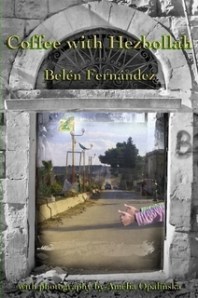
Coffee With Hezbollah

Here’s a strange and sparkly, jumpy and tightly-packed little book by PULSE’s own Belen Fernandez, in which our heroines (Belen and the photographer Amelia Opalinska) hitch-hike through Lebanon and Syria a few weeks after the war of summer 2006, consuming far more caffeine than is good for them.

Beyond Gonzo, it doesn’t pretend to be journalism at all. Instead it recounts a fairly lunatic, fairly random sight-seeing tour towards ‘the dark force’ Hezbollah. The setting, of course, is an Israeli-devastated landscape, and the ‘dark force’ tag, like all the book’s other appropriations of mendacious political language, is ironic. “Coffee with Hebollah” is, as Norman Finkelstein writes in his recommendation, “simultaneously serious and silly.” It’s also quick witted and very well informed, sensitive to the discourses and stereotypes of Lebanon’s 18 sects, the country’s tortured history, as well as the fantastic representations of Lebanon that have emerged from Israeli and Western power centres. This makes the book a new kind of journalism as well as a parody of the mainstream version.

The satire is harsh, and nobody escapes the treatment, including the author. The absurdity of the material is pointed up further by the mock-formal language of negotiation and diplomatic report in which encounters are narrated, the supposedly transparent language of perfect sense. So, for instance, labelling somebody by sect is described as conducting  an “exhaustive religio-spatial analysis.” Such phrasing mirrors the pompous pretensions of the thinking it describes. There is also a great deal of translation comedy, natural territory for irony, which lies in gaps, in the distance between reality and representation.

Continue reading “Coffee With Hezbollah”