Who’s Afraid of Women’s Song?

At 4:02, as the women sing, a male protester yells: “Who’s afraid of women’s song?”

The following is a testimony of one of the women, out of the 23 activists, who were arrested in this week’s Nabi Saleh demonstration (above video). This demonstration was the first after Mustafa Tamimi’s murder. It was extremely brutal, which is a relative term, considering the continuous repression that the demonstrations against the apartheid wall face, and the village of Nabi Saleh in particular.

Out of the 23 activists, many were physically assaulted while handcuffed behind their backs, as Mohammed Khatib, one of the leaders of the Bil’in popular committee, describes in his own testimony. Mustafa Tamimi’s sister, Ola, who was prevented from being with her brother as he took his last breaths, was pepper sprayed in the eyes, from a few centimeters away. And another handcuffed woman was slapped with the back of the hand of a passing male settler, when she expressed objection to him assaulting Khatib and taking pictures. These are just a few of the testimonies that were published and taped, we still don’t have a complete story of this particular demonstration, and many other stories will be lost in the clouds of gas.
Testimony of Sahar M. Vardi

Continue reading “Who’s Afraid of Women’s Song?”

Kashmir, of dreams and nightmares

by Burhan Qureshi

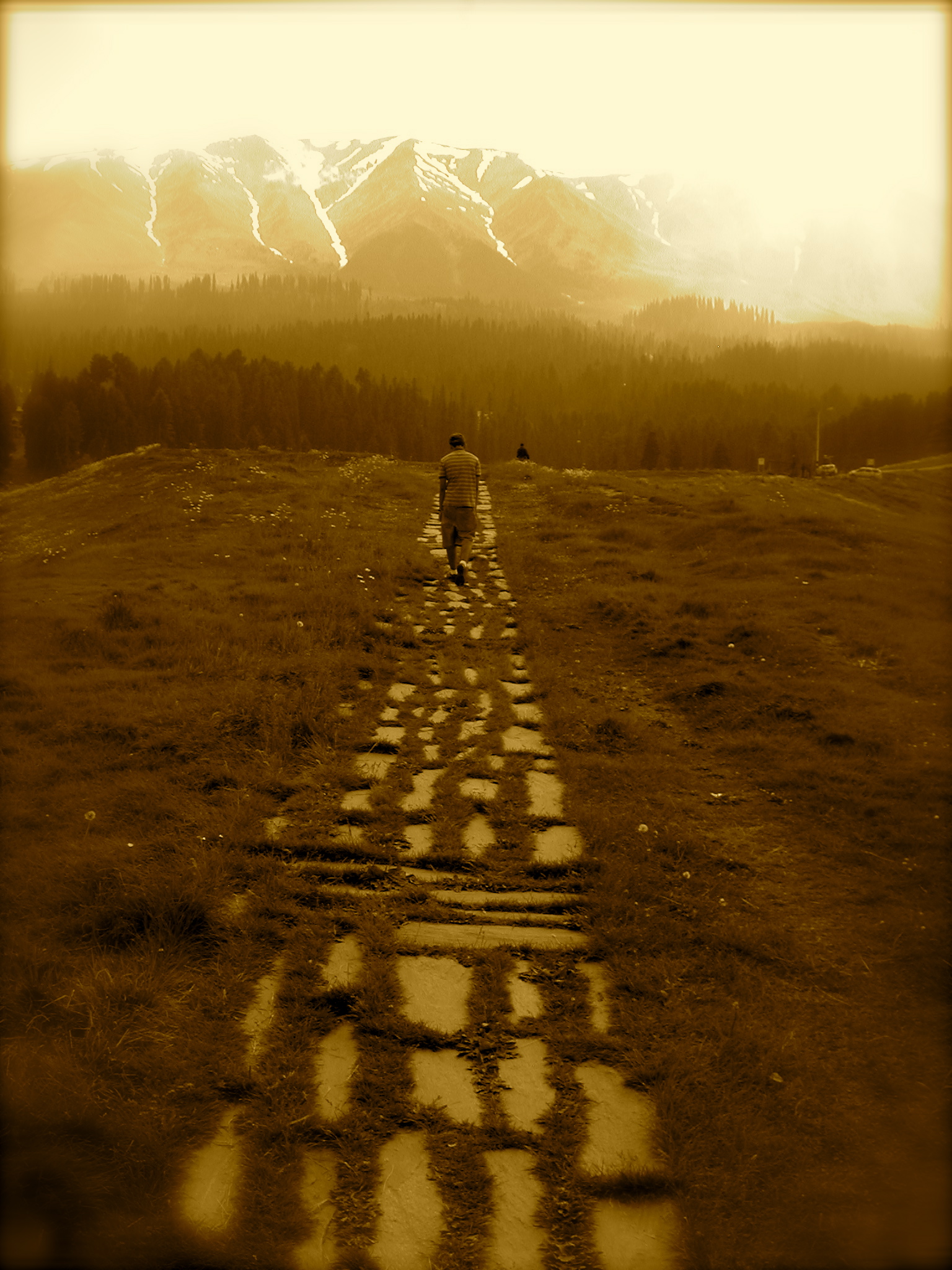
Blurred Memories.  photo credit: Huma Dar, 2006
Blurred Memories. photo credit: Huma Dar, 2006

My mother comes from a sleepy village in north Kashmir.  It is, indeed, picturesque.  At times when she sits me down and tells me the stories of her childhood, she takes me into a dreamland.  Her house there is on a hillock, a gushing clear stream runs at its foothills.  There are vast fields on either side of the road.  She tells me of the orchard where the finest apples grow, of the walnut trees in her garden that she used to climb (in fact, she taught me how to eat the raw, green colored walnuts, which if you know the trick, taste even better).  And when she tells me that she used to swim in that stream, my heart skips a beat.  I fall in love with her all over again.

Continue reading “Kashmir, of dreams and nightmares”

Israeli vs Palestinian Right to Protest

Lia Tarachansky reports for The Real News from Tel Aviv on the Israeli right to protest–which according to Benjamin Netanyahu is one of the reasons Israel is an example for “the entire democratic world”–versus the Palestinian lack thereof.

RIP Mustafa Tamimi.

Hagen Rether on Islamophobia

Hagen Rether, the German political cabaret artist, takes on casual Islam-bashing in this stellar monologue from one of his shows. It is sharp, intelligent and full of wry irony.

Silence of the lambs

It says something about American society that on the day a true hero, PFC Bradley Manning, goes to trial, less than twenty people show up to support him. Shame.

How to Occupy the World

A Call for True Internationalism

by Jason Hickel

Leon Neal/AFP/Getty Images

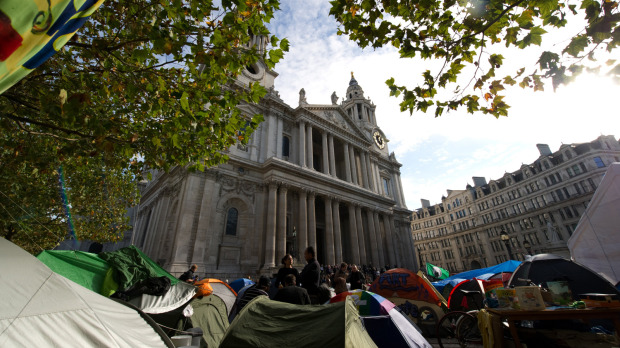
The leading tagline of the Occupy Wall Street movement reads: “Protest for World Revolution.”  This is an ambitious claim, to be sure. And in most respects it seems to ring quite true: the movement has successfully taken root not only in cities and towns throughout the United States but also in major urban centers around the world.  On October 15, Occupy Wall Street’s success inspired a broad wave of coordinated occupations across Europe.  I was a founding participant in the one that began in London.

But the Occupy movement has been notably absent outside of North America and Europe.  Not for want of trying, of course: in southern Africa, where I am originally from, small groups of committed activists tried to instigate occupations in a few key regional cities, but without much success.  In South Africa, a society divided by violent inequalities that proceed directly from neoliberal policy, Occupy managed to attract only a few dozen souls – a poor showing for a country known for one of the highest protest rates in the world.

What accounts for the failure of Occupy to capture the imagination of the global South, which comprises precisely the people whose lives have been most brutally affected by the recent global financial crisis?  And in what sense can Occupy claim to be a world revolution if it leaves out – and in some cases even alienates – the vast, non-white majority of humanity?

Continue reading “How to Occupy the World”

Bradley Manning Heads for Trial; No One Charged for Murdered Civilians

Ray McGovern introduces a short documentary deconstructing events revealed by Wikileaks.

Bombing Savages in Law, in Fact, in Fiction

Professor Paul Gilroy chairs this event with Sven Lindqvist, the great Swedish author of over 30 widely translated books including A History of Bombing.

This lecture marks the centenary of aerial bombardment. More than just a military revolution, this development redrew the legal and moral boundaries between civilians and combatants and spread the theatre of war into cities and domestic spaces.

The lecture is part of a joint initiative of LSE Sociology and the Sociology Department at Goldsmiths, University of London.

UPDATE: In case you are having trouble listening to the whole lecture, you can hear it on the LSE website instead.

Are there any winners of the Iraq war?

With Inside Story Americas, Shihab Rattansi has really elevated the quality of the show. Rattansi is in my view Al Jazeera’s best anchor and the following is a rather superb show with an excellent selection of guests. Don’t miss.

Hearts and Minds

Armed US drones have been blamed for more than 300 missile attacks in seven years in Pakistan’s tribal areas. Residents of Pakistan’s tribal areas say that they feel terrorised by the strikes, and doctors say that those who survive them often suffer from post-traumatic stress disorder (PTSD). Al Jazeera’s Kamal Hyder met with the survivors of one such strike at a hospital in the Pakistani city of Peshawar.