For many months into the Syrian revolution the dominant narrative (outside Syria), promoted by Syria Comment and other such sources, held that the inhabitants of inner Damascus were loyal to the regime, or at least fearful of change. This perceptive and moving talk by Ella Wind takes the wind out of the sails of that myth. Unlike the Tariq Alis and David Bromwiches of the chattering West, Ella clearly knows Damascus and Damascenes very well indeed. She describes the rapid politicisation of her friends, many of whom went on to become revolutionary organisers, and also talks about revolutionary heroes from the Christian community, such as film-maker Basel Shehadeh and our beloved Pere Paolo, last seen in Raqqa, presumed kidnapped by the Islamic State of Iraq and Sham.
Month: November 2013
Beyond the Sunni/ Alawi Dichotomy
Nader Atassi (of the great Darth Nader blog) takes on the twin myths that the Syrian regime is Alawi and that the revolution is Sunni. To divide and rule, the Assad regime has cleverly exploited sectarian tensions for decades. (A great Syrian blogger of previous years, Karfan – or ‘Disgusted’ – described the regime’s repression of the Alawi community and its religion here – a must read.)
Syria: Global Designs and Local Democracy
Leftist academic Yasser Munif (who happens to be the son of the great novelist – exiled from Saudi Arabia – Abdul Rahman Munif) goes beyond binary idiocy and orientalist generalisation to explain the role of global powers in Syria, as well as the local democracy he saw at work in Menbij, a town in Aleppo province in liberated Syria.
Open Letter to the Stop the War Coalition
 News recently broke that the Stop the War Coalition (StWC) invited Mother Superior Agnès Mariam de la Croix to speak at its November 30 International Anti-War Conference. Fellow guests included MPs Diane Abbott and Jeremy Corbyn and journalists Owen Jones and Jeremy Scahill.
Responding to a firestorm of protest, Jones and Scahill vowed to boycott the event if the Syrian-based nun spoke alongside them. Eventually she decided to “withdraw” from the conference and StWC issued a statement without explanation. Nor did it divulge why anyone would object to a Syrian cleric’s participation in an ostensibly pro-peace event.
Here are some reasons why we consider Mother Agnès-Mariam’s inclusion in an anti-war event to be a “red line” for opponents of conflict. Despite contrary claims, she is a partisan to—rather than a neutral observer of—the war in Syria.
Mother Agnès claimed that the Syrian opposition faked films of Bashar al-Assad’s 21 August 2013 sarin-gas attack on Ghouta in the suburbs of Damascus. In her 50-page dossier on the horrible events of that fateful morning, she wrote that the dead, gassed children documented in those videos “seem mostly sleeping” and “under anaesthesia.”
According to Father Paolo Dall’Oglio, a Jesuit priest exiled by the Assad regime for speaking out against its suppression of peaceful protests and currently a prisoner of al-Qa’ida’s Syrian affiliate, ISIS, Mother Agnes “has been consistent in assuming and spreading the lies of the regime, and promoting it through the power of her religious persona. She knows how to cover up the brutality of the regime”.
Moreover, Syrian Christians for Peace have denounced Mother Agnès for claiming there had never been a single peaceful demonstration in Syria. The also accused her of failing to disburse any of the money she raised in the name of their beleaguered community. They have asked “that she be excommunicated and prevented from speaking in the name of the Order of Carmelites.”
Having a massacre denier and apologist for war criminals like Mother Agnès speak alongside respected journalists such as Jeremy Scahill and Owen Jones is not only an insult to them and their principles. It is also, more insidiously, a means of exploiting their credibility and moral authority to bolster hers, both of which are non-existent. No journalist should be sharing a platform with Agnès when she stands accused of being complicit in the death of French journalist Gilles Jacquier by his widow and a colleague who accompanied him into Homs during the trip arranged by Mother Agnès in January 2012.
Given that her UK speaking tour is still scheduled to last from the 21st to 30th November we, the undersigned, feel compelled to express our profound and principled objections to those who give a platform to a woman condemned by Syrian pro-peace Christians for greasing the skids of the regime’s war machine.
Signatories:
Continue reading “Open Letter to the Stop the War Coalition”
Palestine is Not a Flag
Palestinian anarchist Budour Hassan talks about Palestine and the Syrian revolution. Read Budour’s wonderful blog here (both Arabic and English).
The Syrian Revolution in Brazil
This documentary shows the inspiring solidarity extended by Brazilian workers to revolutionaries in Syria and the wider Arab world. It puts to shame the betrayals of the Cuban and Venezuelan states, and of course the irrelevant Stalinists, Islamophobes and blanket thinkers in the West. Here is the real left, still standing.
Qaddafi’s Harem
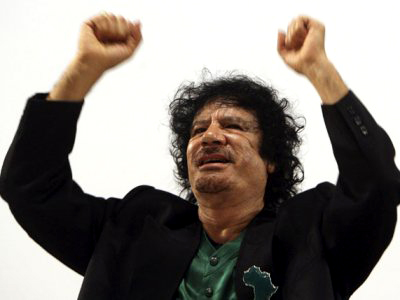 This review of Annick Cojean’s book was published at NOW.
*
“Today is the beginning of the end of the era of harems and slaves and the beginning of women’s liberation within the Arab nation.” Muammar Qaddafi. September 1981.
The Arab world is still crammed full of tyrannies self-labelling with terms such as ‘popular’ and ‘democratic’, sectarian regimes pretending to be secular, reactionary regimes describing themselves as progressive, and ‘resistance’ regimes which resist nothing but their subjects’ life and freedom.
The current post-revolutionary chaos in Libya provokes two orientalist responses: the crude (statist-leftist) version, that the uprising was a foreign conspiracy; and the subtler (because it’s never quite made explicit), that the Libyans made a terrible mistake by rising, because their fractious ‘tribal’ society can only be held together by a strong man of Qaddafi’s calibre. After him, goes the implicit argument, the inevitable deluge.
“Gaddafi’s Harem” by French journalist Annick Cojean provides a fact-based corrective to those fooled by Qaddafi’s illusions, specifically those impressed by the radical feminist image evoked by his once highly visible – and sexily transgressive – corps of ‘Amazon’ body guards. It will change the minds too of those who saw the dictator from a distance as a lovable buffoon.
His regime was capricious, yes, at times even darkly comedic, but it was based on undiluted sadism. The cramping stagnation it imposed for 42 years, and the fact that it refused to budge except by force of arms, are the prime causes of today’s anarchy. The means of domination it employed – psycho-social as much as physical – tell us a great deal about the universal megalomaniac personality, as well as certain cultural weaknesses in the Arab world and beyond.
Birthday in Hebron
By Shadab Zeest Hashmi
12.12.12

Stairs vanish before bloodstains come
Before the bullet
or the boot on the dead boy’s shin
he has long been taken
by ghosts passing in lockstep Continue reading “Birthday in Hebron”
What Used To Be Home
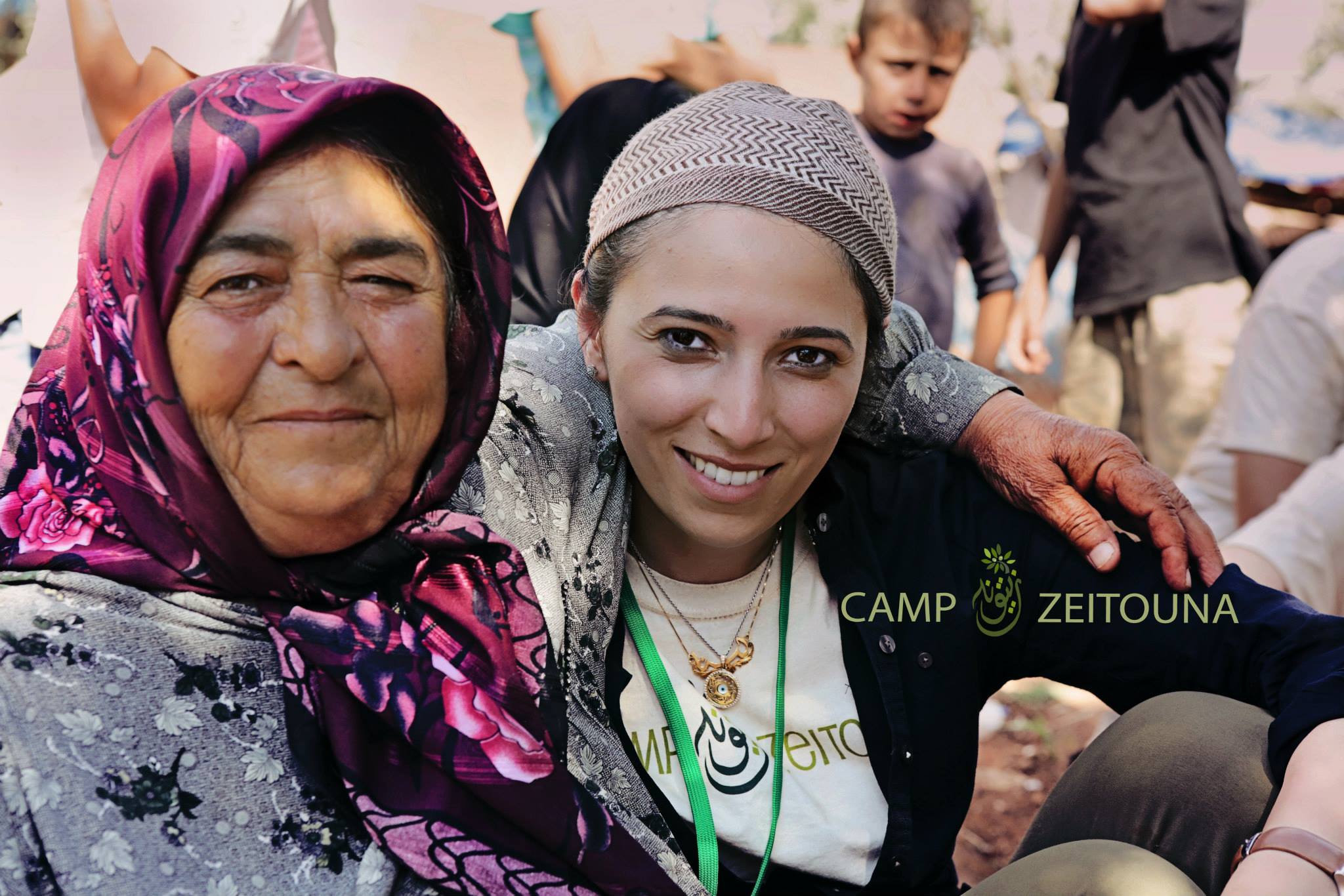
Syrian-American architect Lina Sergie Attar is the founder of the Karam Foundation and its Zeitouna project which brings hope to Syrian displaced and refugee children, many of whom are traumatised, all of whom have lost great chunks of their schooling. Pulse co-editor Robin Yassin-Kassab participated in June’s Camp Zeitouna in the Atmeh camp on the Syrian side of the Turkish border. In this moving piece, originally published at the New York Times, Lina describes the workshop she led with the children in their hot and dusty tented school – mapping a floor plan of their abandoned homes – and what it meant to them. Please donate to the project and Karam’s other work inside Syria here.
by Lina Sergie Attar
“We comfort ourselves by reliving memories of protection.”
Gaston Bachelard, The Poetics of Space
Standing in a stuffy tent while facing over forty children crowded onto small benches, their dusty faces propped up by weathered, lean arms, I feel a bit nervous. They study me curiously. I tell them that I’m Syrian, from Aleppo, and that I’m an architect. I turn towards the cracked whiteboard and begin to draw with the streaky, half dried-up marker. “I haven’t been to my family’s home for over two years. When I miss it, I remember it like this.” Without turning around, I say, “Let me tell you a story about my home.”
***
After enduring two and a half years of the grueling brutality that defines Syria, the fall of Assad’s regime is no longer the most pressing concern of most Syrians. Rather, “When will we return home?” is the question that haunts the over seven million displaced Syrians. Of course, the fact that the first concern is the reason the second one exists adds to the country’s mass despair.
Last winter in Atmeh, the largest of Syria’s border camps for the internally displaced, the longing to return home was repeated to me over and over — sometimes in anger, other times in sorrow. I could not answer their inquiry, “Will we ever return home?” except with the traditional, “God willing.” A response that should have been comforting if my wavering voice hadn’t betrayed my uncertainty.
When I returned to Atmeh last June, the camp had doubled in size from 12,000 to over 24,000 people who had fled their villages and towns to seek refuge in rows of tents between the olive trees — literally in no man’s land. They were as I had left them, still surviving without running water, electricity, and adequate sanitary services. The biting cold of December had been exchanged with the suffocating summer heat. The snow-white tents were now permanently coated with brown dirt streaks. The camp which had been still in formation a few months before, now felt unsettlingly settled.
I did not return alone. I returned with a team of Syrian expatriates to hold an educational mentorship program for displaced children called Zeitouna. The idea behind Zeitouna was to inspire and engross Syrian children with creative and athletic workshops that would engage their young minds. We returned to show them that they mattered. And that they had not been forgotten.
A Broken Immigration System
UCL has released a new study which shows that immigrants contribute more to British finances than is expended on them and are less likely to claim benefits or housing. Since 2000, it shows immigrants have contributed £25 billion to the British economy. So much for all the Tory/New Labour/UKIP hysteria. But unfortunately reality rarely intrudes on this fear-driven campaign. David MacIsaacs, a respected head teacher at a Scottish school, who is married to a British citizen, is being deported after living 10 years in this country. I myself nearly suffered a similar fate after living 8 years in this country and paying tens of thousands in taxes.
This debate is even more poisonous across the Atlantic, and it is poignantly highlighted in a new documentary “The Dream is Now” by Academy Award-winning director Davis Guggenheim. The film tells the story of those directly affected by the immigration system, especially the undocumented children of immigrants.
 P U L S E