Bamiyan Diaries – Day Two

by David Smith-Ferri

Editor’s Note: American peace activists Kathy Kelly, Jerica Arents and David Smith-Ferri are part of a 3 person delegation currently travelling in Afghanistan. Read Smith-Ferri’s first piece on their experiences here.

Building Bamiyan Peace Park

The city of Bamiyan, with a population of roughly 60,000, has only one paved street, a wide, two-kilometer road without lanes that is a site of constant activity from 5 a.m. to curfew, at 10 p.m., and is referred to as the “Bazaar” because it is lined on both sides with shops.

In our short time here, we’ve been struck by how hard people, both in town and in the outlying villages, have to work to make a meager living. Children clearly work hard, too, seeming to participate fully in the livelihood of the family. At almost anytime of the day they can be seen at all manner of enterprise – helping set up the family street stall early in the morning, riding a donkey to fetch water in five-gallon plastic jugs, helping harvest potatoes, herding sheep or goats, collecting leaves for fuel, washing clothes in a creek, caring for younger siblings; and of course, they also attend school. Their work is as much a part of the landscape as the cottonwood trees and the red-rock cliffs which stand above the rivers.

Having had a chance to talk with members of the Afghan Youth Peace Volunteers (AYPV) and learn something about their significant commitments to home, family, and school, it was with delight and astonishment that we visited Bamiyan Peace Park today with nine proud members of the group and learned about their role in its development and use.

Continue reading “Bamiyan Diaries – Day Two”

Bamiyan Diaries – Day One

by David Smith-Ferri

Editor’s Note: American peace activists Kathy Kelly, Jerica Arents and David Smith-Ferri are part of a 3 person delegation currently travelling in Afghanistan. This is Smith-Ferri’s article written about their first day in Bamiyan province.

Bamiyan Province in Afghanistan, a stunningly beautiful mountainous region, is located in the center of the country, roughly 100 miles from Kabul. Most people here live in small, autonomous villages tucked into high mountain valleys, and work dawn to dusk just to scratch out a meager living as subsistence farmers, shepherds, or goatherds. The central government in Kabul and the regional government in Bamiyan City exercise little or no control over their lives. They govern themselves, and live for the most part in isolation.

Given this, who would imagine that Afghan youth from small villages across Bamiyan Province would come together to form a tight-knit, resilient, and effective group of peace activists, with a growing network of contacts and support that includes youth in other parts of the country and peace activists in the U.S. and in Palestine? I certainly wouldn’t have. In the United States, we may find it hard to believe that anything good can actually come out of Afghanistan, or we may have fallen into a trap of thinking that Afghans cannot accomplish anything useful without foreign aid and assistance. I confess that I struggle to live outside the shadow of this narrow-mindedness and ethno-centrism. Certainly, if the scope of our imaginations is limited by CNN and Fox News, we would not be likely to imagine an indigenous peace group forming in Bamiyan Province. But this is exactly what has happened.

Calling themselves the Afghan Youth Peace Volunteers (AYPV), they range in age from eight to twenty, and they have been active for over two years, translating their camaraderie and the horror of their families’ experience of war and displacement into a passionate and active pacifism. At an invitation from AYPV, three American peace activists from Voices for Creative Nonviolence have arrived in Bamiyan for five days to build bridges of friendship and support with these youth and their families. Over this time, we will write a daily diary of our experiences and interactions with the Afghan Youth Peace Volunteers.

Continue reading “Bamiyan Diaries – Day One”

New Israeli Report: Israeli Banks are Principal Beneficiaries of the Illegal Settlements

The branch of Bank Poalei Agudat Israel of First International Bank in the settlement of Modi’in Illit ~Photo: Who Profits, April 2009.

According to a new report by Who Profits, a research project that exposes Israeli and international corporate involvement in the occupation:

“The banks are well aware of the activities carried out with their financial assistance.”

Continue reading “New Israeli Report: Israeli Banks are Principal Beneficiaries of the Illegal Settlements”

The collapse of American journalism

Media scholar Robert W. McChesney lectures on the collapse of American journalism at the University of Illinois YMCA on October 24th, 2010. Listen as Bob discusses the political implications and his solutions to the crisis. Sunday, 1pm central on Media Matters with Bob McChesney.

The lecture begins at 6:00.

Download mp3.

Breaking the Silence

Israel’s Channel 10 shows excerpts from Hagai Levi’s documentary about the wonderful folks behind Breaking the Silence.

Jewish activists confront the JNF

The JNF according to historian Ilan Pappe is Israel’s main agency of ethnic cleansing. For nearly a decade the Scottish Palestine Solidarity Campaign has been waging a lonesome fight against this pernicious outfit which, outrageously, enjoys tax-exempt charitable status in many Western countries. Now it is being confronted by some great Jewish activists both in the UK and the US. This latest protest took place in Atlanta where some activists were physically abused after trying to disrupt the JNF event. They deserve our support and encouragement. (via Mondoweiss)

For more on the JNF see the SPSC’s invaluable e-book.

The Other Debt Crisis: Climate Debt

With the Cancun UN climate conference only weeks away now, the brilliant Avi Lewis travels to Bolivia to explore the country’s climate crusade from the inside on this edition of Al Jazeera’s Fault Lines.

The climate crisis in Bolivia is not a headline or an abstraction – it is playing out in people’s lives in real time. Melting glaciers are threatening the water supply of the country’s two biggest cities. Increasing droughts and floods are playing havoc with agriculture. So it is no surprise that in climate negotiations, Bolivia is emerging as a leader in the global south – advancing both radical solutions and analysis that make rich countries distinctly nervous.

Continue reading “The Other Debt Crisis: Climate Debt”

The People’s Lawyer: In Conversation with Colin Gonsalves

by Saffi Ullah Ahmad

Colin Gonsalves (Photo: Saffi Ullah Ahmad)

Colin Gonsalves is a senior advocate of the Supreme Court of India and a pioneer of public interest and human rights law. He has won over 200 mostly precedent setting cases against the Indian government and powerful corporations in favour of poor and marginalized groups. Gonsalves has been described as a champion of the exploited.

In 1989 Colin founded the human rights law network (HRLN), known today as a network of hundreds of lawyers and social activists whose aim has been to further the struggle for human rights and equality through making justice accessible to disadvantaged members of Indian society. Funded mainly through grants from various organisations, his growing army of lawyers regularly litigates on issues of women’s and minority rights, environmental damage, child labour, disability law, land confiscation, sexual harassment, prisoner abuse, human trafficking and the right to nutrition. Giants taken on by the HRLN include the likes of Enron. The HRLN now has a presence in over 20 Indian states where its centres provide pro bono legal services, undertake public interest litigation and run campaigns to spread awareness of human rights.  In addition to this organization Gonsalves also heads the Indian People’s Tribunal on Environment and Human Rights (IPT).

In 2001 Gonsalves began work on a case which in the face of ever increasing privitisation and withdrawal of food subsidies, aimed to force the central government to implement several food security schemes across the country. He argued that the Indian constitution’s reference to a ‘right to life’ encompasses the right to food, work and fair wages. Also highlighting that as a result of rampant malnutrition 3-5,000 Indians die every year of starvation, Gonsalves and his team of pro-bono lawyers were able to bring relief to over 300 million people following a series of court orders in their favour. The case won him and the HRLN acclaim from former Irish President and UN High Commissioner for Human Rights, Mary Robinson, among others.

Gonsalves has received honorary degrees and awards for his services from a plethora of educational institutions as well as legal and charitable organizations including the American Bar Association’s International Human Rights Award for his ‘extraordinary contribution to the causes of Human Rights rule of law and promotion of Access to Justice’ in 2004.

Gonsalves was recently in London to receive an honorary doctorate in Law from Middlesex University where I interviewed him.

Continue reading “The People’s Lawyer: In Conversation with Colin Gonsalves”

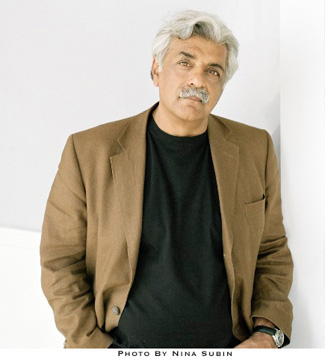
“Only the mood music has changed”: Tariq Ali on Obama’s presidency

OK… here’s the PULSE exclusive I’ve been working on. Hope you enjoy.

Is president Barack Obama the change America has been waiting for or is he another corporate Democrat representing elite interests?  According to Tariq Ali, very little has chanced between Obama and former president George W. Bush.  In his latest book “The Obama Syndrome: Surrender at Home, War Abroad,” Ali argues that Obama is carrying on the reckless policies of the Bush regime.  If Obama continues down this path, the Democratic Party not only face the prospect of the House & Senate in 2010 but also the presidency in 2012.  This should be a cause for concern.

I caught up with Ali during his American book tour and here’s what he had to say about the Obama presidency.

Where did the idea for this book emanate from? Why did you want to write a book about “The Obama Syndrome” and what does that refer to?

The idea occurred because I speak a lot on the United States. People ask me questions after each talk and increasingly in the past two to three years, the talk has been about Obama.  I thought a short book which essentially provided a balance sheet from the left on the mid-term would be a useful exercise. Given that he’s being attacked nonstop for being a socialist, a leftist, being a Muslim and all this nonsense that comes from the Tea Party-Fox Television alliance, I thought it was better to have a hard-headed realistic account about who the guy really is.  So my book is a critique of him, but it’s also by implication a very sharp critique of people who claim that everything Obama is doing is so radical that they can’t take it anymore.

Continue reading ““Only the mood music has changed”: Tariq Ali on Obama’s presidency”

PULSE Joins Blog Action Day 2010… So Should You!

We ask bloggers to take a single day out of their schedule and focus it on an important issue. By doing so on the same day, the blogging community effectively changes the conversation on the web and focuses audiences around the globe on that issue. ~ Blog Action Day Website

For the past 3 years, every October 15th, Blog Action Day has been marked by tens of thousands of bloggers, discussing the same issue. From the environment, to poverty, to this year’s theme of water, Blog Action Day is a perfect fit for PULSE, which never fails to make the connection between these “social issues” and the politics driving them, 365 days of the year.

To all of us at PULSE that follow world events (or rather “the money”, or rather “the power”) it’s very evident that water, being the very essence of basic needs for sustaining life, becomes a cynical tool, leveraged by the powerful, in order to oppress, control and often kill off whole populations of human beings deemed meaningless.

On October the 15th PULSE will dedicate itself to the issue of water, and we invite all our blogging readers to do the same.