The Crash

On May 2, 2011, US Treasury Secretary Timothy Geithner sent his third ultimatum to Congress noting that the US is set to reach its statutory debt limit of $14.3 trillion by May 16, and unless the ceiling was raised by August 2, the country could face default. ‘The economy is still in the early stages of recovery,’ he warned, ‘and financial markets here and around the world are watching the United States closely.  Delaying action risks a loss of confidence and accompanying negative economic effects.’ These will have a ‘catastrophic economic impact’ and ‘broad range of government payments would have to be stopped, limited or delayed, including military salaries, Social Security and Medicare payments, interest on debt, unemployment benefits and tax refunds.’ It will also lead to ‘sharply higher interest rates and borrowing costs, declining home values and reduced retirement savings for Americans.’ Mostly ominously, it will ‘cause a financial crisis potentially more severe than the crisis from which we are only now starting to recover.’

The situation doubtless sounds dire, but there is something mildly ironic about a Treasury Secretary warning the government against losing the trust of an industry which he only recently rescued with an extraordinary cash transfusion of $4.1 trillion in public money. The real costs of the bailout are estimated by Bloomberg at $ 12.8 trillion. But it is easy to overlook the consistency in Geithner’s assessment: the US government was a hostage to the financial industry when it faced collapse, and it is a hostage to it when its own economic future turns increasingly uncertain. The doubling of US national debt between 2004 and 2011 is merely a symptom of the problem—two wars and the bailout have both paid a part—but at its root are the regulatory failures and conflict of interests which are embodied in the person of Timothy Geithner. For over two decades the US Treasury has functioned as a de facto arm of Wall Street, eschewing its regulatory function to act as a passive enabler. Little surprise then that three years after the crisis the institutions that caused the collapse continue to evade responsibility and the price is instead paid by the taxpayer in exorbitant, lost homes and depleting employment opportunities.

How did things go so bad?
Continue reading “The Crash”

Tablet and Pen

This review appeared in today’s Financial Times.

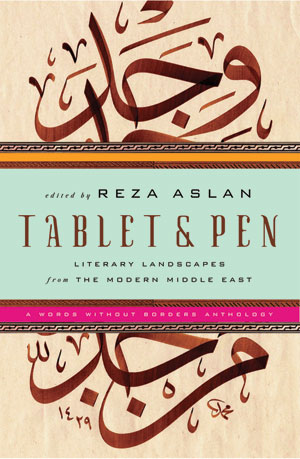
In his introduction to “Tablet and Pen – Literary Landscapes from the Modern Middle East”, Reza Aslan correctly argues that “from ‘the civilising mission’ to ‘the clash of civilisations’” the West has read the East primarily through a security prism, as something to be managed and contained. Apart from a couple of Nobel winners, an Egyptian feminist, and Sayyid Qutb, the region’s writing – and therefore the human dimension – is absent from our calculations.

With Saidean distaste for grand orientalist categories, Aslan argues the literatures grouped here are linked by themes of “imperialism, colonialism and Western cultural hegemony.” A straightforward civilisational definition might have been more logical; African, Indian and Caribbean writing has engaged the same preoccupations. But we know what Aslan means: these 20th Century poems, short stories, novel extracts and essays come from Pakistan, Iran, Turkey and the Arab world, the old Islamic heartland connected by common experience and similar cultural references.

The presence of the anthologiser is felt throughout – pleasantly so: Aslan’s introductions and chronologies give historical structure and social context to the pieces, and succeed in making this “not an anthology to be tasted in disparate bits but rather a single sustained narrative to be consumed as a whole.” It’s a weighty and physically beautiful book which is also compulsively readable.

Continue reading “Tablet and Pen”

Breaking Knees

by Ali Farzat

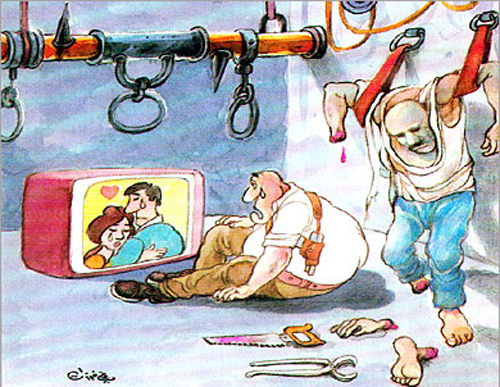
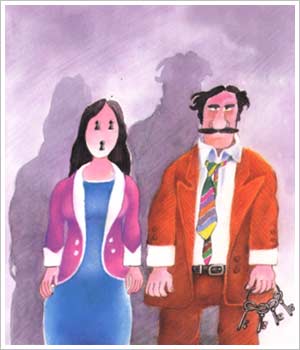
Zakaria Tamer’s “Breaking Knees” tugs us rushing straight into the Big Topics: religion, politics, sex and death. It deals with imprisonment, literal and figurative, its characters entrapped in unhappy marriages and by their personal inadequacies, ignorances and fears, as well as by dictatorship, bureaucracy and corrupt tradition. It sounds grim, but “Breaking Knees” is a very funny book.

Tamer is a well-known Syrian journalist and writer of children’s books. His literary reputation, however, rests on his development of the very short story (in Arabic, al-qissa al-qasira jiddan), of which there are 63 here. Each is a complex situational study, a flash of life or nightmare, each with at least one beginning, middle and end. Some are as clear as day; some are seriously puzzling. Some are no more than extended, taboo-breaking jokes.

It’s certainly satire. Tamer uses an elegant, euphemistic language (referring, for instance, to “that which men have, but not women”) to tell some very plain tales. Delicious irony abounds. In bed an adulterous woman begs her lover “not to soil the purity of her ablutions.” In the street afterwards she frowns at a woman without a headscarf and says “in a voice full of sadness that immoral behaviour had become widespread.”

Continue reading “Breaking Knees”

Coffee With Hezbollah: A Review

by Tom Chartier

Lately, in the last few years… like since Richard Milhous Nixon assumed the coveted title of POTUS… I have had trouble falling asleep at night. Sound familiar? You betcha! The stresses and anxiety of the days have a tendency to beat us to death, and relaxation is tough to find.

How to switch off the horrors of tomorrow’s deadlines, tomorrow’s exams, and tomorrow’s humiliations at the TSA pat-down and peep show? Tough questions indeed.

To make matters worse, I also have trouble getting out of bed in the morning. Not only do I live in complete terror of… well, terror… I also live in terror of saying the wrong thing. Look at all the trouble that dude Assange has caused with his little website, wikileaks.com! My God! State secrets, plots, skullduggery and shenanigans are being exposed! Is there no decency left in America?

God… or State… forbid the First Amendment and Free Speech should actually be upheld. We have our national paranoia to protect!

But… I have veered from the path of the straight and narrow and my purpose. Let me return to the subject of stress relief.

Continue reading “Coffee With Hezbollah: A Review”

Sabriya

by Ali Farzat

It’s Damascus: bustling alleyways and courtyards crammed with silence. Sabriya is secretly in love with Adil. Her brother Sami is secretly in love with Nermin. Both loves are chaste and built on idealism, and both are doomed. Adil and Sami join the 1925-27 revolt against the French occupation. Sami is killed by the enemy. Nermine is badgered into marrying a wealthy old man, then ends up eloping with her hairdresser. Sabriya’s fiance Adil is killed, probably by Sabriya’s bullying brother Raghib who doesn’t like the idea of her marrying a baker’s son. Sabriya is left alone to care for her dying mother, then her dying father. Finally she kills herself, leaving her journal for her niece to read, and a message: “Do not let your life be in vain.”

Sabriya: Damascus Bitter Sweet” (in Arabic, “Dimashq Ya Basmat al-Huzn”, or “Damascus, O Smile of Sadness”) was published in Syria and then transformed into a controversial and wildly popular muselsel, or television series. (If the Egyptians are famous in the Arab world for films, the Syrians do muselselat, particularly period dramas). This elegantly-written, carefully-dramatised period novel is nostalgic but also very current in its concerns.

Ulfat Idilbi explicitly links the struggles for national rights and women’s rights. When Sabriya participates (wearing niqab) in a women’s demonstration against the French, she says: “For the first time I felt I was a human being with an identity and an objective, in defence of which I was ready to die.”

Continue reading “Sabriya”

Ours Are The Streets

This review was written for the Guardian.

Here’s another suicide bomber novel. We’ve had Amis and Updike’s uninformed attempts, plus variations on the theme from Sebastian Faulks. This time, though not of Muslim background, our author is a British-Asian and he does have some important insights on the anguished inbetweenness suffered by so many second-generation immigrants, which in some rare cases may constitute part of the psychological background to political radicalisation.
As a study of migrants, the frustrated ambition of the first generation and the generalised alienation of the second (from the ‘home country’ as much as from ‘home’) – this could as well be titled ‘Ours Are Not The Streets’ – the novel is very successful.

People of a variety of backgrounds will recognise the complex allegiances of Imtiaz, the chief protagonist, who “felt fine rooting for Liverpool, in a quiet way, but not England” and who finds himself “defending Muslims against whites and whites against Muslims.” Everybody will appreciate Suhota’s deft treatment of the generation gap. Imtiaz’s repeated ‘why can’t you be normal?’ is a common adolescent interrogation, but one which becomes more acute in an immigrant household. Suhota is very good at dramatising children’s rankling shame at their migrant parents’ submission to humiliation. Imtiaz’s father’s silence as a passenger pisses in the back of his cab, or when a member of a hen party demands he grope her breasts, and Imtiaz’s squirming response to the silence, are excrutiatingly well written.

Imtiaz is really very British. He stands up to his parents and marries Becka, his pregnant white girlfriend, who happily converts to Islam and moves into the family home. They have a daughter, Noor. Imtiaz, not assimilated but reasonably comfortably integrated, seems to have it all.

Continue reading “Ours Are The Streets”

The Awakening According to Antonius

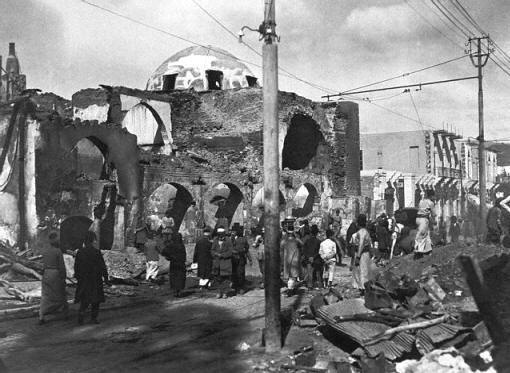
Damascus after French Bombardment, 1925.

Originally published at the Muslim Institute.

I never managed to finish T.E. Lawrence’s vastly overrated “Seven Pillars of Wisdom”. It’s a poorly written, narrowly partial and self-dramatising account of the Arab Revolt against Turkish rule during World War One, as poor a rendering of history as one would expect from Lawrence, with his poor Arabic, poor knowledge of the Arab nationalist movement, and his strange belief that he could pass as an Arab, despite his blond hair and stumbling speech. I got as far as his description of the Syrians as “an ape-like race.”

A far, far better book on early Arab nationalism is George Antonius’s “The Arab Awakening,” which covers the period from Muhammad Ali’s brief unification of Egypt and Syria in the 1830s to the struggle for Palestine in the 1930s.

Continue reading “The Awakening According to Antonius”

Coffee With Hezbollah

Here’s a strange and sparkly, jumpy and tightly-packed little book by PULSE’s own Belen Fernandez, in which our heroines (Belen and the photographer Amelia Opalinska) hitch-hike through Lebanon and Syria a few weeks after the war of summer 2006, consuming far more caffeine than is good for them.

Beyond Gonzo, it doesn’t pretend to be journalism at all. Instead it recounts a fairly lunatic, fairly random sight-seeing tour towards ‘the dark force’ Hezbollah. The setting, of course, is an Israeli-devastated landscape, and the ‘dark force’ tag, like all the book’s other appropriations of mendacious political language, is ironic. “Coffee with Hebollah” is, as Norman Finkelstein writes in his recommendation, “simultaneously serious and silly.” It’s also quick witted and very well informed, sensitive to the discourses and stereotypes of Lebanon’s 18 sects, the country’s tortured history, as well as the fantastic representations of Lebanon that have emerged from Israeli and Western power centres. This makes the book a new kind of journalism as well as a parody of the mainstream version.

The satire is harsh, and nobody escapes the treatment, including the author. The absurdity of the material is pointed up further by the mock-formal language of negotiation and diplomatic report in which encounters are narrated, the supposedly transparent language of perfect sense. So, for instance, labelling somebody by sect is described as conducting  an “exhaustive religio-spatial analysis.” Such phrasing mirrors the pompous pretensions of the thinking it describes. There is also a great deal of translation comedy, natural territory for irony, which lies in gaps, in the distance between reality and representation.

Continue reading “Coffee With Hezbollah”

An Animal of Colossal Proportions

This review first appeared at the new Muslim Institute website (worth watching)..

These days it seems that almost everyone sees the apocalypse bearing down. This is the age of Kali Yag and the oncoming rapture, the arrival of the triumphant Mehdi, of catastrophic climate change and resource shortage. This is the age in which Beduin compete to build the taller towers, in which fog appears above cities as a sign of their evil.

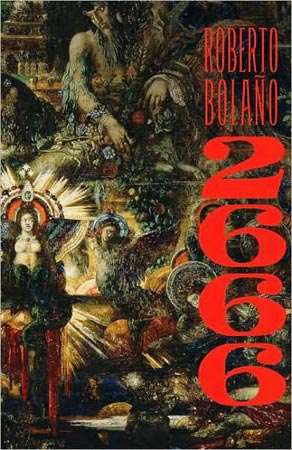
2666’ is a vast apocalypse-in-motion novel set in the 1990s. It was written by a poet who turned to novel writing in his forties only in order to support his young family. He died at 50.

Roberto Bolano wrote ‘2666’ in five books. Before he died he asked that each book be published separately, because he believed that would leave more cash for his loved ones. His publishers decided to ignore this directive, for each book feeds thematically and by plot tangent into the others. The novel has a cumulative, total effect.

The first book – effortlessly cosmopolitan, densely detailed, persistently digressive – centres on a menage a trois between three European academics who also share an obsession with a reclusive German writer called Archimboldi. When a British-Pakistani cab driver expresses his outrage at the academics’ unorthodox relationship, the two men of the trio beat him to a pulp. Afterwards, “they were convinced that it was the Pakistani who was the real reactionary and misogynist, the violent one, the intolerant and offensive one, that the Pakistani had asked for it a thousand times over.” Almost in passing, the episode diagnoses a very contemporary European disease, but also contributes to some of the novel’s central themes, of violence, anonymity, senselessness and the failure of imagination.

Continue reading “An Animal of Colossal Proportions”

Shahid Alam’s Destabilising Logic of Zionism

This review of Shahid Alam’s indispensable book was written for Holy Land Studies.

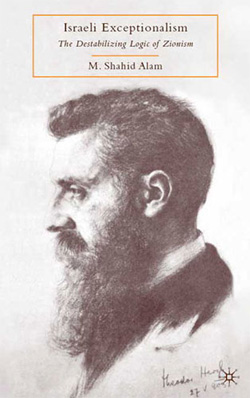
M. Shahid Alam’s latest book “Israeli Exceptionalism: The Destabilising Logic of Zionism” is a fascinating historical analysis, densely detailed and referenced, of the nature and trajectory of Jewish nationalism. It is bracingly honest, dispensing with the usual Western pieties to describe three elements of what Edward Said called Israel’s “ideology of difference.” These are, firstly, the notion of Jewish chosenness and divine right to Palestine; secondly, the ‘miraculous’ creation and survival of the state; and thirdly, the uniquely tragic history of the Jewish people.

Many studies have deconstructed the first two myths. Less attention has been lavished on countering the third, the “lachrymose historiography” of the Jews (in Salo Baron’s words) and its employment to neutralise criticism of the Zionist project. Alam argues persuasively that Zionism was not simply a response to virulent anti-Semitism but also, crucially, the result of Jewish power.

Until the rise of fascism, the trend of Jewish involvement in modern Europe was one of phenomenal success. This is despite recurring episodes of anti-Semitism, particularly in the east. The European Jewish population increased more than tenfold in the eighteenth and nineteenth centuries (the general population increase was by a factor of 3.3). In the same period, Jews moved into the West’s urban power centres. Ironically, anti-Semitic discrimination had “endowed the Jews disproportionately with those assets that would give them vital advantages in Europe’s emerging capitalist societies.” By the early 19th Century, Jews owned 30 of 52 private banks in Berlin. In Vienna in 1900, 62% of lawyers, half the doctors and over half the journalists were Jews. An important strata of Jews now had both money and access to political and cultural elites.

Continue reading “Shahid Alam’s Destabilising Logic of Zionism”