Rime Allaf has an unmissable piece in the Guardian. As a counterpoint to the sectarian war scenario we’re hearing so much about, Rime offers the other pole.
From 1946, spoiled by the US-sponsored coup of 1949 which first brought military rule to the region, Syria witnessed a shortlived parliamentary democracy, a vibrant civil society and a brief period of a free press, and it elected leaders whose names remain embedded in the national memory as examples of the Syria it can be, and it should be. While perhaps initially elitist in nature, unlike the current varied spectrum of opposition groups and revolutionary committees, it is a logical inspiration for the future.
The whole article is well worth reading. There are good observations on how the supposed fractiousness of the ‘opposition’ is not necessarily a bad thing, and important commentary on the future ramifications of Iranian miscalculations.
One major issue may change in the post-Assad era: relations with Iran and Hezbollah. The strategic alliance with Iran since the Islamic revolution flourished under Bashar al-Assad’s reign, especially following the invasion of Iraq, but Iranian support in repressing the current protests won’t easily be forgotten. Likewise, the Hezbollah leader Hassan Nasrallah’s support for the Syrian regime has incensed many, especially after his praise for every other Arab uprising; only last year, it would have been unimaginable to see Hezbollah’s flag burned in Syria, as it has been recently.
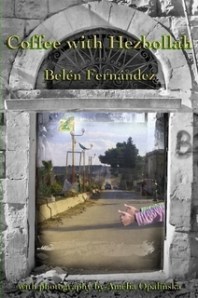
 Erlich is a veteran journalist who has covered U.S. foreign policy for decades. He has freelanced for National Public Radio, Radio Deutsche Welle, the Australian Broadcasting Corp. Radio, the Canadian Broadcasting Corp. Radio, and writes for The San Francisco Chronicle and The Dallas Morning News.
 Over the last decade and a half, Sayyed Hassan Nasrallah, the secretary general of Lebanon’s militant Shiite movement Hezbollah, has steadily moved front and center in the often vitriolic (and regularly under-informed) Western debate over the threat that ‘radical Islam’ is said to pose to the world at large.
 As election volunteers in Lebanon work this morning to spruce up its hundreds of Polling Places for Sundays’ election, Minister of Education Bahia Hariri, sister of the murdered Rafiq, canceled school for Saturday and Monday as a precaution, and the US Embassy just an hour ago issued an advisory for Americans to avoid public places and “reminds American citizens in Lebanon that even peaceful gatherings and demonstrations can turn violent unexpectedly.” As for the voters, they are preparing to elect 128 Parliamentary Delegates from more than 550 candidates who theoretically will chart this country’s course over the next four years.
 P U L S E