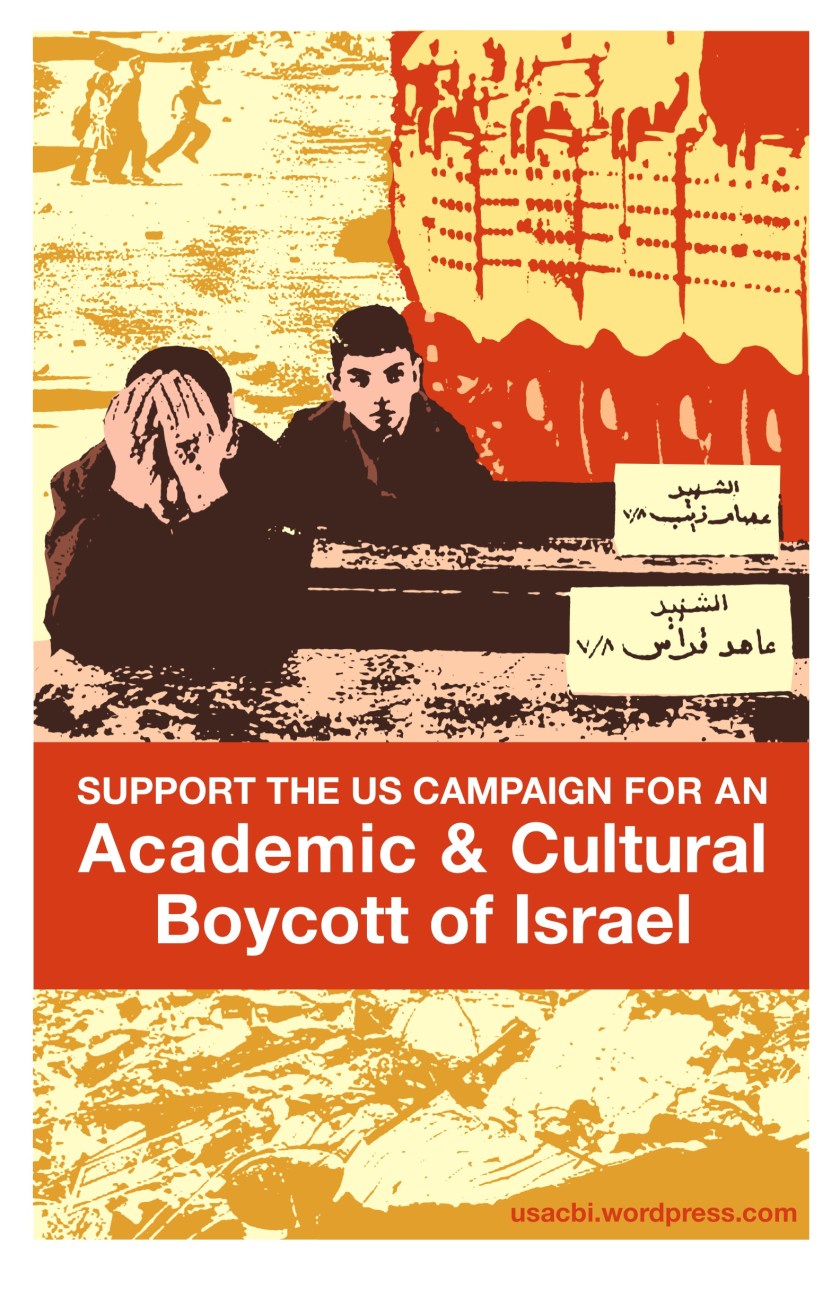
USACBI Statement on 1 Year Anniversary of ‘Operation Cast Lead’

December 27, 2009 marks the one-year anniversary of the beginning of ‘Operation Cast Lead,’ Israel’s 22-day assault on the captive population of Gaza, which killed 1400 people, one third of them children, and injured more than 5300.  During this war on an impoverished, mostly refugee population, Israel targeted civilians, using internationally proscribed white phosphorous bombs, deprived them of power, water and other essentials, and sought to destroy the infrastructure of Palestinian civil society, including hospitals, administrative buildings and UN facilities.  It targeted with peculiar consistency educational institutions of all kinds: the Islamic University of Gaza, the Ministry of Education, the American International School, at least ten UNRWA schools, one of which was sheltering internally displaced Palestinian civilians with nowhere to flee, and tens of other schools and educational facilities. 

While world leaders have tragically failed to come to Gaza’s help, civilians everywhere are rallying to show their solidarity with the Palestinian people, with anniversary vigils taking place this week in New York, Washington DC, Seattle, Portland, San Francisco, Boston, Los Angeles, and many more cities and towns in the US and world-wide.

Continue reading “USACBI Statement on 1 Year Anniversary of ‘Operation Cast Lead’”

In the Guardian, Palestinians ‘Claim’ While Israelis ‘Count’

Halim writes in over the Guardian’s blatantly biased language in its coverage a week ago:
It is the second time in 2 days that the UK Guardian and its correspondent Ian Black have repeated the same claim without proof.  They say:

“Palestinians claim 1,400 were killed, mostly civilians; Israel counted 1,166 dead, the majority of them combatants.”

“Palestinians claim 1,400 people, mostly civilians, were killed in the three-week offensive. Israel counted 1,166 dead, the majority combatants. Israel insists it acted in self-defence against Hamas rocket attacks from Gaza.”

How can it be that the Palestinians only claim but Israel counts? Where is the proof of this “counting”? Please EMAIL ian.black@guardian.co.uk and ian.cobain@guardian.co.uk and ask them this.

Note: Ian Black’s son reportedly serves in the Israeli military. Readers might want to ask Guardian editors if this is true, and if it does not constitute a conflict of interest.

Continue reading “In the Guardian, Palestinians ‘Claim’ While Israelis ‘Count’”

Long Live Gaza: Remembering one year since the massacre

This is what the Only Democracy in the Middle East Looks Like

This Friday, International Human Rights Day was marked for the first time in Israel. In Tel-Aviv, some 5000 people marched in a general human-rights march. It was a quiet event that was covered very favorably and widely by the press. What wasn’t being covered by the press? The second March to Sheikh Jarrah, which ended up with 24 arrests and one demonstrator in the hospital.

Putting Sheik Jarrah in Context
In 1875- Ottoman times- the Committee of the Sephardic Ethnic Group bought these lands. There was a small Jewish community living there until they gradually started fleeing, during the violence, in the area, during the 1920’s and 30’s and up until 1948. From 1948 to 1967, the land was under Jordanian control. At that time, 28 Palestinian refugee families were given lodging on this land by the Jordanian government, under the condition that they give up their UNRWA benefits and pay symbolic rent, for three years, by which time the houses will be passed under their names. The last part never happened.

Continue reading “This is what the Only Democracy in the Middle East Looks Like”

Utopia as Alibi: Said, Barenboim and the Divan Orchestra

by Raymond Deane

As a classical musician involved in pro-Palestinian activism, I frequently encounter the assumption that I am an unconditional admirer of the West-Eastern Divan Orchestra (WEDO). My reservations on this score tend to produce shocked disapproval: How could I not enthuse about such an idealistic project, particularly since it was co-founded by the late Edward Said, a figure for whom I have frequently expressed respect and admiration?

In truth, I have always been a little wary of Said’s veneration for the eighteenth/nineteenth century canon of European classical music. I look in vain in his writings on the subject[1] for a historical and political contextualisation of music comparable of that to which he so perceptively subjected literature in his indispensable Culture and Imperialism.[2]

In his 2002 speech accepting the Principe de Asturias Prize, Said claimed that he and his friend the Israeli pianist and conductor Daniel Barenboim founded the WEDO “for humanistic rather than political reasons”. This surprising dualism implies that music belongs to a utopian sphere somehow removed from the dialectical hurly-burly of hegemony and resistance.

The paradoxes of Said’s position have been ably dissected by the British musicologist Rachel Beckles Willson.[3] She quotes her colleague Ben Etherington’s critique of Said’s tendency “to assert the intrinsic value of Western elite music without really exploring how that tradition escapes mediation.” Paraphrasing Said’s critique of literary scholars in his Humanism and Democratic Criticism[4] she convincingly claims that he “omitted to make ‘a radical examination of the ideology of the [musical performance] field itself.’” (Willson’s chain brackets).

Continue reading “Utopia as Alibi: Said, Barenboim and the Divan Orchestra”

Five Books on Israel-Palestine

The interview below was published in the Five Books section of The Browser. I chose five books on the Israel-Palestine conflict.

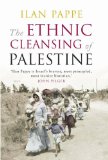
Tell me about the Ilan Pappe book, The Ethnic Cleansing of Palestine.

Pappe has written a great historical work on the ethnic cleansing of Palestine in 1947/8 and he shows that it was organised and planned, called Plan D, or plan Dalit, and he has exploded the myths that were current until his work.

What myths?

Well, for example, that the Arab leaders told the Palestinians to leave, or that the Palestinians were Bedouin people who didn’t really live there anyway, and he showed that they were ordinary people in brick and mortar homes who were intentionally forced out. This is very important because the ethnic cleansing of Palestine is the original sin of Zionism and the root of the current problem.

Continue reading “Five Books on Israel-Palestine”

What the US Elite Really Thinks About Israel

Senator William Fulbright had first called the US Congress an Israeli Occupied Territory

Our friend Jeffrey Blankfort on the surprising results of CFR survey — surprising, to the extent that it goes against the lefitst conventional wisdom which has accorded Israel the status of a ‘strategic asset’; much less so, however, when it comes to revealing the level ignorance about the situation in Pakistan. For background, also see Blankfort’s rejoinder to Joseph Massad’s fatuous attack on John Mearsheimer and Stephen Walt.

The Council on Foreign Relations is always near the top of the Left’s list of bogeymen that stand accused of pulling the strings of US foreign policy. It is right up there with the Bilderberg Group and the Trilateral Commission, right? Wrong. If that was the case,  those arguing that US support for Israel is based on it being a “strategic asset”  will have a hard time explaining a Pew Research Center survey on America’s Place in the World, taken of 642 CFR members between October 2 and November 16. The Pew poll  not only reveals that the overwhelming majority, two-thirds of the members of this elite foreign policy institution, believes that the United States has gone overboard in favoring Israel, it doesn’t consider Israel to have have much importance to the US in the first place.

Continue reading “What the US Elite Really Thinks About Israel”

The Interview Ha’aretz Doesn’t Want You To See

Ali Abunimah

Rehaviya Berman conducted an interview with Ali Abunimah, for Ha’aretz, a few weeks ago. The Interview was never published. Berman decided to publish it on his blog [Hebrew] and I decided to translate it, for your reading pleasure:

Exclusive: One On One with the Leader of the Electronic Intifada

Rehaviya Berman

Meet Ali Abunimah, the son of a Jordanian diplomat, a Palestinian activist, and the man who brings the hottest news of the struggle to thousands of people. His message: Forget two states, one will be tough enough to get it right.

The Interview before you was commissioned by one of the the big newspapers. For a reason that has yet to be clarified, this paper decided not to publish the interview. It’s published here, because it’s the opinion of the editor that it’s important that this be read by the Israeli public.

“First of all, it’s important for me to clarify that I’m not a leader, and I’m not interested in being a leader.” Continue reading “The Interview Ha’aretz Doesn’t Want You To See”

Militarism, Genderphobia and Beer

Israeli commercials have proved to be the height of militarism and insensitivity in the past, today we revisit gay ole’ Israel, and debunk Hasbara, yet again.

McCann Erickson Does it Again!

McCann Erickson probably has one of the most amazing records of militarizing civil society. The good people who brought you the Army Strong campaign now bring you a beer commercial. How is beer military? Soldiers aren’t allowed to drink- it’s a punishable offense. In Israel, the majority of the population have been soldiers, and the majority of men and some women are in the reserves until the age of 45 (39 for women). Since you’re going to have civilians in your corps, you have to keep them motivated (translation below the Video):

Continue reading “Militarism, Genderphobia and Beer”

Bay Area Premier of “My Name is Rachel Corrie”

by Charlotte Silver

On November 19, 2009, My Name is Rachel Corrie made its Bay Area premier at Stanford University.  Amanda Gelender, senior at Stanford University, produced a staged reading of the play as a part of her senior thesis at Stanford University. Amanda is my friend. She was also my college classmate and we worked together in several campus political organizations, including the student-led Israel divestment campaign.

I attended opening night and along with a sold-out audience was struck by the poignancy of the play and Amanda’s subtle and deeply moving performance. Rachel Corrie was a 23 year-old American woman who traveled to Gaza in 2003 during the Second Intifada. She was killed by a Caterpillar bulldozer driven by Israeli Defense Forces as she attempted to prevent the IDF from demolishing the home of a Palestinian family. My Name is Rachel Corrie consists entirely of words written by Corrie herself, recorded in diary entries and emails from Rachel’s early childhood until a few days before her death. Gelender breathes vivid life into Rachel’s words, which themselves reveal the keen sensitivity and eloquence of a poetic nature.

Amanda Gelender, the lead and visionary behind this production, had been waiting to obtain the rights for the play for nearly two years. But obtaining rights is not always the only hurdle to securing a production of Rachel. Since its London premier in 2005, several professional American and Canadian theaters have seen their efforts to mount a production of this one-woman show quashed by vigorous opposition from powerful forces.  The charge is always the same: the play is anti-Semitic. Gelender’s successful production reflects the changing tide that is occurring within the American public’s relationship to Israel and anti-Semitism.

Continue reading “Bay Area Premier of “My Name is Rachel Corrie””