“Diplomatic Immunity” or Murder with Impunity? And Who’s a Diplomat Anyway?

triple murders, a suicide, and the unraveling of a spy and a covert war…

by Huma Dar

On Thursday, 27th of January, 2011, while the world was busy watching — or ignoring, as the case might be — the inspiring Egyptian Revolution, in broad daylight, in a very busy part of Lahore (Pakistan), in front of hundreds of eye-witnesses, American contractor, Raymond Davis, murders two or by some accounts even three people: Muhammad Faheem (aka Faheem Shamshad?) (age 26), Faizan Haider (age 22), and Ibad-ur-Rehman.  Davis shoots the former two, who had allegedly threatened to rob him, from within his locked car, with seven bullets — each bullet expertly and fatally finding its mark.  The windshield shows the piercing trajectory of the fatal bullets, but otherwise remains miraculously unshattered.  Davis, then, emerges calmly from his well-equipped car (see descriptions below), shoots Faizan from the back while Faizan was running away (how “dangerous” is that?! does the excuse of “self-defence” hold when one of the victims was running away?), takes photographs and videos of both his victims with his cellphone, gets back into his car, and drives off unruffled, to flee the scene.  Faizan Haider was still alive — he expired later in the hospital.  What an act of “responsibility” from a “diplomat” of the self-ascribed global policeman!

Continue reading ““Diplomatic Immunity” or Murder with Impunity? And Who’s a Diplomat Anyway?”
Thus Alone, and Always, Have People Resisted Tyranny: Remembering Faiz on his Birth Centenary

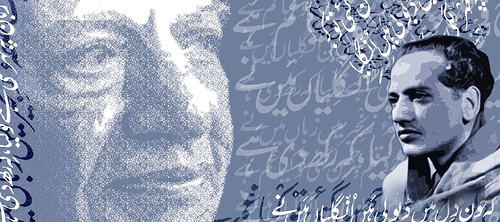
Today is the first birth centenary of Faiz Ahmed Faiz: one of South Asia’s most beloved radical Urdu poets. Today is also, just two days after Mubarak’s resignation as a result of the inspiring revolution in Umm al-Duniya, Mother of the World, Egypt; and almost a month after Tunisia’s courageous revolution. How ecstatic would Faiz have been today?!

by Huma Dar

Today is the first birth centenary of Faiz Ahmed Faiz: one of South Asia’s most beloved radical Urdu poets.  Today is also, just two days after Mubarak’s resignation as a result of the inspiring revolution in Umm al-Duniya, Mother of the World, Egypt; and almost a month after Tunisia’s courageous revolution.  How ecstatic would Faiz have been today?!  Faiz, who had lived in Beirut, in exile from Pakistan — when ruled by the US-bolstered military dictator, General Zia-ul Haq.  Faiz, who wrote a beautiful lullaby for a Palestinian child, and a poem for those who were martyred outside their beloved Palestine.  Faiz, whose poem commonly mis-titled, “Ham Dekhenge,” is a battle-song for people fighting for social justice from Sindh, Pakistan to Kashmir to Chhattisgarh, India.

The title of this particular poem of Faiz is in Arabic: “Wa Yabqaa Wajhu Rabbika.”  It is most often brushed aside as it does not fit the simplistic profile of the “avowed atheist” assigned to Faiz.  Being a socialist does not preclude belief in Islam, but this nuance is lost on many who cannot easily imagine Faiz being a Muslim, leave alone leading a prayer in the mosque of his ancestral village, especially given the subtle Islamophobia that pervades élite political and literary discourses, both within and without South Asia.  For some, even more difficult “to reconcile [is] the glowing tribute [that Faiz wrote] to Muhammad Ali Jinnah,” but this has to do with the rigorous demonology of Jinnah, the founder of Pakistan, in Indian historiography, and the hegemonic status of India and Indian academics, even those who vigorously critique nationalisms of all kinds, within South Asian Studies.

Continue reading “Thus Alone, and Always, Have People Resisted Tyranny: Remembering Faiz on his Birth Centenary”

Pakistan: A Deficit of Dignity

M. Shahid Alam

Pakistan’s rulers and ruling elites may well be thinking that the wave of people’s indignation that started in Tunisia and is now working its way through Egypt, Jordan and Yemen will never reach them. Perhaps, they are telling each other, ‘We are safe: we are a democracy.’

The Arabs who are pouring into the streets of Tunisia, Egypt, Jordan and Yemen are not protesting only against their dictatorships. Simultaneously, they are also protesting against governments that have sold their dignity and bartered the honor of their country. Nearly, all the Arab rulers are self-castrated eunuchs in the courts of foreign powers, who have turned their own countries into police states, and who jail, maim, torture and kill their own people to please their masters.

The Arabs are venting their anger against elites who have stymied their energies by turning their societies into prisons. In complicity with foreign powers, these elites have ruled by fear, blocking the forward movement of their people because this movement collides with the imperialist ambitions of Israel and the United States.

It is true that Pakistan has had ‘elected’ governments alternating with military dictatorships. Increasingly, however, these governments, whether civilian or military, have differed little from each other. The priority for both is to keep their power and US-doled perks by doing the bidding of the United States and Israel.

Starting in the early 1990s, Pakistan hurriedly embraced the neoliberal paradigm that emanated from Washington. Hastily, successive ministers of finance and privatization – all of them IMF appointees – went about dismantling Pakistan’s industries, selling off for a song its state-owned enterprises, and empowering Pakistan’s elites to engage in unchecked consumerism.

Continue reading “Pakistan: A Deficit of Dignity”

Obama 2.0

Marwan Bishara brings another episode of Empire with Ralph Nader, As’ad Abukhalil, Roger Hodge, and Stefan Halper.

Two years after an historic victory that saw the first African-American elected president of the US, Barack Obama has come under pressure. Empire discusses the failures and successes of Barack Obama’s presidency.

People Power in the Middle East

M. Shahid Alam

From his weekly perch at CNN, Fareed Zakaria, speculated last Sunday (or the Sunday before) whether George Bush could take credit for the events that were unfolding in Tunisia, whether this was the late fruit of the neoconservative project to bring ‘democracy’ to the Middle East.

It is quite extraordinary watching Zakaria – a Muslim born and raised in India, and scion of a leading political family – mimic with such facility the language of America’s ruling classes, and show scarce a trace of empathy for the world’s oppressed, despite his propinquity to them by reason of history and geography. He does have a bias for India, but here too he only shows a concern for India’s strategic interests, not the interests of its subjugated classes, minorities and ethnicities. This I offer only as an aside about how easy it is for members of the upper classes in countries like India, Pakistan or Egypt to slip into an American skin whenever that dissimulation offers greater personal advantages.

As a cover for deepening US control over the Middle East – here is the latest civilizing mission for you – the neoconservatives in the Bush administration argued that the Islamic world produces ‘terrorists’ because it lives under autocracies. To solve the ‘terrorist’ problem, therefore, the US would have to bring democracy to the Middle East. This demagoguery only reveals the bankruptcy of America’s political class. It is a shame when the President of the United States and his neoconservative puppet-masters peddle such absurdities without being greeted by squeals of laughter – and shouted down as hypocritical, as farcical.

Who has been the leading ally and sponsor these past decades of nearly all the despotisms in the Middle East – those of royal pedigree and others seeking to become royalties?

Regardless, the real plan of United States failed miserably. It was dispatched to its grave by a people’s resistance in Iraq, Afghanistan and Pakistan.

Continue reading “People Power in the Middle East”

Is Pakistan’s ‘Monkey Show’ Coming Apart?

M. Shahid Alam

For too long now, the government of Pakistan – at its highest levels – has looked like a monkey show staged by the United States of America.

The USA picks the mercenaries from Pakistan’s wealthy and corrupt elites who are eager to play the part of the monkey. Once in office, they act upon cues that are called by the US plenipotentiary in Islamabad or elsewhere. The monkey master says, Give us transit rights; the monkey obliges. He says, Join our war against Afghanistan; the monkey obliges again. He says, We will bomb your people, you take the blame; the monkey obliges again. The monkey never disappoints.

All that the monkey master has to do to keep this monkey show going is to toss a few peanuts to the monkeys in the show for every act well-performed.

Of course, in order to try to fool the Pakistanis, the monkey master complains periodically that the monkey is not “doing enough.” The monkey replies that the master is not “giving enough” – peanuts, that is.

How long is this monkey show going to go on?

How long will Pakistanis stand for this humiliation?

Continue reading “Is Pakistan’s ‘Monkey Show’ Coming Apart?”

A Case of Exploding Absurdities

Christopher Lydon of the excellent Radio Open Source interviews Mohammed Hanif, the acclaimed author of A Case of Exploding Mangoes on the wars in Afghanistan and Pakistan, the murder of Salman Taseer and the sociology of extremism.

Salman Taseer Remembered

by Tariq Ali

Mumtaz Hussain Qadri smiled as he surrendered to his colleagues after shooting Salman Taseer, the governor of the Punjab, dead. Many in Pakistan seemed to support his actions; others wondered how he’d managed to get a job as a state bodyguard in the carefully screened Elite Force. Geo TV, the country’s most popular channel, reported, and the report has since been confirmed, that ‘Qadri had been kicked out of Special Branch after being declared a security risk,’ that he ‘had requested that he not be fired on but arrested alive if he managed to kill Taseer’ and that ‘many in Elite Force knew of his plans to kill Salman Taseer.’

Qadri is on his way to becoming a national hero. On his first appearance in court, he was showered with flowers by admiring Islamabad lawyers who have offered to defend him free of charge. On his way back to prison, the police allowed him to address his supporters and wave to the TV cameras. The funeral of his victim was sparsely attended: a couple of thousand mourners at most. A frightened President Zardari and numerous other politicians didn’t show up. A group of mullahs had declared that anyone attending the funeral would be regarded as guilty of blasphemy. No mullah (that includes those on the state payroll) was prepared to lead the funeral prayers. The federal minister for the interior, Rehman Malik, a creature of Zardari’s, has declared that anyone trying to tamper with or amend the blasphemy laws will be dealt with severely. In the New York Times version he said he would shoot any blasphemer himself.

Taseer’s spirited defence of Asiya Bibi, a 45-year-old Punjabi Christian peasant, falsely charged with blasphemy after an argument with two women who accused her of polluting their water by drinking out of the same receptacle, provoked an angry response from religious groups. Many in his own party felt that Taseer’s initiative was mistimed, but in Pakistan the time is never right for such campaigns. Bibi had already spent 18 months in jail. Her plight had been highlighted by the media, women had taken to the streets to defend her and Taseer and another senior politician from the Pakistan Peoples Party, Sherry Rehman, had demanded amendments to the blasphemy laws. Thirty-eight other women have been imprisoned under the same law in recent years and soon after a friendly meeting between Yousaf Gillani, the prime minister, and the leader of the supposedly moderate Jamaat-e-Islami, a member of the latter offered a reward of ten thousand dollars to whoever manages to kill Bibi.

Continue reading “Salman Taseer Remembered”

Taliban can fight forever

Rahimullah Yusufzai: Negotiations must take place now, Taliban fighting for religion and country, can fight forever

Pakistan: Between Drones and Deus

Yesterday I appeared on Dori Smith’s excellent Talk Nation Radio, which runs on Pacifica, to discuss the situation in Pakistan. Among other things I discussed the devastation wrought by the US drone war, the folly of seeking military solutions for political problems, the deteriorating situation in Afghanistan, and the murder of Salman Taseer.

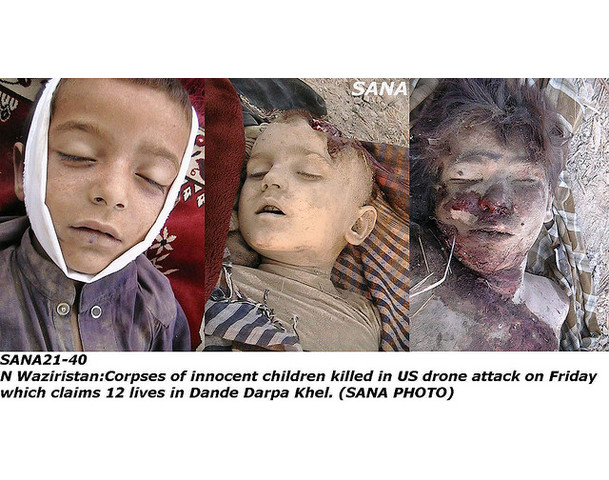
To date there have been 215 drone attacks, including 3 on 1 January 2011 in North Waziristan which killed 19 people. In 2010, there were 116 strikes, over twice as many as in 2009. The total deaths from the drones number over two thousand. According to reports in  The News and Dawn about 98 percent of the victims are civilians, a figure confirmed by David Kilcullen, the former senior advisor on counterinsurgency to Gen. David Petraeus. According to the Brookings Institution the drones kill at a ratio of  1 militant for every 10 civilians. According to Frontier Constabulary men I spoke to last year, the drones once in a while do get their targets but their victims are largely civilians.

Continue reading “Pakistan: Between Drones and Deus”