Author, journalist, film maker John Pilger speaks at Socialism 2009 http://www.socialistworker.org; http://www.haymarketbooks.org Filmed by Paul Hubbard at the Womens Building in San Francisco 4 July 2009.
Category: Palestine
What Hamas Should Do
I wrote this in March 2008, before the most recent Gaza massacre, and also before the deployment of ‘morality patrols’ in Gaza. Whilst these patrols have no official authority and have usually (but not always) dispensed their advice politely, they still give off the unpleasant whiff of Saudi Arabia, and seem at best like a diversion from more pressing problems. I support Hamas unconditionally in its resistance to Zionism (and now to Wahhabi-nihilism too), but unconditional support does not need to be uncritical.
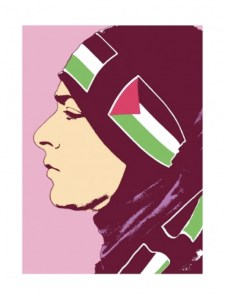 I’ve written a great deal about Israel’s crimes. Here I’ll write about what Hamas should do. I won’t criticise its choice to resist, which I see as entirely legitimate so long as there is no real peace process, and I won’t discuss its evolving methods of resistance, because I don’t think that’s my business or area of expertise. I won’t criticise the so-called ‘coup’ in which it took sole power in Gaza, because it is now common knowledge that it did this to pre-empt an American-Israeli-Dahlan coup against its democratically-elected government, and to restore some kind of order in the territory. And I’m not writing this in an attempt to be ‘objective’ or ‘balanced’; when faced by obvious injustice I see no point in equating the occupier and ethnic cleanser with the occupied and the refugees. I offer the following criticisms as advice, in the hope that it will help the resistance meet its goals.
Mahmoud Darwish’s Passing
 A year ago, the great Palestinian poet Mahmoud Darwish passed away. At the time, I wrote this obituary for 3QuarksDaily.com and thought I would share today with PULSE readers.
It is impossible for me to express what I feel about the passing of Mahmoud Darwish. Like many Palestinians, I had grown up reading his poetry in order to express how I feel about whatever significant events happen to Palestinians. I turned to his writings to understand the periods of Palestine’s history that happened before I was born. If ever anyone in history deserved the title of a Poet Laureate, it was indeed Darwish, who spoke the mind of his people in a way I doubt anyone has ever been able to do for any other people. Today, I wake up missing my voice. The real travesty of Darwish’s death is that it revealed to me that he is no longer there to eloquently express to me how I feel about such travesties.
An often underemphasized aspect of Darwish’s life is how he truly lived every single episode of modern Palestinian history, and lived in all the significant locations and periods of Palestinian life. He was born in 1942 in Al-Birweh, Galilee, before the Zionist ethnic cleansing of Palestine that made him a refugee in Lebanon in 1948. His father decided to return his family to Palestine in 1949, risking murder by Zionist militias that had murdered countless Palestinians who attempted to “escape home”. Somehow, Darwish succeeded in returning, and thus lived the years of his youth as a second-class Israeli citizen. He would then leave to study in the Soviet Union in the early 1970’s, joining the growing Palestinian Diaspora in Europe. His political activism lead to Israel stripping him of his second-class citizenship, and thus returned him to the ranks of Palestinian refugees and the Diaspora. He would then live in Egypt, Jordan and Lebanon, getting to savor the experience of the homeless Palestinians wandering across the Arab World.
Free Palestine- Free Yourself
I’ve probably told this story — orally — hundreds of times in the past nine months. It’s a story I find fascinating, and I ask it of every Israeli I meet: How did you become a dissident?
A Zionist Upbringing
I was born and raised in Israel. A daughter to “Atheist Jews”, secular Zionists, white collar, upper middle class, capitalists, Neo-Liberals, who “built this country”. I’ve had many internal struggles with these values and identity labels. Always self aware, at some point I decided to just accept that I will never be in the mainstream, and to accept the “rebel without a cause” label I’ve been given by my family.
Through the Zionist thicket of my own family’s education, school, and the Israeli media, I found myself rootless, alone, but most of all numb. It seems to me that the biggest achievement of Zionist propaganda is to make the majority of Israelis numb and confused. I would despise school (which I often described as “oppressive”), my army service (“jail with better visiting conditions”), and national ceremony (“disgusting solidarity”).
Untermenschen
 This is Jana Hannoun. I met her after a Palestine Literature Festival event at the British Council in occupied east Jerusalem. We were at the British Council because our original venue, the Palestine National Theatre, had been closed down by the Israeli occupiers. The British Council is just down the road from the Sheikh Jarrah neighbourhood, where Jana lived, and which Israel wants to Judaize.
At five o clock in the morning on August 2nd, the Hannoun and al-Ghawe families were physically thrown out of their homes by Zionist troops. 53 people, including 19 children, were made homeless, and their toys and clothes were strewn in the street. They were made homeless because they are members of the wrong ethnic group – because they are Arabs, the natives of Palestine, and not invading Jews. Their homes were immediately occupied by foreign settlers.
This, of course, is fascism. Because of a myth of national origin (and it is a myth – the vast majority of Jews originate from eastern Europe and north Africa, not from Palestine, not even two thousand years ago), the Canaanite-Arab Palestinians are designated untermenschen to be driven out. The Sheikh Jarrah families have experienced this before, as they are refugees from Haifa and west Jerusalem, ethnically cleansed by Zionist terrorist militias in 1948. The UN built homes for them in east Jerusalem after 1948, and that half of the city fell too in 1967. In this report, Jana is interviewed. More videos of the theft can be viewed here.
An Unholy Alliance

I always talk about Israeli pacifists and their inability to see the barriers they place on the Palestinian road to justice, dignity, and human rights. Today I’d like to talk about a much more appalling occurrence; Amnesty International supporting Leonard Cohen’s breach of the boycott of Israel.
The Leonard Cohen Myth
Personally, it’s hard for me to understand the disillusionment of pro-Palestinian Leonard Cohen fans. In the history of his involvement with Israel, Cohen has always sided with Israel, or made statements of officially taking no sides, when his side was rather obvious:
I don’t want to speak of wars or sides … Personal process is one thing, it’s blood, it’s the identification one feels with their roots and their origins. The militarism I practice as a person and a writer is another thing. … I don’t wish to speak about war.
In case I’m misconstruing my information, I’ll repeat the quote I’ve embedded on my front page and have, personally, had no choice but to live by:
If you are neutral in situations of injustice, you have chosen the side of the oppressor. (Desmund Tutu)
Resigning from Cohen and Amnesty

Renowned Irish composer and novelist Raymond Deane on the reasons why he has chosen to resign from Amnesty International. We encourage readers to follow Deane’s example.
When I first – and belatedly – began fretting about human rights and political injustice in the wake of the 1990-91 Gulf War, I joined Amnesty International and started writing letters and cards to political prisoners and to a variety of Embassies.
Although I was subsequently drawn deeply into activism of a more explicitly political nature – particularly on the Israel/Palestine issue – I retained my Amnesty membership out of residual respect for the organisation, but also because I wished to be in a position to say “as an Amnesty member myself, I completely disagree with the organisation’s stance on…” (fill in the dots as appropriate).
Obscenity
This is, more or less, a selection from posts I made during the Gaza massacre.
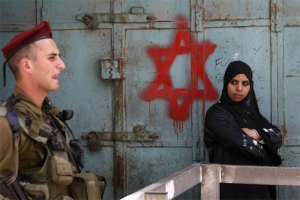 According to the dictionary, obscenity is what is offensive or repulsive to the senses, or indecent in behaviour, expression or appearance.
From Palestine come pictures on the internet, and on al-Jazeera – burning half bodies, a head and torso screaming, corpses spilt in a marketplace like unruly apples, all the tens and hundreds of infants and children turned to outraged dust. A little more out of focus, but concrete, there is the obscenity of starved refugees and cratered farmland, of shriek-soaked hospital walls and babies born at checkpoints. Still further behind these instances, these symptoms, looms the brute and perpetual obscenity of the ancient Canaanite-Arab Palestinian people having been driven from their land into camps and walled ghettoes, where they have been repeatedly massacred. All of this is offensive, repulsive and indecent. The Western media, not wishing to offend our senses, keeps the obscenity quiet. Better put, they cloak the obscenity with the greater obscenity of untruth, of dreaming a pleasant version while people bleed and die.
This should concern everybody, and first of all writers and readers. For the prime obscenity for us here, away from the immediate death and panic, is the language we use to hide the reality of what’s happening. We use magical terms. This is how it goes:
All roads lead to Palfest
An edited version of this article was published in The National.
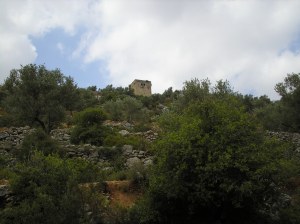 We entered Palestine from Jordan, across the Allenby Bridge and over the trickle which is what’s left of the diverted, overused, and drought-struck river. The Dead Sea glittered in the hollow to our left. Jericho, the world’s oldest city, shimmered through heat haze to our right. The site where Jesus was baptised was a stone’s throw away. Palestine is most definitely part of bilad ash-Sham, in the same cultural zone as Syria, Lebanon and Jordan, but it is also most definitely like nowhere else on the planet. Suddenly the superlatives were coming thick and fast.
Palestine feels as large as a continent – but one that’s been crushed and folded to fit into the narrow strip of fertile land between the river and the sea. The Jordan Valley depression is the lowest point on earth, part of the Rift Valley which stretches from east Africa, and it’s as hot as the Gulf. But only a few miles up from the yellowed, cratered desert into the green hills before Jerusalem, and the weather is very different. As we left our performance in Ramallah a couple of nights later, gusts of fog blew in on an icy wind. If a Palestinian in the West Bank manages to find an unoccupied hilltop – which isn’t at all easy – he can look all the way to the forbidden Mediterranean, and perhaps he’ll pick out the fields of his ancestral village.
Conversations with History: Amira Hass
Harry Kreisler interview with the brilliant Amira Hass:
 P U L S E