A short documentary on the Assad regime’s mass torture campaign.
Category: Uncategorized
Christmas in Saraqeb
Christmas in Saraqeb, Idlib provence, Syria. Happy Christmas everyone, and especially to Syrian Christians. May we all celebrate next year in freedom and peace.
Birthday in Hebron
By Shadab Zeest Hashmi
12.12.12

Stairs vanish before bloodstains come
Before the bullet
or the boot on the dead boy’s shin
he has long been taken
by ghosts passing in lockstep Continue reading “Birthday in Hebron”
Drone Survivors Speak
Martin Bashir interviews family of drone strike survivors
Here is the deceased’s grand daughter Nabila talking about the murder:
On October 24, 2012, a drone strike hit and killed Rafiq ur Rehman’s mother who was tending vegetables in the garden.
For the first time ever, on October 29, 2013, Rafiq ur Rehman, along with his two children, will testify before Congress and share their story with the American public in a briefing called by Representative Alan Grayson (FL-09).
RSVP NOW to witness this historic event: http://unmanned.warcosts.com/unmanned…
On Monsterphilia and Assad
My latest for Guernica Magazine.

Earlier this month, the British street artist Banksy produced a video on Syria that attracted over five million viewers in three days. At a time of intensifying state repression, the target of Bansky’s satire was not the regime in Damascus but its opponents. By contrast, the most watched video from the chemical attack in August, showing a traumatized young survivor, managed only half a million hits in over a month.
Six weeks after the attacks on Ghouta that killed hundreds of civilians, regime forces have choked off food supplies to the targeted neighborhoods. Survivors of the chemical attack are now facing the threat of starvation. Children have been reduced to eating leaves; and clerics have issued fatwas allowing people to eat cats and dogs.
The belated discovery of the Syrian conflict by “anti-imperialists” after the US government threatened war inspired impassioned commentary. The strangulation of its vulnerable population has occasioned silence. But dog whistles from issue-surfing provocateurs like Banksy are unexceptional; they merit closer scrutiny when they come from respected essayists like David Bromwich.
In a recent front-page article for the London Review of Books, Bromwich identifies many rogues in the Syrian drama: Barack Obama, John Kerry, Saudi Arabia, Qatar, “the jihadists”. But conspicuously absent is Assad’s Baathist regime. Vladimir Putin is the closest Bromwich admits to a hero. The Syrian people are denied even a cameo.
The Thistle and the Drone
Excerpts from my review of Akbar Ahmed’s remarkable new book.
 In the post-9/11 paranoia, many rogues have endeavoured to portray their local adversaries as part of a global terrorist threat. Russia did it with the Chechens; China with Uighurs; Israel with Palestinians – they all claimed to be fighting a “war on terror” against the same Islamist menace that threatened America. Others have followed the template. “Painting their peripheries as associated with Al Qaeda,” writes Akbar Ahmed in his remarkable new book The Thistle and the Drone: How America’s War on Terror Became a Global War on Tribal Islam, “many countries have sought to join the terror network because of the extensive benefits that it brings. They use the rhetoric of the war on terror to both justify their oppressive policies and to ingratiate themselves with the United States and the international system”.
This failure to distinguish regional struggles from global militancy allowed many states to harness US power to settle local disputes. The conflict between a centralising, hierarchical state and a recalcitrant, egalitarian periphery is not unique to Pakistan and the Federally Administered Tribal Areas (FATA). In the multi-ethnic Orient, geography rarely corresponds with identity. Many tribal societies have been left excluded on the margins. In turn they have resisted modernisation, seeing it as the centre’s tool for expanding its authority. Some of these conflicts, as in Chechnya, have simmered for centuries. But in most places, modus vivendi were evolved guaranteeing the autonomy of tribes while upholding state sovereignty.
Ellie Goulding, I know you care
The wonderful Ellie Goulding sings a heartfelt song for Syrian children.
Donate to Save the Children’s Syria appeal now by downloading Ellie Goulding – I Know You Care #song4syria at http://bit.ly/1euLyJ3
The civil war in Syria is now in its third year. Nearly 7,000 children have died during the conflict, more than 2 million children within Syria have been forced to leave their homes and another million children have fled the country altogether. Many are traumatised, hungry, in urgent need of shelter and protection. Children are, once again, the innocent victims of war.
Save the Children is working inside Syria and neighbouring countries to ensure that Syria’s children get the food, medicines and protection they need. To donate to the Syria appeal and for more information please visithttp://www.savethechildren.org.uk/abo…
How not to argue against war

Two recent articles I’d like to bring to readers’ attention. The first is my debut article for Al Jazeera America in which I write about the misuse of the Iraq analogy:
Of the many lessons Iraq taught, only two are fundamental: one must not hype threats that don’t exist, and one must not introduce war where there is none. The former diminishes public trust; the latter creates human suffering it is supposed to prevent. Neither is applicable to Syria. The regime has shown both the capability and the willingness to deploy proscribed weapons, and Syria is already at war.
In yesterday’s frontpage article for The New Republic I write that in their justifiable concern over (the highly improbable) military intervention in Syria, some opponents of the policy (or Obama) have crossed the line into victim-blaming.
There are perfectly good arguments for opposing military intervention—and some have been made persuasively, on moral or national interest grounds. There are also good reasons to be skeptical of humanitarian conceits that might be used to justify intervention. But there is more than a fine line between skepticism and cynicism—and not even the otherwise noble concern with preventing war, or the less-noble determination to oppose a president regardless of policy, justifies excusing the Assad regime’s well-documented crimes. While war must always be an option of last resort, and it is right to be concerned about its unforeseen consequences (as long as one is mindful that inaction too has consequences), the national debate over whether to wage it in Syria is not helped by spreading ideologically driven lies.
My argument that the relevant analogy is not Iraq but Bosnia has also been echoed by Rory Stewart in what I consider the most sensible article written by a non-Syrian on the subject so far.
As regards the regime’s use of chemical weapons in last month’s massacre, those who think the jury’s still out might want to read Human Rights Watch’s detailed analysis of the regime’s culpability which was already well established by respected independent munitions experts like Eliot Higgins. As regards the regime’s motivations for using CW, check out Kim Sengupta’s stellar report on developments in Ghouta before and after the attack.
Thinking of Spring in Summer: Martyrs’ Day in Kashmir
by Huma Dar
July 13, 2013
for Naheed Shah-Sheikh
in conversation with the attached photograph by an anonymous photographer…
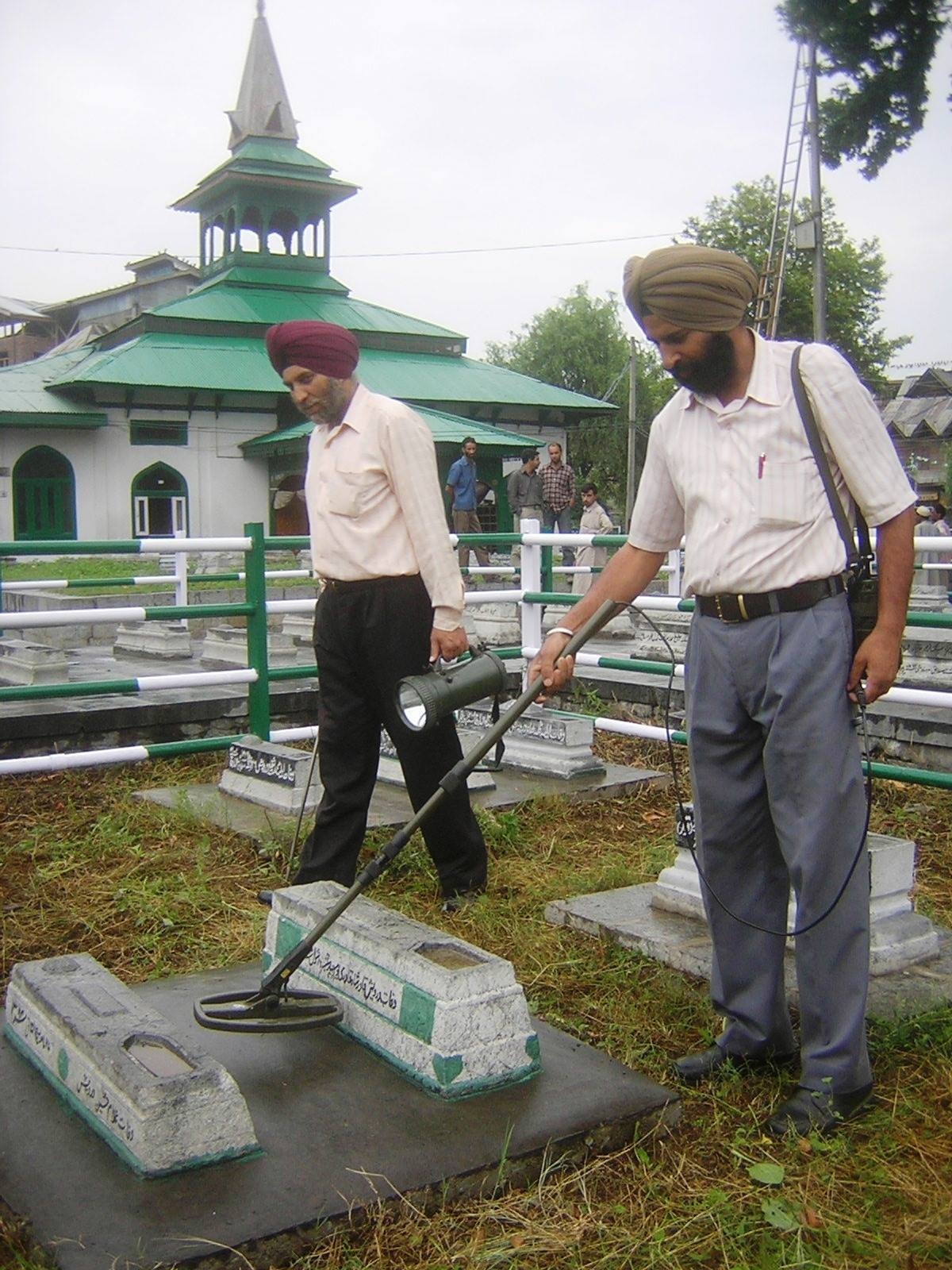
In my homeland
beloveds are planted as seeds
singly, or in mass
23, 54, 77, 131…
(each madness has its method —
each massacre its algorithm)
marked, unmarked, empty graves
or those packed like sardines
in football fields where children once played
or open meadows where people once prayed.
In my homeland
the bodies of my martyrs
even in death
are deemed seditious,
dangerous, explosive. Continue reading “Thinking of Spring in Summer: Martyrs’ Day in Kashmir”
Legitimizing A Military Occupation With Music: Zubin Mehta in Kashmir
It is most unfortunate that the German Embassy should seek to collaborate, perhaps unwittingly, with the Indian State in Kashmir, recognized as an international dispute by the United Nations and the international community, without any sensitivity to the aspirations of the people, or issues faced, or the machinations of the Indian State.
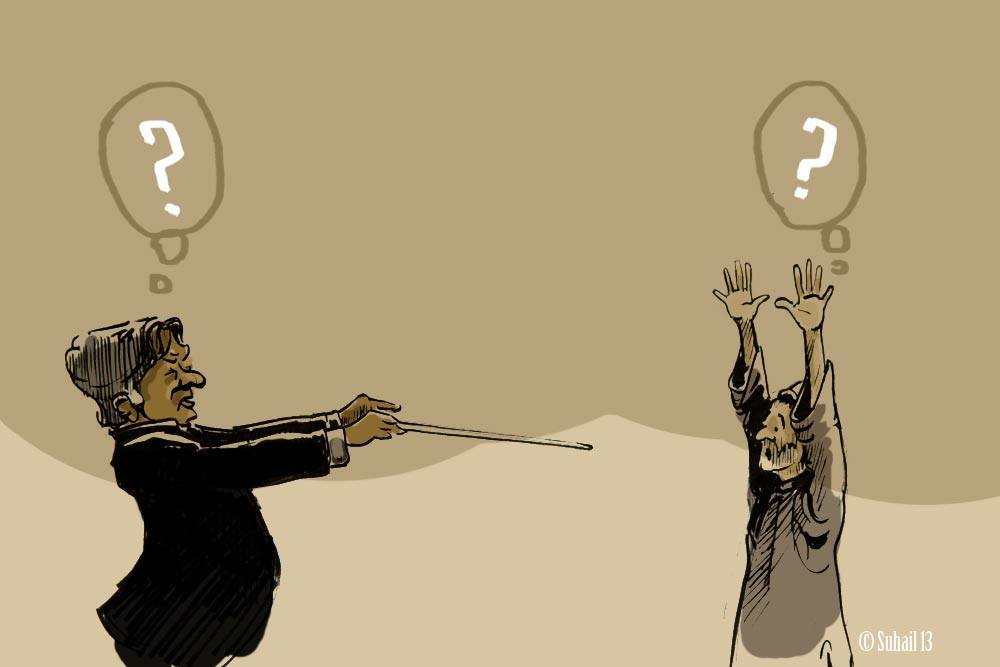
PLEASE SHARE WIDELY! Thanks!
26 August 2013
To
Ambassador Michael Steiner,
German Embassy,
New Delhi, India.
Subject: URGENT Protest Letter to German Embassy on scheduled Zubin Mehta concert in Srinagar, Jammu and Kashmir, on 7 September 2013
1. On 22 August 2013, a press release was issued by the German Embassy that Zubin Mehta would be conducting an orchestra on 7 September 2013 at Shalimar Bagh, Srinagar, Jammu and Kashmir.
2. The press release quoted you as stating that the concert was for the people of Jammu and Kashmir by way of a cultural tribute. The press release also reads that the concert was intended to give a message of hope and encouragement to the people of Jammu and Kashmir. The concert, said to be a part of a “broader engagement” is being organized by the German Embassy and supported by the “competent authorities both at Central as well as at Union State level.” The costs of the concert are covered by “benevolent sponsors mainly from the business world in India and Germany, as well as “Incredible India” and the German Foreign Office”.
3. The people of Jammu and Kashmir take immense pride in our rich history of resisting oppression. We also have historically cultivated a sublime tradition in, and love for, music. Music – which appeals to the higher truths of love, justice, dignity, and peace; which genuinely acknowledges the long suffering, and yet bravely resisting, Kashmiris; and which is performed for the actual public – is wholeheartedly welcomed. However, legitimizing an occupation via a musical concert is completely unacceptable. Art as propaganda, as abundantly documented, was put to horrific use in Nazi Germany. We are sure you will understand that we cannot welcome anything even remotely analogous in Jammu and Kashmir. Sadly, the occupation will be amply reflected in the demographics of the audience of the proposed concert – the list of “invitees only” is bound to be restricted to the members of the apparatuses of the Occupying State: from perpetrators of crimes, as heinous as murder, rape, and torture, to the local collaborators of the State and perhaps some powerless, vulnerable and compliant few. Continue reading “Legitimizing A Military Occupation With Music: Zubin Mehta in Kashmir”
 P U L S E