Don’t Forget Bassem Abu Rahmeh

Today is the first year’s anniversary of Bassem Abu Rahmeh’s Death. I didn’t know Bassem, but I watched him die. It was only a few months after the Gaza massacre. Nobody cared for a dead Palestinian. Two weeks later I started going to Bil’in. I’ve been going every week ever since. I’ve met people I’ve come to care about. I’ve met Bassem’s friends, who welcome me in their home with a smile and embrace. His family, who have been shot and jailed. His fiance- a beautiful Israeli activist- whom I’ve come to love like a sister. I care about their life and I see them hurt.

Burying Bassem Abu Rahmeh
A couple weeks ago, I stumbled upon an article in the Ha’aretz website, that unsurprisingly never showed up in the English version (I’ve written before about Ha’aretz double standards, when it comes to its international audience). It was titled “The Military Attorney Won’t Investigate the Death of a Demonstrator of IDF Fire in Bil’in a Year Ago”.

Continue reading “Don’t Forget Bassem Abu Rahmeh”

Secretary Gates, Colombia, and Paying Your Client States

Another broken promise: Secretary Gates promotes US-Colombia Free Trade Agreement as a way to "reward" the Uribe government. Photo from Flickr user ZenaShots.

When asked in a Presidential debate why he opposed the US-Colombia Free Trade Agreement, Barack Obama framed his concerns with Colombia’s deplorable human rights record. Now that he is President and the labor movement is far more inconsequential, these concerns have evidently withered away. Yesterday, Secretary of Defense and Bush Administration carry-over Robert Gates was in Bogota expounding on the need to pay off America’s client state. As the Los Angeles Times reports:

Defense Department officials have favored the pact as a way to reward Colombia for its successful effort at beating back drug trafficking and the country’s insurgency…

“Colombia’s success against terrorists and narco-traffickers does offer a lot of opportunities for them to share their expertise,” Gates said. “We certainly would like to see . . . other countries take advantage of Colombia’s strengths.”

Yes, Colombia has done a smashing job of fighting people like this. Meanwhile, the United States Labor Education in the Americas Project informs us that Colombia remains the most dangerous place in the world for union organizers. More trade unionists have been assassinated in Colombia in the last six years than the rest of the world combined. As for those advances in human rights Gates mentions in the Times report, Colombia still has an impunity rate of 96% in the more than 2,700 worker’s-rights related murders that have been perpetrated in the last twenty years. Perhaps Amnesty International put it best when they reported on the threats facing human rights activists in the country: “Such hostility has been fomented by the Government, which appears to perceive human rights and security as mutually exclusive.”

The King is Out, His Name is Khan: Long Live the King (Part I)

My Name is Khan, although narratively based mostly in the USA, has to be theorized within and around the framework of Bollywood; the Urdu-Hindi film history, and its transnational circuits of production, distribution, and consumption; Shahrukh Khan’s star narrative, and the determining context of the Indian political scene along with that in the US and its “war on/of terror.”

by Huma Dar


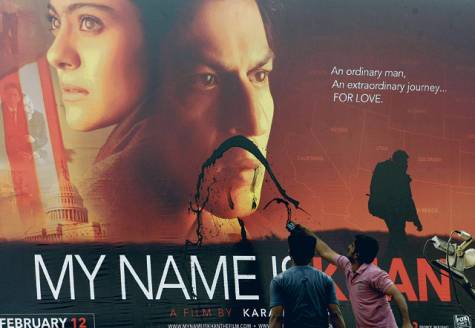
The Defacing of Khan: It's Not Easy Being Muslim in Mumbai or in Newark

My Name is Khan, although narratively based mostly in the USA, has to be understood and theorized within and around the framework of Bollywood; the Urdu-Hindi film history and its transnational circuits of production, distribution, and consumption; Shahrukh Khan’s star narrative, and the determining context of the Indian political scene along with that in the US and its “War on/of Terror.”  Even prior to the Indian Partition in 1947, most Muslim artists had what Sa’adat Hasan Manto (1912-1955) mockingly called “shuddified” or Hinduized names – Dilip Kumar for Yusuf Khan, Madhubala for Mumtaz Begum Jahan Dehlavi (1933-1969), Meena Kumari for Mahjabeen Bano (1932-1972), or the more ambivalent (non-halal) Johnny Walker for Badruddin Jamaluddin Qazi (1923-2003) and Nargis for Fatima Rashid (1929-1981).  At the contemporary moment, the biggest stars of the Urdu-Hindi film industry in India are Khans: Shahrukh, Salman, Aamir, Saif Ali et al.  It might therefore be tempting to conclude that the Bombay film industry is indeed a level playing field.  The Khans are all Muslims, at least nominally.  Cinematically, they enact, with a few notable exceptions, Hindu characters.  Culturally, the vigorous fanzines of Bollywood idolize them as comfortably suave denizens of metropolitan Bombay[Mumbai] with understated or unexpressed Muslimness — their Hindu wives, girlfriends, or mothers facilitating this imagined assimilation or passing.  Of course, for regular, non-filmi (“film-related” in Urdu-Hindi) Muslim men, this assimilation through marriage to Hindu women is generally frowned upon and can have potentially fatal consequences.

My ruminations on My Name is Khan, like a typical Urdu-Hindi film, lengthy and replete with intermissions, are an entryway into not just the film as cinematic text, but also its complex and rich transnational contexts that must be read in tandem.  In a series of six thematic posts, with this as the first, I will expand on:

(i) The (B)Onus of Muslimness in Bollywood

(ii) Shahrukh Khan and the Pound of Flesh: the Cost of Stardom

(iii) Placating the gods of Citizenship: the Ritual Sacrifice

(iv) A Suitable Boy, “Decent” People, and Names that Pass

(v) The Price of Translating a Narrative and its Context

(vi) Outing the Muslimness, Finally: Some Viewing (and Hearing) Pleasures

Continue reading “The King is Out, His Name is Khan: Long Live the King (Part I)”

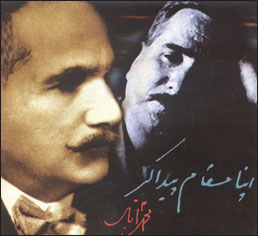
Allama Iqbal, Gabriel and Iblīs

Allama Iqbal, 1877-1938

translated by M. Shahid Alam

Note: In the Qur’anic account of man’s creation, God asks the angels to bow down to Adam; they bow down, except Iblīs. God banishes Iblīs but, granting his request, gives him the power to tempt and waylay humans except those who submit in sincerity to their Creator.

Gabriel

Old friend, how is your time spent in banishment?

Iblīs

In fire wrapped, pain-swept, surging, toiling, unbent.

Gabriel

At our heavenly summits, we often talk of you.
Should you repent, seek grace, give us the cue.

Continue reading “Allama Iqbal, Gabriel and Iblīs”

Israeli Apartheid in al-Naqab

The following is taken from an email sent out by Yeela Ranaan, from the Regional Council for the Unrecognized Villages (RCUV):

The Government of Israel is putting me on trial next week (Monday, April 19th, 11:00am in Beer Sheva): for expressing my displeasure at the brutal home demolitions in the Unrecognized Bedouin Villages. The government and its acting bodies do not want any resistance to the implementation of their racist policies, and therefore wish to scare and intimidate those who speak out…

I grew up in Arad, a town built among the Bedouin, to make sure that the Jews become the rulers of this space. It took me many years to realize that the Bedouin I saw every time I left my hometown are not part of nature, like the rocks and the wadis. It was not my education that had opened my eyes, a good Zionist education, teaching me to be part of a dream of redeeming the land. It was despite this education.

But once the blinds were lifted, it started hurting. I saw the pain in the injustice, in the ongoing feeling of my neighbors, now turned friends, of being treated as deserving less, as a bother to the natural development of our region – the Negev. Every baby born – a “demographic threat”, every time a home is built, economic stability achieved – it is seen as a menace in the only country they can call home… Continue reading “Israeli Apartheid in al-Naqab”

Propagandistic Anti-Semitism Report (Accidentally) Raises The Linkage Issue

by Max Blumenthal

The Tel Aviv University/Stephen Roth Institute’s newly released study on anti-Semitism in 2009 is getting loads of media attention. Among the many outlets that have reported its findings are the AP, CNN, and Haaretz.

“Anti-Semitic incidents Doubled Last Year,” blared the AP headline.

Sponsored by the European Jewish Congress and produced with help from researchers around the world, including the Anti-Defamation League’s Aryeh Tuchman, the report’s release was timed to coincide with Holocaust Remembrance Day. The Roth Institute’s director, Dinah Porat, who also sits on the board at the Israeli Holocaust research center, Yad Vashem, declared at a recent press conference that anti-Semitism is directly linked to anti-Zionism. This is also the conclusion of her group’s report, which focuses on the alleged connection between anti-Semitic acts and Israel’s assault on Gaza in late 2008 and early 2009.

The Roth Institute identifies the UK and France as centers of anti-Semitism, but also centers in on American targets, including the widely praised Palestinian author Ali Abunimah and the Muslim students at UC-Irvine who heckled Israeli Ambassador Michael Oren.

Continue reading “Propagandistic Anti-Semitism Report (Accidentally) Raises The Linkage Issue”

The Only Democracy in the Middle East: 09.04.2010

Haitam being kidnapped by the Israeli Army - Kfir BrigadeThis Friday’s demos were themed in respect to the Deir Yassin massacre. In Bil’in, the village committee and B’tselem photographer (who’s videos you often see here) and dear friend, Haitham Al-Khatib, was abducted near the end of the demonstration. Al-Khatib was returned home, battered and bruised, after over 24 hours in which he was unreachable.

Continue reading “The Only Democracy in the Middle East: 09.04.2010”

On Elections, Prisoner Releases, and False Positives in Colombia

Caricature of Uribe suggesting that "false positives" instead be interpreted as a method of birth control.

By Ken Kelley

As Colombians prepare to vote in presidential elections on May 30, opinion polls show former Defense Minister Juan Manuel Santos of President Alvaro Uribe’s National Unity Party (Partido de la U) with a commanding lead to replace his former boss, who was barred from seeking a third term earlier this year. A poll released by the National Consulting Center on April 8 shows Santos with 37 percent of the vote, Green Party candidate Antanas Mockus with 22 percent—surprising given the party’s formation just last year—and Conservative Party candidate Noemí Sanín with 20 percent.

To boost his campaign, Santos has pointed to government victories over the leftist Revolutionary Armed Forces of Colombia (FARC) during his tenure as Defense Minister, such as the killing of No. 2 commander Raúl Reyes during a cross-border raid into Ecuador in 2008 and the rescue from FARC captivity of former Colombian presidential candidate Ingrid Betancourt and others the same year. As for the infamous “false positives” scandal in which Colombian soldiers—on possibly thousands of different occasions—murdered innocent civilians and dressed them up as guerrillas, Santos has admitted that the Prosecutor General is currently investigating nearly 1300 such cases. He maintains, however, that “there are people who want to inflate the numbers, make the problem bigger, without taking into account how it is hurting the institutions”, something the military might have taken into account before engaging in the murder of innocents.

Continue reading “On Elections, Prisoner Releases, and False Positives in Colombia”

Ill Fares The Land

By Tony Judt

—This essay is drawn from the opening chapter of Tony Judt’s new book, Ill Fares the Land (Penguin), first excerpted at NY Review of Books. A review of the book will follow shortly.

On the left, Marxism was attractive to generations of young people if only because it offered a way to take one’s distance from the status quo. Much the same was true of classical conservatism: a well-grounded distaste for over-hasty change gave a home to those reluctant to abandon long-established routines. Today, neither left nor right can find their footing.

For thirty years students have been complaining to me that “it was easy for you”: your generation had ideals and ideas, you believed in something, you were able to change things. “We” (the children of the Eighties, the Nineties, the “Aughts”) have nothing. In many respects my students are right. It was easy for us—just as it was easy, at least in this sense, for the generations who came before us. The last time a cohort of young people expressed comparable frustration at the emptiness of their lives and the dispiriting purposelessness of their world was in the 1920s: it is not by chance that historians speak of a “lost generation.”

If young people today are at a loss, it is not for want of targets. Any conversation with students or schoolchildren will produce a startling checklist of anxieties. Indeed, the rising generation is acutely worried about the world it is to inherit. But accompanying these fears there is a general sentiment of frustration: “we” know something is wrong and there are many things we don’t like. But what can we believe in? What should we do?

Continue reading “Ill Fares The Land”

The Sudan Debate

As Sudan holds its first multi-party election since 1986, Al Jazeera’s Hassan Ibrahim hosts this one-hour roundtable discussion with Sudanese politicians from the government and leading opposition groups.