PLO: History of a Revolution

1. Masters of their Own Destiny

Masters of their own Destiny is the first episode in Al Jazeera’s six-part series on the history of the Palestine Liberation Organisation. It looks at the challenges encountered as Palestinians sought to wrest control of their own destiny from Arab regimes and create an independent Palestinian organisation that would lead the struggle for a national home.

Continue reading “PLO: History of a Revolution”

The muzzling of Israel critics in European universities

David Cronin, author of the recently released Europe’s Alliance with Israel: Aiding the Occupation, writes in his latest piece for Mondoweiss:

If imitation is the best form of flattery, then the activists behind Israeli Apartheid Week have been paid an immense tribute. As students belonging to Palestine support groups across Britain held events to mark the annual March event, they learned of a rival initiative. A network of on-campus Zionist societies have declared their own Israeli Awareness Week over the same period.

The awareness week has relied heavily on gimmicks to try and counter impressions that Israel has a war addiction. Stalls staffed by visiting Israeli students have offered sugary delights labelled “Peace of Cake”; signatures have been collected for a “we support a two-state solution” petition.

Continue reading “The muzzling of Israel critics in European universities”

United States of Israel

Sarah Palin is just the latest GOP politician to visit to Israel after a string of possible Presidential hopefuls to make a pilgrimage to the Holy Land in the past few months. Why is establishing your credentials in Tel Aviv before running for US president as vital as stumping in New Hampshire?

Will the two-state solution go the way of the defunct peace process?

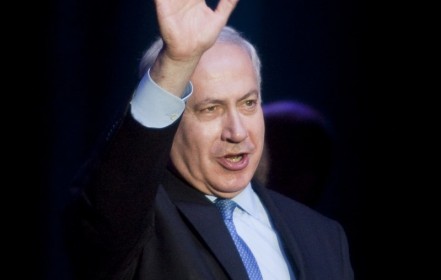
Benjamin Netanyahu (Photo: Getty Images)

by Ben White

This article first appeared in the NewStatesman.

In the last week, press reports have suggested that Israeli PM Benjamin Netanyahu is preparing to give a key speech on the peace process in the next few months, with many flagging up his planned visit to the US in May. Claims of an imminent bold proposal have been met with a good deal of scepticism, from both Palestinians and Netanyahu’s domestic political opponents. Analysts have described the talk of a new plan as a “trial balloon” and a “public relations exercise aimed first and foremost at Washington”.

Netanyahu’s new plan, should it materialise, is rumoured to be based on the “the establishment of a Palestinian state within temporary borders” as part of an “interim peace agreement with the Palestinian Authority”. Other reports have been even vaguer, claiming that Netanyahu is proposing “a phased approach to peacemaking”, but leaving it open if this includes temporary borders.

Continue reading “Will the two-state solution go the way of the defunct peace process?”

No thank you, the Arabs have their own minds

Photo from thecst.org.uk/blog

by Brenda Heard

‘With me you have a prime minister whose belief in Israel is indestructible’, David Cameron assured over a thousand supporters of a private security organisation that polices the English Jewish communities.  While his commitment has long been common knowledge, his word choice underscores the need for concern.

When we say we ‘believe in’ something, we are making a personal value judgement.  Whether we ‘believe in’ God, or we ‘believe in’ drinking five litres of water a day, the phrase means that we think the concept is valid.  The British Prime Minister’s word choice points to a political phenomenon: Israel has never been a traditional state as much as it has been an ethos.  From the beginning, the Israeli project has been an ideology imposed at the expense of those whose only fault was to have been caught unawares on a coveted land.

Indeed the whole of Cameron’s speech, which can be read here, exudes a passion for a conceptual people under siege.  Cameron thus describes his belief in the Israeli project as ‘indestructible’—defensively and defiantly ‘indestructible’.

Continue reading “No thank you, the Arabs have their own minds”

CulturEscapes and the Moral Duty of BDS Today


The neutral Switzerland is about to host a yearly Culturescapes festival. Every year the festival focuses on a different country. This year- the most successful for cultural boycott, yet- it just had to play into Desmond Tutu’s hands and focus on Israel.

A Word about Culture

Culture is a word I’ve been hearing a lot lately. Israel’s Brand Israel campaign is focusing on PR apartheid; Hiding it’s atrocities as best it can, and highlighting it’s “advantages”:

In the Ministry of Foreign Affairs, 6 niches were identified in which Israel has a relative advantage… The 6 niches through which it is planned to promote Israel, in the world, are environment (with an emphases on desert agriculture); Science and technology (medicine, internet and hi-tech); Culture and art; Human variety and tradition; lifestyle and leisure culture; Tikun Olam [=Fixing the world] (support of populations of special needs).

Continue reading “CulturEscapes and the Moral Duty of BDS Today”

Conversations with History — Richard J. Goldstone

Justice Richard J. Goldstone discusses “The Rule of Law” with Harry Kreisler on Conversations with History.

Conversations host Harry Kreisler welcomes Justice Richard J. Goldstone for a discussion of the role of law in transitions to democracy, in the prosecution of war crimes, and in the enforcement of the rules of war in the post 911 environment. Drawing on his experiences in South Africa, on his work as special prosecutor for the Bosnia and Rwanda tribunals, and for his leadership of the UN commission on the Gaza War, Justice Goldstone discusses the distinctive features of the South African transition, the ground breaking work that facilitated a breakthrough in the Bosnia conflict, and the goals and accomplishments of the commission examining the conduct of Hamas and Israel in the Gaza War. He concludes with lessons learned from his efforts to insure the rule of law.

My Journey to BDS

by Roger Waters

In 1980, a song I wrote, “Another Brick in the Wall Part 2,” was banned by the government of South Africa because it was being used by Black South African children to advocate their right to equal education. That apartheid government imposed a cultural blockade, so-to-speak, on certain songs, including mine.

Twenty-five years later, in 2005, Palestinian children participating in a West Bank festival used the song to protest Israel’s apartheid wall.  They sang “We don’t need no occupation! We don’t need no racist wall!”  At the time, I hadn’t seen first-hand what they were singing about.

A year later in 2006, I contracted to perform in Tel Aviv.

Palestinians from the movement advocating an academic and cultural boycott of Israel urged me to reconsider.  I had already spoken out against the wall, but I was unsure whether a cultural boycott was the right way to go. The Palestinian advocates of a boycott asked that I visit the occupied Palestinian territory, to see the Wall for myself before I made up my mind.  I agreed.

Continue reading “My Journey to BDS”

The revolt comes to Saudi Arabia

Riot police clash with protesters in the Gulf coast town of Awwamiya

Meaningful change in the Middle East is not possible until the malign influence of the House of Saud is lifted. For nearly eight decades it has served as a bulwark of American power in the region, and in more recent years has emerged as a key ally of Israel. When Israel was devastating Lebanon in 2006 and Gaza in 2009, the Saudi government reserved its criticism for the war’s victims. It has also tried to draw attention away from its own domestic failings by joining Israel and the US in ratcheting up propaganda against Iran. (As with pre-Jan25 Egypt, the accomodation with Zionism resulted in Iran replacing Israel as the chief bogeyman). It has yet to pay a price for the repeated betrayals of its own people and for spreading the brand of conservative, intolerant Salafist Islam that is today fragmenting societies from Beirut to Jakarta. It is time for a reckoning, and as Robert Fisk reports, the date has been set for March 11.

Saudi Arabia was yesterday drafting up to 10,000 security personnel into its north-eastern Shia Muslim provinces, clogging the highways into Dammam and other cities with busloads of troops in fear of next week’s “day of rage” by what is now called the “Hunayn Revolution”.

Saudi Arabia’s worst nightmare – the arrival of the new Arab awakening of rebellion and insurrection in the kingdom – is now casting its long shadow over the House of Saud. Provoked by the Shia majority uprising in the neighbouring Sunni-dominated island of Bahrain, where protesters are calling for the overthrow of the ruling al-Khalifa family, King Abdullah of Saudi Arabia is widely reported to have told the Bahraini authorities that if they do not crush their Shia revolt, his own forces will.

Continue reading “The revolt comes to Saudi Arabia”