Why Pakistan isn’t getting the aid it needs

by Beenish Ahmed

United Nations General Secretary Ban Ki Moon has called the recent floods in Pakistan the worst humanitarian disaster he has ever witnessed. With over 20 percent of the country under water, contagious diseases run rampant while the delivery of vital goods and services are all but halted by gushing water and broken roads.

While the 1500 projected dead in Pakistan is a minuscule sum compared to the 100,000 lives lost in the earthquake that ravaged Haiti at the onset of this year, or the 250,000 killed by the South East Asian Tsunami of 2004, exponentially more people are adversely affected by the flood. As cruel as the reality seems, the amount of aid needed cannot be measured in terms of death toll, but in terms of those who continue to live amidst the rubble of their former lives.

The plights of those who survive when all around them falls to a state of ruin is especially heart-wrenching, and tuning in to such atrocity has not come without a response of great empathy. An outpouring of donations to relief work came from all corners of the world as it watched the aftermath of hurricanes, tsunamis, earthquakes, and now a catastrophic flood. Still, with such widespread devastation hitting the globe with frightening regularity, the amount that sympathetic souls can give, especially those who are themselves hard-pressed by a recession of epic proportions is seemingly on the decline.

Continue reading “Why Pakistan isn’t getting the aid it needs”
After the Flood

Pakistan’s flood crisis is making the spread of disease a fast increasing problem and hospitals are struggling to cope with the sheer volume of affected people. Women and children, especially newborns, are suffering the most from malnourishment. Al Jazeera’s Jonah Hull reports from northwest Pakistan.

Jemima Khan has a must-read piece in the Sunday Times. Here’s an excerpt:

The death toll, amounting to 1,600 people, has, Alhamdulillah (praise to God), so far been low relative to the magnitude of the disaster facing Pakistan. Mostly, though, the stories are grim. My ex-husband Imran Khan, whom I spoke to after he visited flood-hit areas in the northwest, sounded uncharacteristically defeated; more so, I thought, than even after his cancer hospital was bombed in 1996. “Pakistan could implode, Jem,” he said. “We are already on the brink of bankruptcy. The poverty and the suffering will be unimaginable. Best not to send the children this weekend. There’s too much to do.”

Continue reading “After the Flood”

Robert Fisk: The Road out of Kabul goes through Kashmir

The title is actually a quote from veteran journalist Graham Usher, but it pretty much sums up Robert Fisk’s view of the significance of Kashmir to the new Great Game being played in Afghanistan.

Continue reading “Robert Fisk: The Road out of Kabul goes through Kashmir”

Kashmir: Trapped Within Hindu Nationalist Imagination

In annexing Kashmir, Indian leaders put aside their progressive anti-colonialism, and pursued a policy that stood in direct confrontation with the goals of struggling Kashmiris. Nehru’s professed derision for princes and despots proved facile in Kashmir in this first real test of his commitment to anti-colonialism and democratic values. His decision to urge the discredited and runaway Dogra ruler to sign the imperial Instrument of Accession, and then accept it, was a defeat for the oppressed Kashmiris who had, with great sacrifices, forced the Dogra ruler out. By recognizing the authority of the Dogra ruler, Indian sovereignty over Kashmir simply replaced the sovereignty enshrined in the Dogra maharaja. But along with that sovereignty, India inherited Dogra rule’s illegitimacy as well.

by Mohamad Junaid

(First published in Greater Kashmir on August 5, 2010)

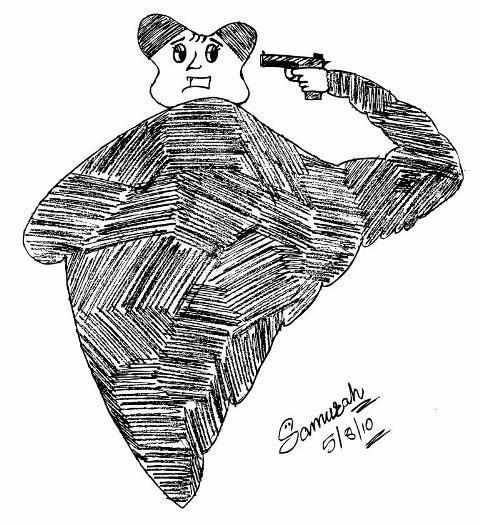
Untitled by Samurah Kashmiri, August 5, 2010
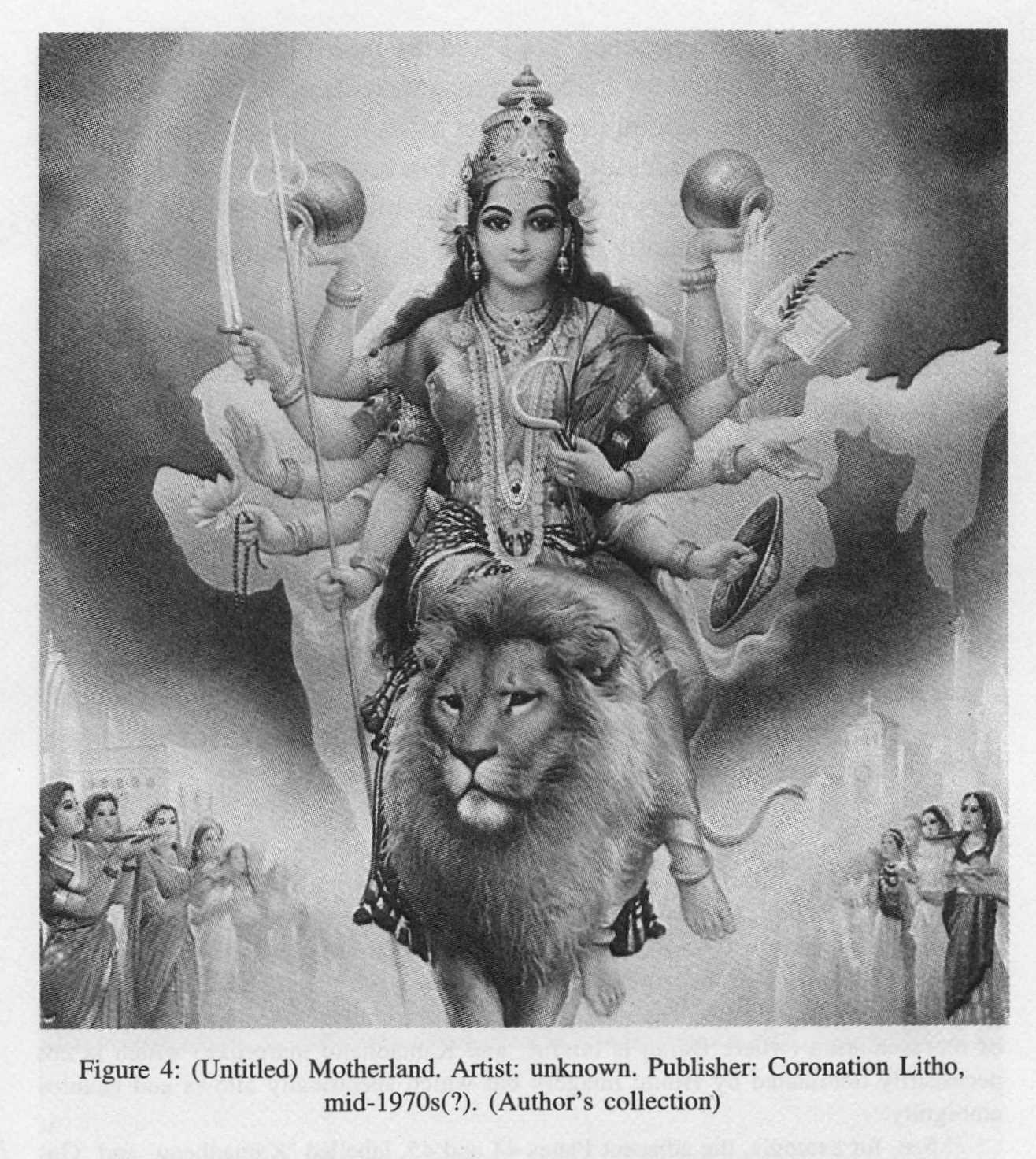
Bharat Mata or Mother India

On 26 January 1992, Murli Manohar Joshi, the leader of the Hindu nationalist Bharatiya Janata Party, after travelling by road all the way from the southern tip of India, was airlifted from Jammu to the heart of Srinagar where he half-raised the Indian flag near historic Lal Chowk. All of Kashmir was put under severe curfew, and the army was given shoot-at-sight orders. Throughout the day soldiers shot dead more than a dozen Kashmiris in the streets of Srinagar. Over the previous two years, the Indian government had unleashed a reign of terror on the people, with massacre upon massacre of unarmed protestors dotting Kashmir’s timeline. Joshi’s Ekta Yatra (Unity March), protected and provided of full support by the Indian government, was an important reminder of the nature of the Indian state and the relationship it sought with the people of Kashmir. The event was designed to put on display the majoritarian character of Indian nationhood, and line up power of the state behind it to send barely coded messages to audiences in India and in Kashmir.

Continue reading “Kashmir: Trapped Within Hindu Nationalist Imagination”

“O, God! Have mercy on me! Distracted, I whirl” — Rumi’s Gift

Not frivolously, around the alleys and bazaars, I whirl.
Lover’s temperament, I have — to have one glimpse of my Beloved, I whirl.

After Maulana Rumi (actual poet unknown)

Singing: Nusrat Fateh Ali Khan and Qawwaals

Translated by Huma Dar

Raqs al-Ruhani, al-Qahirah (Huma Dar 2005)
Naa Man Behooda Gird-e Koocha-o-Baazaar Mi Gardam (Huma Dar 2005)

نه من  بيهوده  گرد کوچه  و  بازار  می  گردم
مذاق عاشقی  دارم  پئ  ديدار  ميگردم

خدايا  رحم  کن  بر  من  پريشان وار  می  گردم
خطا کارم  گناھگارم  به  حال زار  می  گردم

شراب شوق  می نوشم  به  گرد يار  می  گردم
سخن مستانه  می گويم  ولے  هوشيار  می  گردم

گھےخندم  گھے گريم گھے افتم  گھے خيزم
مسيحا  در دلم  پيدا  و  من  بيمار  می گردم

بیا جانا  عنایت  کن  تو  مولانای رومی  را
غلام  شمس  تبریزم  قلندروار  می گردم

Continue reading ““O, God! Have mercy on me! Distracted, I whirl” — Rumi’s Gift”

Zardari gets ‘Shoed’ by Protester in the UK

On Monday, August 9th, Asif Ali Zardari received a rude awakening from one of the hundreds of protesters who were gathered outside a political rally in Birmingham, organized by the UK branch of Zardari’s Pakistan People’s Party. Amongst the protesters was Sardar Mohammed Shamim Khan, a 57 year old man who managed to sneak into the invite-only event.  Khan was sitting 20 meters away from the president when he threw his shoes as he shouted “Only Allah has the right to give and take away life.”

Khan’s sentiments echoed the resentment of many who have been angered by the government’s less-than-adequate efforts in delivering aid and assistance to the millions still suffering as a result of last week’s floods.

Here’s a GEO News interview with Sardar Mohammed Shamim Khan. The interview is in Urdu, but I have translated the relevant portions below.

Continue reading “Zardari gets ‘Shoed’ by Protester in the UK”

One More War, Please

by David Bromwich

Will the summer of 2010 be remembered as the time when we turned into a nation of sleepwalkers? We have heard reports of the intrusion of the state into everyday life, and of miscarriages of American power abroad. The reports made a stir, but as suddenly as they came they were gone. The last two weeks of July saw two such stories on almost successive days.

First there was “Top Secret America,” the three-part Washington Post report by Dana Priest and William M. Arkin on the hyperextension of private contracts, government buildings, and tax-funded expenditures in the secret surveillance economy. Since 2001, the new industries of data mining and analysis have yielded close to a million top secret clearances for Americans to spy on other Americans. Then at the end of July came the release of 90,000 documents by Wikileaks, as reported and linked by the New York Times, which revealed among other facts the futility of American “building” efforts in Afghanistan. We are making no headway there, in the face of the unending American killing of civilians; meanwhile, American taxes go to support a Pakistani intelligence service that channels the money to terrorists who kill American soldiers: a treadmill of violence. Both findings the mainstream media brought forward as legitimate stories, or advanced as raw materials of a story yet to be told more fully. This was an improvement on the practice of reporting stories spoon-fed to reporters by the government and “checked” by unnamed sources also in government. Yet, as has happened in many cases in the mass media after 2001 — one thinks of David Barstow’s story on the “war experts” coached by the Pentagon and hired by the networks — the stories on secret surveillance and the Afghanistan documents were printed and let go: no follow-up either in the media or in Congress.

We seem to have entered a moral limbo where political judgment is suspended and public opinion cannot catch its breath.

Continue reading “One More War, Please”

Flood of Misery

Al Jazeera on the decimation of infrastructure in the Swat Valley. Also see Kamal Haider’s report on the resulting food and economic crisis.

Continue reading “Flood of Misery”

Death Toll Continues to Rise in Pakistan

The death toll from Pakistan’s worst flood in living memory has exceeded 1,100. It is estimated that over 27,000 people are still trapped, and approximately 1.5 million people have been affected by the flow of waters that continue to wash away villages and trigger devastating landslides in Khyber-Pakhtoonkhwa and parts of Punjab.

Continue reading “Death Toll Continues to Rise in Pakistan”

“Truth Alone Triumphs”: of David, Goliath, Stones, and Speech

“Azadi” is also the chant whose echoes swirl in the Kashmir Valley with greater resonance each day, from the minarets and playgrounds, boulevards and alleys, schools and courts, despite the crushing screeches of teargas and bullets of the Indian (in)security forces. It is “scriptured” into utterance by each breath of Kashmiri women, children, and men; calligraphed by their blood on their emerald valley; embroidered by their bones in Kashmiri Arabesque on worn cobblestones of the downtown; and papier-mâchéd in paisley tears on the blue of their beloved lakes.

by Huma Dar

“A Defiant Kashmiri woman being frisked by Indian Security Forces.” 2007. Uncredited photograph from a Kashmiri blogger


And the night’s sun there in Srinagar?  Guns shoot stars into the sky, the storm of constellations night after night, the infinite that rages on.  It was Id-uz-Zuha: a record of God’s inability, for even He must melt sometimes, to let Ishmael be executed by the hand of his father.  Srinagar was under curfew.  The identity pass may or may not have helped in the crackdown.  Son after son–never to return from the night of torture–was taken away.

… But the reports are true, and without song: mass rapes in the villages, towns left in cinders, neighborhoods torched.  “Power is hideous / like a barber’s hands.”  The rubble of downtown Srinagar stares at me from the Times.

… And that blesséd word with no meaning–who will utter it?  What is it?  Will the women pronounce it, as if scripturing the air, for the first time?  Or the last?

… What is the blesséd word?  Mandelstam gives no clue.  One day the Kashmiris will pronounce that word truly for the first time.  (Excerpt from Agha Shahid Ali’s “The Blesséd Word: A Prologue,” in The Country Without A Post Office,  1997: 16-17)

Continue reading ““Truth Alone Triumphs”: of David, Goliath, Stones, and Speech”