Manufacturing Consent and Violence: Azadi, Arundhati, Hindutva Terror, and Indian Media

by Huma Dar

At a groundbreaking seminar, ‘Azadi: The Only Way,’ organized by the Committee for the Release of Political Prisoners (CRPP) in New Delhi, India, on October 21st, 2010, the minutes record that Arundhati Roy, the prize-winning author of The God of Small Things, asserted that

[Kashmir] has never been an integral part of India and the Indian government recognised it as a disputed territory and took it to the UN on its own accord. In 1947 we were told that India became a sovereign democracy. But it became a country as per the imagination of its colonizer, and continued to be a colonizer even after the British left the country. Indian state forcibly or deceitfully annexed the North-East, Goa, Junagarh, Telangana, etc… the Indian state has waged a protracted war against the people which it calls its own. Who are the people it has waged war against? The people of North-East, Kashmir, Punjab, etc. This is an upper caste Hindu state waging a continuing struggle against the people. Continue reading “Manufacturing Consent and Violence: Azadi, Arundhati, Hindutva Terror, and Indian Media”

Elections: The day after

by Robert Jensen

November 2 is going to be a big day in our political lives.

But November 3 will be far more important.

On mid-term Election Day, voters will choose between candidates with different positions on health-care insurance, withdrawal from Afghanistan, and CO2 levels that drive global warming. The politicians we send to the legislatures and executive offices will make — or avoid making — important decisions. Our votes matter.

But Election Day is far from the most important moment in our political lives. The radical changes necessary to produce a just and sustainable society are not on the table for politicians in the Republican or Democratic parties, which means we citizens have to commit to ongoing radical political activity after the election.

I use the term “radical” — which to some may sound extreme or even un-American — to mark the importance of talking bluntly about the problems we face. In a political arena in which Tea Partiers claim to defend freedom and centrist Democrats are called socialists, important concepts degenerate into slogans and slurs that confuse rather than clarify. By “radical,” I mean a politics that goes to the root to critique the systems of power that create the injustice in the world and an agenda that offers policy proposals that can change those systems.

In previous essays in this campaign series on economics, empire, and energy I argued that the conventional debates in electoral politics are diversionary because painful realties about those systems are unspeakable in the mainstream: capitalism produces obscene inequality, U.S. attempts to dominate the globe violate our deepest moral principles, and there are no safe and accessible energy sources to maintain the affluent lifestyles of the First World.

Continue reading “Elections: The day after”

John Mearsheimer on WikiLeaks Iraq logs

John Mearsheimer debates the WikiLeaks war logs with Patrick Mansoor, a former Petraeus aide.

JOHN MEARSHEIMER, University of Chicago:
[I]t does make it very clear how horrible the violence has been in Iraq since we invaded in 2003. And it also is quite clear from the documents that the United States has played an important role in making that violence happen.

Not only do the documents show that American soldiers and airmen have killed large numbers of civilians. It’s also clear that we didn’t do much at all to stop the Iraqis from torturing and murdering prisoners. This was a huge mistake on our part. […]

Continue reading “John Mearsheimer on WikiLeaks Iraq logs”

The Secret Iraq Files

UPDATE: See part II of Al Jazeera’s Secret Iraq Files below. Also see Part 1 and Part 2 of Democracy Now‘s interview with Julian Assange, and Daniel Ellsberg on why he supports Wikileaks.

The Wikileaks war logs present irrefutable evidence of the murder, torture and rape which has been occuring for the past seven years in Iraq. However, it is not clear why it has chosen to collaborate with the dubious Iraq Body Count which for years has been providing a convenient underestimate of Iraqi casualties to war supporters.

Continue reading “The Secret Iraq Files”

Tea party, Big money, Twisted maps

Al Jazeera: Ahead of the US midterm elections, Fault Lines presenter Avi Lewis travels to Nevada and Florida — two states gripped by political division and economic uncertainty.

The collapse of American journalism

Media scholar Robert W. McChesney lectures on the collapse of American journalism at the University of Illinois YMCA on October 24th, 2010. Listen as Bob discusses the political implications and his solutions to the crisis. Sunday, 1pm central on Media Matters with Bob McChesney.

The lecture begins at 6:00.

Download mp3.

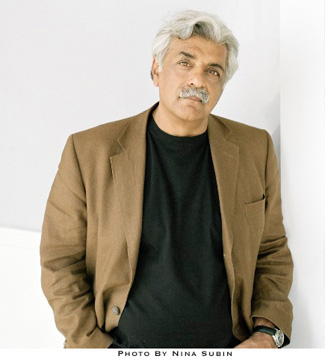
“Only the mood music has changed”: Tariq Ali on Obama’s presidency

OK… here’s the PULSE exclusive I’ve been working on. Hope you enjoy.

Is president Barack Obama the change America has been waiting for or is he another corporate Democrat representing elite interests?  According to Tariq Ali, very little has chanced between Obama and former president George W. Bush.  In his latest book “The Obama Syndrome: Surrender at Home, War Abroad,” Ali argues that Obama is carrying on the reckless policies of the Bush regime.  If Obama continues down this path, the Democratic Party not only face the prospect of the House & Senate in 2010 but also the presidency in 2012.  This should be a cause for concern.

I caught up with Ali during his American book tour and here’s what he had to say about the Obama presidency.

Where did the idea for this book emanate from? Why did you want to write a book about “The Obama Syndrome” and what does that refer to?

The idea occurred because I speak a lot on the United States. People ask me questions after each talk and increasingly in the past two to three years, the talk has been about Obama.  I thought a short book which essentially provided a balance sheet from the left on the mid-term would be a useful exercise. Given that he’s being attacked nonstop for being a socialist, a leftist, being a Muslim and all this nonsense that comes from the Tea Party-Fox Television alliance, I thought it was better to have a hard-headed realistic account about who the guy really is.  So my book is a critique of him, but it’s also by implication a very sharp critique of people who claim that everything Obama is doing is so radical that they can’t take it anymore.

Continue reading ““Only the mood music has changed”: Tariq Ali on Obama’s presidency”

Energy: recognizing how much isn’t there

by Robert Jensen

This article is Part 3 of a 3 part collection of essays by University of Texas at Austin Professor Robert Jensen on important issues that should be highlighted during this year’s US mid-term election campaigns.

Robert Jensen

Will America’s energy crisis be solved by more aggressive pursuit of fossil fuels or by more vigorous development of renewables?

In this campaign season, there are politicians on all sides. Chants of “drill, baby, drill” ring out, while others sing the praises of wind and solar, and some argue we must try everything.

Unfortunately, politicians don’t seem willing to face a more difficult reality: There is no solution, if by “solution” we mean producing enough energy to maintain our current levels of consumption indefinitely.

To deal with the energy crisis we must deal with a consumption crisis, but politicians are reluctant to run a campaign based on a call for “less” — the American Dream, after all, is always “more.” But, whether the public and politicians like it or not, our future is about learning to live with less, starting with a lot less energy.

In the United States, we have been living with the abundance produced by an industrial economy, all made possible by the concentrated energy of fossil fuels. We tell ourselves this is the product of our hard work, but our life of plenty was made possible by the incredible energy stored in coal, oil, and natural gas. How long can that continue?

Continue reading “Energy: recognizing how much isn’t there”

Empire: affluence, violence, and U.S. foreign policy

by Robert Jensen

This article is Part 2 of a 3 part collection of essays by University of Texas at Austin Professor Robert Jensen on important issues that should be highlighted during this year’s US mid-term election campaigns.

Robert Jensen

The United States is the most affluent nation in the history of the world.

The United States has the largest military in the history of the world.

Might those two facts be connected? Might that question be relevant in foreign policy debates?

Don’t hold your breath waiting for such discussion in the campaigns; conventional political wisdom says Americans won’t reduce consumption and politicians can’t challenge the military-industrial complex. Though not everyone shares in that material wealth, the U.S. public seems addicted to affluence or its promise, and discussions of the role of the military are clouded by national mythology about our alleged role as the world’s defender of freedom. Business elites who profit handsomely from this arrangement, and fund election campaigns, are quite happy.

There’s one word that sums this up: empire. Any meaningful discussion of U.S. foreign policy has to start with the recognition that we are an imperial society. We consume more than our fair share of the world’s resources, made possible by global economic dominance backed by our guns.

Continue reading “Empire: affluence, violence, and U.S. foreign policy”