Two of the world’s best photojournalists, Tim Hetherington and Chris Hondros, were killed Wednesday in Misurata. They were part of a group of six photographers reporting on the Libyan conflict in a particularly dangerous part of the besieged city.
Rebel Workshop
The rebel army which John Pilger and other Western leftists tell us is a front for CIA.
Facing superior firepower on the battlefield, fighters seeking to overthrow Libyan leader Muammar Gaddafi are left renovating ageing, abandoned military hardware.
As the rebels refurbish old tanks and make launching systems from doorbells, they appeal for new weapons.
Al Jazeera’s Hoda Abdel-Hamid, reporting from Benghazi, has more from the rebels’ workshop.
Academic sanctions and global solidarity for Palestinian liberation: A view from South Africa
By Patrick Bond
Introduction
This panel is not only devoted to considering arguments about implementing the call for Boycott, Divestment and Sanctions (BDS) against Israel, but also about broader problems of progressive political positioning and backlash in the academy. Although I do not deal with the April 2 case of Richard Goldstone’s unprincipled U-turn on the findings of the United Commissions commission into Israel’s 2008-09 Gaza invasion, the incident suggests the extent to which South African commentary on the oppression of Palestinians has become acutely politicized. For if Goldstone’s return to his Zionist past – recalling, too, his past as a minor apartheid-era judge (hence as a human rights ally, his zig-zag unreliability, reliability and now unreliability) – serves any purpose aside from empowering Israeli militarists, it will be to compel us to use South Africa as a base from which critical inquiry into the condition of Palestine must now be intensified. Fortunately, just such an opportunity arises in the case of the University of Johannesburg faculty Senate’s decision on March 23 to support the Boycott, Divestment, Sanctions (BDS) struggle by breaking ties with Israel’s Ben Gurion University of the Negev.
Blankets, Dazzlement, Slander
 This was published at Ceasefire Magazine.
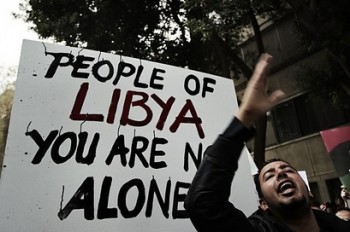
The anti-imperialist left, in the West at least, is painfully divided over the NATO-led intervention in Libya. On the one hand, such commentators as Paul Woodward, Gilbert Achcar, Phil Weiss, and me, believe the intervention is the least worst option, that there was no better alternative. On the other hand, John Pilger, Mahmoud Mamdani and many others, are wary of a new Iraq and oppose Western intervention on blanket principle.
Both positions are legitimate. Although I disagree in this case, I’m very pleased that the general gut response – if we must work by gut responses – is against intervention. But unfortunately a number of lesser figures, emotional oppositionists of the sort who qualmlessly rearrange reality to fit their personal agendas, have wilfully ignored facts on the Libyan ground, and even stooped so low as to slander the revolutionary Libyan people.
Some say NATO is interfering in a civil war, that Libya is split between east and west, that Tripoli stands firm with Qaddafi. These people fail to understand the overwhelming unpopularity of Qaddafi’s capricious regime. In the first days of the revolution, the regime lost control of most areas in the west as well as the east, including suburbs of Tripoli. Protestors marching on Green Square (or Martyrs Square) were driven back by machine gun and artillery fire. Qaddafi is currently keeping the capital quiet by mass arrests, rooftop snipers, and roving jeeps of weapon-wielding thugs.
Some people describe the free Libyans are mere ‘so-called’ rebels. If they were real freedom-fighters, these people argue, they’d be able to take over the country without foreign help. Their acceptance of intervention proves them to be CIA stooges, agents of imperialism, traitors.
Chase Madar: In defense of Bradley Manning
In this TomDispatch.com interview Civil rights attorney and PULSE contributor Chase Madar outlines the case against––and the defense on behalf of––the soldier who allegedly provided the documents for the latest WikiLeaks release as well as the now infamous “Collateral Murder” video, Private First Class Bradley Manning. Also, don’t miss Chase’s brilliant piece on Bradley Manning.
Tribute to Vittorio
Huwaida Arraf’s video tribute to Vittorio Arrigoni
Three Cups of Hooey
UPDATE: ‘Three Cups of Deceit‘, Jon Krakauer’s extensive expose of Mortenson is now available for download (but only for a brief time, so hurry). Also check out Nosheen Ali’s article from the Third World Quarterly on the Mortenson saga and the discourse of humanitarianism. (via Mike Barker)
Fellow PULSEr Chase Madar calls this Missionary Imperialism. Once a critic of Donald Rumsfeld, he notes, Greg Mortenson had taken to touring the US with Pentagon officials stumping for the Afghan effort, portraying it as a Peace Corps project that just happens to have 130k armed soldiers attached.
The US, Gulf Kings and Brutal Repression in Bahrain
The brutal repression of demonstrators by the US-backed monarchies continues.
Adam Hanieh: US policy in region based on Gulf Cooperation Council ability to suppress opposition
New Who Profits Report: Forbidden Fruit- The Israeli Wine Industry and the Occupation
From the Who Profits Newsletter:
 A new report by Who Profits maps the involvement of the Israeli wine industry in the occupation of the West Bank and the Syrian Golan Heights and traces some of the ways in which it masks this involvement. For this purpose, this report surveys the Israeli wine industry, maps the vineyards and wineries in the occupied territory and traces the connections between the main Israeli wine producers and this settlement industry.
The full report is available here: http://www.whoprofits.org/articlefiles/WhoProfits-IsraeliWines.pdf
Continue reading “New Who Profits Report: Forbidden Fruit- The Israeli Wine Industry and the Occupation”
Miss Dallal
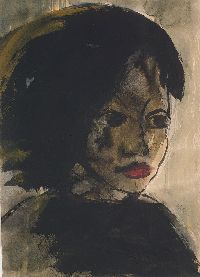
This story was published in today’s Guardian.
He filled up the tank before he left Kuwait City, filled it again at Qurriyat near the Saudi-Jordanian border. He stopped a couple of times for sandwiches and crisps, otherwise kept on driving through the flat desert with stereo playing and air conditioning humming. They waved him through the crossings after he’d waved his genuine Rolex and his heavy silver rings at them. Including border stops, the journey took eighteen hours. These days the world’s a small place, which is one of the Prophet’s Signs of the Hour – distances will disappear before the end comes.
Dusk was falling on Damascus when he arrived. Fumes rose from the minibuses and paraffin heaters and from people’s cigarettes and swirled up to meet the thickening night. Green lights and minarets shook on either side, and there were potholes in the asphalt. He didn’t bother checking into his hotel. He wanted to get straight to business.
He drove towards the mountain, through the centre of town. He followed a highway along the bed of a gorge. Here at last the barren melted against the power of potential fertility. A gurgling stream rushed beside the road, and there were trees and restaurants, sometimes dining rooms fatly bridging the water. He pulled in at a building more contemporary than the rest, a tall building fronted in metal and dark mirrors.
 P U L S E