Journalist Chris Hedges discusses his recent book, Empire of Illusion: The End of Literacy and The Triumph of Spectacle. In it, he charts the dramatic rise of a post-literate society that craves fantasy, ecstasy, and illusion. Hedges argues we now live in two societies: one, the minority, functions in a print-based, literate world and can cope with complexity and can separate illusion from truth; the other, a growing majority, is retreating from a reality-based world into one of false certainty and magic where serious film and theater, as well as newspapers and books, are being pushed to the margins. Also author of War Is a Force That Gives Us Meaning, Hedges is currently a senior fellow at The Nation Institute and the Anschutz Distinguished Fellow at Princeton University. He writes for many publications, including Foreign Affairs, Harpers and TruthDig.
A few weeks back The Browser interviewed British author Ziauddin Sardar for its Five Books section. Among the books he selected on the theme of Travel in the Muslim World was one, The Road from Damascus, by PULSE editor Robin Yassin-Kassab. When Robin was in turn asked to choose his five on the theme of the Israel-Palestine Conflict, he chose among others John Mearsheimer and Stephen Walt’s The Israel Lobby and the US Foreign Policy. In its current interview The Browser turned to Stephen Walt — one of PULSE’s 20 top global thinkers for 2009 — to present his selection of the five most important books on the US-Israel relationship. In the following interview Walt presents his selection and explains why he chose these particular books.
Stephen M. Walt
So, we’re trying to understand how the US has come to identify so closely with Israel in recent decades, and your first book is The Israel Lobby and US Foreign Policy, which you wrote along with John Mearsheimer. Why is that on the top of your list?
The only way to understand the special relationship that now exists between the United States and Israel is to understand the critical role that a number of organisations have played in actively promoting that relationship over the last 60 years. The US has supported Israel since its founding in 1948, but it did not have the same sort of special relationship for the first 20 or so years after Israel’s creation. The US backed it in certain ways, but was also willing to put lots of pressure on it in other circumstances and didn’t provide a lot of economic or military assistance until after 1967. But today the US backs Israel no matter what it does and American politicians are careful never to say anything that is very critical of Israel, even when it is acting in ways that are contrary to US interests and values. The key to understanding this ‘special relationship’ is the operation of various groups in the Israel lobby, and our book lays out in great detail how that works, and why it’s not good for the US or Israel.
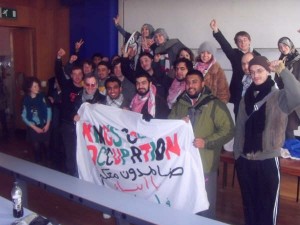
With just days before the UK Viva Palestina convoy is due to arrive in Gaza, we look back at the remarkable recent history of activism at King’s College London (KCL).
On 18 November 2008, the Israeli President Shimon Peres was awarded an honorary doctorate by KCL, a move which sparked outrage amongst students of the college, and saw the beginning of a student movement for its revocation.
“Why the big fuss about the Israeli President?” many asked. Shimon Peres has to his name the sale of arms to the apartheid regime in South Africa and the bombing (twice) of the UN headquarters in Qana. He has directed various Israeli invasions of Lebanon, saw through the 1985 bombing of Tunis, and continues to support Israel’s murderous policies towards the Palestinians, sharing much of the blame for why Gaza has been described as “the largest open air prison” on the planet by major Human rights agencies, UN and Vatican officials. He is also the father of Israel’s nuclear bomb. These are but a few of the highlights of Mr. Peres’s career. Both students and several members of staff felt that by honouring someone who is essentially a war criminal, KCL had dishonoured its own good name. A college-wide petition with close to a thousand signatures calling for the revocation of the doctorate was handed to the College’s Principal Professor, Rick Trainor.
A friend of mine started a cyber-satirical Facebook profile for ex Israeli Air Force commander and Israeli army Chief of Staff, Dan Halutz (you’re all very welcome to join). Fortunately for the anthropology dabblers among us, some people don’t recognize satire when they see it, and among Lt. General Halutz’s friends, I stumbled upon “supporters of the settlers of the Simon the Righteous [aka Sheikh Jarrah] neighborhood”. Who are these supporters of criminals and ethnic cleansers? From their Facebook group (limited by my translation):
Lately, a number of houses have been saved in the “ Simon the Righteous” neighborhood in Jerusalem, which is very upsetting to the Anarchists and anti-semites around the world that are harassing the Jewish residents and the worshippers at the Simon the Righteous tomb, thinking that this will prevent Jews from visiting the area and living around it. Here at the group we’ll update about the going ons at the site and about the struggle to return the stolen Jewish houses.
News:
In honor of the new Christian year the Muslims are brown-nosing the Christians. A big christmas tree has been stationed in front of the settlers houses which proves to us that where there is sanctity the devil grows. We’d like to remind the Christians what happened when Bethlehem was given to Palestinian terrorists: Their daughters were raped, their houses robbed, and most of them left the country.
This delightful group is very active, but rather than waste my time on translating more racist, colonialist blather, I’d like to share with you the choice photos and their labels, from the group, which give lingual and graphic insight into their warped perspective. I call it “Photo Essay of a Settler”.
Hostility and Hospitality in Contemporary World Politics
This is Chomsky at his best, highlighting the exceptionalism that characterizes US political discourse, and the ideological memes that have accompanied US imperialism with few modulations over the years. The follow-up speaker Stephen Pfohl is also very good. (thanks Doug)
The Pakistani daily Dawn — a pro-US paper not known for its antiwar stance — reports that US drones killed over 700 civilians in 44 bombings since Obama took office in January 2009. Of the 44 attacks, only five succeeded in hitting their target. In other words, Obama has surpassed his predecessor’s murderous record in Pakistan. (Of course these attacks are carried out with the complicity of Pakistan’s ruling elites — as Jane Mayer reported, and as Pervez Musharraf confessed — and are cheered on by native informers such as Ahmed Rashid).
PESHAWAR: Of the 44 predator strikes carried out by US drones in the tribal areas of Pakistan over the past 12 months, only five were able to hit their actual targets, killing five key Al-Qaeda and Taliban leaders, but at the cost of over 700 innocent civilians.
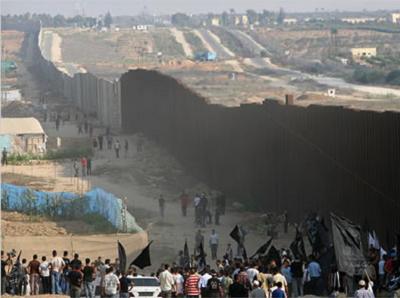
As expected, the Egyptian client regime allowed only a token number of Gaza Freedom Marchers to enter the besieged prison territory. Roughly 1400 activists from 43 countries were forced to remain in Cairo, where they managed to demonstrate outside various embassies and in the central Tahrir Square. Egyptian police turned out in huge numbers to harass the protestors and, most crucially, to stop Egyptians from coming into contact with them. (Ali Abunimah has been blogging on events in Cairo). The Freedom Marchers chanted ‘ash-sha’ab al-misri ma’ana – The Egyptian People Support Us’, a slogan which is undoubtedly true. The Egyptian regime, meanwhile, with the help of American military engineers, is building a metal wall across the frontier with Gaza which will reach deep underground and cut off the tunnels which are Gaza’s only lifeline. The corrupt Azhar Mosque authorities have declared this crime to be compatible with Islamic law.
The Gaza Freedom Marchers approved today an important declaration aimed at accelerating the global campaign for Boycott, Divestment and Sanctions (BDS) against Israeli Apartheid. The Cairo Declaration deserves the widest possible circulation.
Cairo Declaration
January 1, 2010
We, international delegates meeting in Cairo during the Gaza Freedom March 2009 in collective response to an initiative from the South African delegation, state:
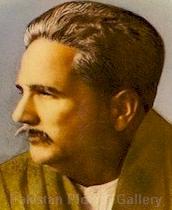
Allama IqbalMuhammad Iqbal, 1877-1938, was a poet of Urdu and Farsi, philosopher, sufi, and revolutionary, who combined in his works the traditions of Al-Ghazzali, Rumi, Ibn-e-Khaldun, Ahmad Sirhindi and Shah Walilullah. While he understood the power of the West, had read the Western philosophers, and was familiar with the advances in physics, unlike Syed Ahmad Khan, he remained firmly rooted in Islamic tradition, and refused to re-examine the Islamicate through Orientalist texts. He was criticial of the West’s excessive emphasis on reason, its materialism, and the depredations of capitalism. Many decades before Frantz Fanon and Aime Cezaire, he was the deep thinker and stirring poet of self-discovery, urging peoples of color to regain their dignity, to dig deep into their own traditions in order to overcome, and transcend, the materialism, racism, excessive rationalism, and the West’s abuse of power and its own principles.
This ghazal is a translation from Wings of Gabriel, the best collection of Iqbal’s Urdu poetry. From time to time, I will be presenting translations from this collection.
اگر کج رو ہیں انجم آسمان تیرا ہے یا میرا
translation by M. Shahid Alam
If the stars are topsy-turvy: is the sky yours or mine?
Should this fret me? Is the world yours or mine?
If Heaven lacks the tug, the heat of love’s adventure,
Dear Lord, this cosmic enigma is yours: not mine.
On that first dawn of creation, how dared he to defy
Your decree. Was he your emissary: or was he mine?
Muhammad is yours, Gabriel and the Qur’an too.
But these melodic words: are they yours or mine?
It’s this star, scintillating, that lights your creation.
Whose loss is it – the fall of Man? Is it yours or mine?
In a notification filed on December 30th in a U.S. District Court for the District of Columbia, the Justice Department has announced that in addition to shifting prisoners from Bagram to a newly built facility nearby, the Pentagon also intends to demolish the original facility at Bagram. According to the notification, the Department of Defense will shift prisoners to the new facility by January 19th. Shortly thereafter, plans to demolish the Bagram facility will be put into effect.
According to an article in the Huffington Post on December 31st, Ramzi Kassem – a lawyer serving as counsel for several Guantanamo and Bagram detainees – has stated that the plan to demolish Bagram “amounts to destroying evidence in the cases of detainees who say they were tortured there.”
Kassem, also a law professor at City University of New York, maintains that Bagram ought to be preserved as evidence and as a crime scene. In Kassem’s view, the administration’s decision to demolish the facility can be read as an “underhanded attempt” on the part of a government concerned with “covering its own tracks.”
After we published our list of 20 Top Global Thinkers, we thought we would be remiss if we did not also honor those who bring these voices to us in the first place. With the goal of recognizing those individuals and institutions responsible for exemplary reportage and awareness-raising in 2009, we asked our editors and writers to name their choices for the top 20 media figures, be they journalists, publications or publishers. We aggregated these nominations into the following list. Like our 20 Top Global Thinkers, our criteria for choosing media figures included individuals/publications/publishers who have shown a commitment to challenging power, holding it to account, highlighting issues pertaining to social justice and producing output that bucks conventional wisdom and encourages critical thinking.
Amy Goodman
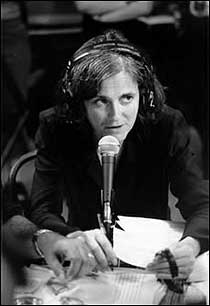
A media institution in her own right, Amy Goodman has shown the true potential of independent media over the past 12 years by turning Democracy Now! into the largest public media collaboration in the US and around the world. Free of corporate sponsorship, DN’s hard-hitting daily broadcast rejects the soundbite format of mainstream media to provide in-depth coverage of the world’s most important issues. Unlike the MSM, Democracy Now! gives less emphasis to official voices than to those affected by the abuses of their offices. Goodman relentlessly pursues her stories, and often follows them long after the mainstream media has moved on to chase new headlines. Iraq and Afghanistan have therefore remained part of DN’s coverage for all the years that they were absent in the MSM. Policy-makers may have lost interest in the story, but for Goodman, the people on the receiving end continue to live the story. Her interviewees include voices that the MSM frequently excludes, including scholars, activists, heads of states out of favor with the United States, opposition leaders, and organizers. Through her journalism, writings and lectures, Goodman continues to set the bar for what every journalist should be aspiring to.
Sherine Tadros/Ayman Mohyeldin
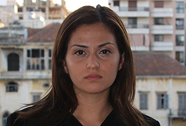
Al Jazeera has long set the bar for war reporting; Sherine Tadros and Ayman Mohyeldin have raised it even higher with their coverage of the conflict in Gaza in 2008- 2009. Tadros and Mohyeldin were the only two journalists working for an international English-language television network reporting from inside Gaza. They braved the dangers of Israel’s indiscriminate assault to bring hour-by-hour reporting the tragedy as it unfolded. Their courage was matched by the quality of their journalism. In 2009, Tadros continued to report from the region, covering the creeping ethnic cleansing of occupied Palestine. Mohyeldin, likewise, continues to report on issues such as the network of tunnels between Egypt and Gaza which are vital for the transfer of food, medicine and fuel supplies into Gaza.


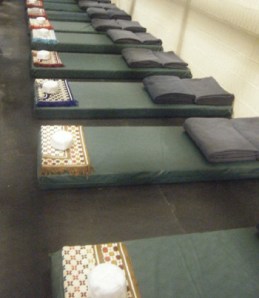 In a notification filed on December 30th in a U.S. District Court for the District of Columbia, the Justice Department has announced that in addition to shifting prisoners from Bagram to a newly built facility nearby, the Pentagon also intends to demolish the original facility at Bagram. According to the notification, the Department of Defense will shift prisoners to the new facility by January 19th. Shortly thereafter, plans to demolish the Bagram facility will be put into effect.
 A media institution in her own right, Amy Goodman has shown the true potential of independent media over the past 12 years by turning
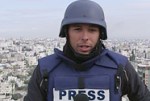 Al Jazeera has long set the bar for war reporting; Sherine Tadros and Ayman Mohyeldin have raised it even higher with their coverage of the conflict in Gaza in 2008- 2009. Tadros and Mohyeldin were the only two journalists working for an international English-language television network reporting from inside Gaza. They braved the dangers of Israel’s indiscriminate assault to bring hour-by-hour reporting the tragedy as it unfolded. Their courage was matched by the quality of their journalism. In 2009, Tadros continued to report from the region, covering the creeping ethnic cleansing of occupied Palestine. Mohyeldin, likewise, continues to report on issues such as the network of tunnels between Egypt and Gaza which are vital for the transfer of food, medicine and fuel supplies into Gaza.
 P U L S E