Robert Greenwald and McChesney discuss Afghanistan
Robert Greenwald is a producer, director and political activist. Greenwald is the founder and president of Brave New Films. Under Greenwald’s direction, Brave New Films has produced a series of short political videos, including the Fox Attacks and Real McCain campaigns. Robert Greenwald’s Brave New Foundation is currently producing Rethink Afghanistan, a groundbreaking documentary being released online in real-time; the film features experts from Afghanistan, Pakistan and the U.S. discussing the United States’ flawed strategy in Afghanista
Yesterday five British soldiers were shot dead by an Afghan policeman. Just as they keep promising that they’ve reached ‘decisive turning points’ in their battle with the Afghan resistance, British military officials immediately vowed that the ‘rogue’ policeman would be caught. Today the Taliban reports that the policeman is safe with them, and that he’s been greeted with flowers.
Our glorious patriotic press responds. Amusingly, the Daily Mail headline wrings its hands and squawks, “What kind of war IS this?” Because some people aren’t playing by the rules, you see. Instead of sitting quietly in their villages waiting for the drone attack, or perhaps sending their kids out to accept sweets and modernity from a rosy-cheeked English lad, some barbarians are actually shooting back at the invaders. How very unBritish. (To be fair to the Mail – which has never been fair to anyone – it does seem to be taking an anti-war stance today). Other sections of the media worry about the ‘loyalty’ of Afghan troops, as if love for foreign occupiers is a realistic standard of loyalty. Still others, even more clever, psychoanalyse the policeman, wondering if an argument with his commander pushed him to a moment of madness. But it really isn’t that complicated, as anybody who disabuses themselves of imperialist delusion can see. Very simply, people don’t like foreigners striding around their streets and fields with guns and assumptions of superiority. Afghans will kill British troops as surely as Britons would kill Afghan troops if they occupied this country.
At the outset of the classes I teach, I always address the question of bias in the social sciences. In one course – on the history of the global economy – this is the central theme. It critiques Eurocentric biases in several leading Western accounts of the rise of the global economy.
This fall, I began my first lecture on Eurocentrism by asking my students, How Eurocentric is your day? I explained what I wanted to hear from them. Can they get through a typical day without running into ideas, institutions, values, technologies and products that originated outside the West – in China, India, the Islamicate or Africa?
The question befuddled my students. I proceeded to pepper them with questions about the things they do during a typical day, from the time they wake up.
Unbeknownst, my students discover that they wake up in ‘pajamas,’ trousers of Indian origin with an Urdu-Persian name. Out of bed, they shower with soap and shampoo, whose origins go back to the Middle East and India. Their tooth brush with bristles was invented in China in the fifteenth century. At some point after waking up, my students use toilet paper and tissue, also Chinese inventions of great antiquity.
The youth in Israel are raised to willingly and even proudly enlist in the army. I personally remember being promised by my high school teachers that if something happened to me, Israel wouldn’t forsake its “sons and daughters”. It’s been a while since I was in school, but nothing has changed:
[IDF Chief of Staff Gabi Ashkenazi] also told the troops that Israeli soldiers “must always remember that if anything happens to them, we will make sure they are returned to their families.”
I often ask myself how this can be said, when raising crops of gun-wielding robots is the main focus of the Israeli educational system. When you encourage me to enlist, do you not encourage me to die? When you encourage my parents to turn me over to the state’s care, for the sole purpose of enlisting, do you not encourage them to make the ultimate Abraham’s sacrifice? How do people get so crazy as to willingly sacrifice themselves for a “greater good” that they are constantly told is unattainable, because the other side is no partner?
From our friend Agustín Velloso Santisteban in Madrid.
Oh, the pirates! What a nice word. It brings us sweet memories from our childhood. Unscrupulous, merciless, astute characters, and today armed with automatic guns. We are longing to see before the High Court in Madrid, Spain, the two Somali pirates captured by our brave Atalanta operatives in the Indian Ocean on 4 October.[1]
We have had enough of the corrupt CEOs who sail towards offshore banks. We do not want to hear anymore about the prime ministers who attack and invade faraway countries. What we really want is to see real pirates. While those corsair and freebooter businessmen and politicians are well-known and still at large, you can confidently expect that the two detainees will spend a long time behind Spanish bars. Everyone knows that they are poor, black, Muslim and dared to attack a Spanish fishing boat.
If all goes well I will be at Notre Dame University in the US later this month for a conference on the role of Islam in contemporary European literature. I wrote the piece below for the conference.
Salman Rushdie once commented that ‘Islam’, in contrast to ‘the West’, is not a narrative civilisation. This, in my opinion, is obvious nonsense. Beyond the fact that human beings are narrative animals, whatever civilisation they live in, and that Islamic civilisation cannot be isolated from, for instance, Christian, Hindu or Arab civilisations, the Muslim world has a history of influential narratives which is second to none. These include Sufi tales, chivalric adventures, fantastical travelogues, romances and spiritual biographies written in several major languages.
Although the Arabic novel is generally considered to have developed in the early twentieth century from the experience of industrial urbanisation and the penetration of European genres and philosophies, Ibn Tufail’s 12th Century “Hayy ibn Yaqzan”, an inspiration for Defoe’s “Robinson Crusoe”, can reasonably stake a claim to being the world’s first novel. The Arabian Nights (via Don Quixote) is surely another source of the European novel tradition. And Islam the religion – as opposed to the even more nebulous ‘civilisation’ – is a text-based faith. The Qur’an is the religion’s only official miracle; the first word revealed to the Prophet was ‘iqra’ – ‘read’. Those who attempt to draw a distinction between literalist scripture and free and playful literature should pay attention to verse 26 of the Qur’an’s second chapter which, immediately after the first description of heaven and hell, proclaims: “Behold, God does not disdain to propound a parable of a gnat, or of something even less than that.” In other words, the Qur’an is a text unashamed to use metaphor, symbol and a whole range of literary devices in order to point to ineffable realities. Continue reading “Islam in the Writing Process”
Tariq Ali and Noam Chomsky speak in London on the Israel-Palestine question. I think Tariq’s suggestions are eminently sensible, whereas once again Chomsky’s analysis leaves me underwhelmed. I don’t think he has anything of value to contribute to this debate any more. Worse, he is telling Palestinians that UNGAR 194 is no longer useful and that they should forgo the right of return. Curiously, he still continues to insist that Israel is merely a pawn in the belligerent US designs against Iran. I also found it disingenuous that while he has remained consistent in his opposition to BDS, his argument hasn’t. While in the past he would insist that everything Israel does was at the behest of the US, hence its the imperial patron that needs to be boycotted, now he says public opinion is not ready for it.
Spinwatch has uncovered evidence that an apparently London based organisation offering expertise on Iran to journalists and politicians is a covert propaganda operation run by a pro-Israel organisation in the United States.
The organisation, which is called Réalité-EU, has direct connections to the Israel Project, a hardline pro Israel organisation based in Washington DC. Both Réalité-EU and the Israel Project also appear to be connected to a Jewish organisation – B’nai B’rith International, which is also active in pro Israel campaigning
Réalité-EU was at one time linked to the former Shadow Security Minister Patrick Mercer, raising further concerns about the Conservative MP’s links to individuals and groups involved in exaggerating and even fabricating domestic and international threats for personal and political ends. These activities have previously been reported by Spinwatch as well as other sources.
Réalité-EU has claimed to be based at offices in London, but e-mails received from the organisation were sent from a mail server registered to the Washington offices of B’nai B’rith International.[1] An expert from Réalité-EU who spoke to Spinwatch denied ‘any connection whatsoever’ with B’nai B’rith
Asked whether Réalité-EU receives any funding or direct support from the pro-Israel pressure group, the expert replied, ‘Definitely not,’ but added, ‘I’m not at all involved in any development [i.e. funding] questions so I really don’t know exactly who the individuals are and where they come from.’[2]
POLITICS: U.S. in Pakistan’s Mind: Nothing But Aversion
Analysis by Muhammad Idrees Ahmad
With Nato supply convoys passing through the FATA region, US military hardware frequently falls into the hands of insurgents.
PESHAWAR, Pakistan, Oct 30 (IPS) – To the west of Peshawar on the Jamrud Road that leads to the historic Khyber Pass sits the Karkhano Market, a series of shopping plazas whose usual offering of contraband is now supplemented by standard issue U.S. military equipment, including combat fatigues, night vision goggles, body armour and army knives.
Beyond the market is a checkpoint, which separates the city from the semi-autonomous tribal region of Khyber. In the past, if one lingered near the barrier long enough, one was usually approached by someone from the far side selling hashish, alcohol, guns, or even rocket-propelled grenade launchers. These days such salesman could also be selling U.S. semi-automatics, sniper rifles and hand guns. Those who buy do it less for their quality—the AK-47 still remains the weapon of choice here—than as mementos of a dying Empire.
The realisation may be dawning slowly on some U.S. allies, but here everyone is convinced that Western forces have lost the war. However, at a time when in Afghanistan the efficacy of force as a counterinsurgency tool is being increasingly questioned, there is a newfound affinity for it in Pakistan.
Phillip Adams speaks to the nephew of the late Edward Said, Professor Saree Makdisi, who will give the 2009 Edward Said Memorial Lecture in Adelaide. Professor Makdisi talks about the latest UN findings of war crimes in Gaza; what he describes as the bureaucratic occupation of the Palestinian territories; and his reasons for supporting a one-state solution. (thanks Michael)
Makdisi is Professor of English Literature at the University of California, Los Angeles; Edward Said Memorial Lecturer for 2009, and the author of Palestine Inside Out: Everyday Occupation (John Wiley, 2008)
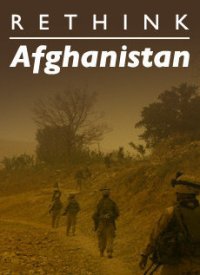 Robert Greenwald of Brave New Films speaks about Afghanistan on Bob McChesney’s excellent Media Matters.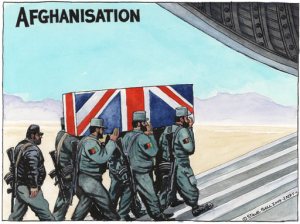
 At the outset of the classes I teach, I always address the question of bias in the social sciences. In one course – on the history of the global economy – this is the central theme. It critiques Eurocentric biases in several leading Western accounts of the rise of the global economy.
 The youth in Israel are raised to willingly and even proudly enlist in the army. I personally remember being promised by my high school teachers that if something happened to me, Israel wouldn’t forsake its “sons and daughters”. It’s been a while since I was in school, but


