Anything but Stationary

kaaGhazi hai pairahan har paikar-e tasveer ka
Robed in paper are all pictures manifest:
this world is nothing but
Your paper!

by Huma Dar
for my N, Z, many Shahids, and the One

Write to Me.  photo credit: Natasha Dar, 2012
Write to Me. photo credit: Natasha Dar, 2012

The moon did not become the sun. 
It just fell on the desert 
in great sheets, reams 
of silver handmade by you. 
The night is your cottage industry now, 
the day is your brisk emporium.  
The world is full of paper.

Write to me.
Agha Shahid Ali, “Stationery”

(I)
The tilted goblet drips
mocking
Pacific amber:
liquid lunatic luminous.
And makes a slippery mess
of Highway 1
the night
memory and desire —
relentless, ebon, a plumbless
dream of falling.
Like tresses distraught
entwining your imagined arm
(make the bleeding black night
all yours)
your aching memories knotted in my gut
my exiled ghost lost, found
and willfully entangled
again
in the lines of your words
your stone-cold feet in my shaalfa —
an ablution performed in blood.

I will die at the golden hour…

by Huma Dar
dedicated to the memory of Agha Shahid Ali (4 Feb 1949 — 8 Dec 2001), and that of some other Shahids…
Untitled.  photo credit: Huma Dar, 2008
Untitled. photo credit: Huma Dar, 2008
I will die at the golden hour
on a Fall afternoon
in a car:
the driver’s seat

For Omar Misharawi: Killed by Israeli Airstrikes on 11/14/12

BBC journalist Jihad Masharawi carries his son’s body at a Gaza hospital. (Associated Press)
BBC journalist Jihad Misharawi carries his son’s body at a Gaza hospital. (Associated Press)
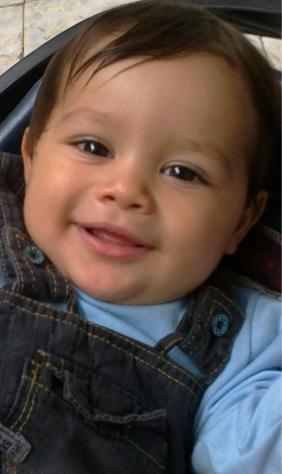
Omar Misharawi (Jihad Misharawi, via Paul Danahar)

by Shadab Zeest Hashmi

At death you measure
no more than our arms
When we rise
to blow a prayer into your charred lung
we find resplendent
butterflies
milling about — lapidary
punctuations of our time
together
(eleven months in all)

Horror turned honey
and lustrous
as buds of new fruit

Ya Shaheed
You witnessed

A Scene from Pulp Fiction in Kashmir

PUMPKIN: Everybody be cool, this is an occupation!
YOLANDA: Any of you fucking pricks move, and I’ll execute every motherfucking last one of you!
JULES: So, tell me again about those killing-for-promotions there…

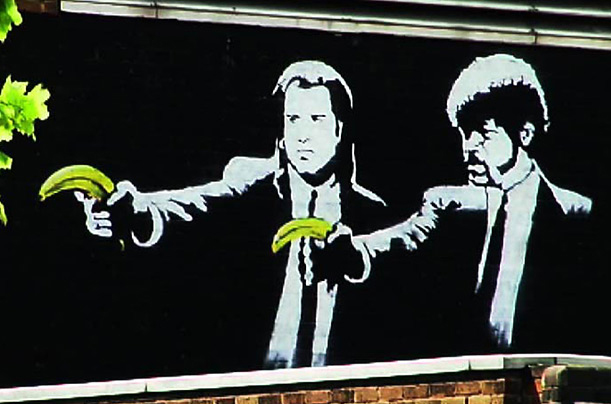
"Pulp Fiction Bananas" by Banksy, once near Old Street Tube Station, London, now whitewashed.  From http://www.toptenz.net/top-10-images-by-street-artist-banksy.php
"Pulp Fiction Bananas" by Banksy, once near Old Street Tube Station, London, now whitewashed.

PUMPKIN: Everybody be cool, this is an occupation!
YOLANDA: Any of you fucking pricks move, and I’ll execute every motherfucking last one of you!
JULES: So, tell me again about those killing-for-promotions there…
VINCENT: What do you want to know?
JULES: Killing is legal there, right?
VINCENT: Yeah, it is legal but it ain’t 100% legal. I mean you can’t walk into a house and start shooting right away. You’re only supposed to take those fucking pricks to certain designated places and blast off their fucking brains? You have to give them some name…
JUKES: Those are encounter sites?
VINCENT: Yeah, it breaks down like this: it’s legal to kill them, it’s legal to own it and, if you’re the occupier of the encounter site, it’s legal to bury them there. It’s legal to carry their bodies, but that doesn’t really matter ’cause — even if you got a truckload of them — if the cops stop you, it’s illegal for them to search you. Searching you is a right that the cops in Kashmir don’t have. Continue reading “A Scene from Pulp Fiction in Kashmir”

Adam of Lost Eden

by Najeeb Mubarki

(This article first appeared in The Economic Times, May 19, 2007, while the Palestinian poet, Mahmoud Darwish, was still alive.  Darwish was born exactly seventy-one years ago in the Western Galilee village of al-Birwa on March 13, 1941.)

Mahmoud Darwish (13 March 1941 – 9 August 2008)

In his 2004 film Notre Musique [Our Music], a journalese-philosophical meditation on war and reconciliation, Jean-Luc Godard gave pride of place to Palestinian poet Mahmoud Darwish. In the film, repeating what he had once told an Israeli journalist, Darwish inverts the relationship with the ‘other’: “Do you know why we Palestinians are famous? Because you are our enemy. The interest is in you, not in me…” By saying that he was important because Israel is important Darwish wasn’t just referring to the erasure of identity and history the Palestinians have had to struggle against, but perhaps more to the continuum of suffering, of that erasure, that has been passed down, as it were, to the Palestinians by the Jews. Not that Darwish now needs to affirm his self as an inversion of his ‘enemy’, or that he needed a Godard to affirm his being. In fact, it is quite the other way round, he was in the film because one cannot make a film on reconciliation without him, and his is a poetry of love, loss, of memory and exile that is more a challenge to the occupier than slogans and bombs ever can be.

Continue reading “Adam of Lost Eden”

Reading Sebald

by Manash  Bhattacharjee

G. W. Sebald  (1944-2001)
G. W. Sebald (1944-2001)

World, take a backseat.
Do not disturb.
I am reading Sebald.
Hush.

Trees with eyes flit by
My blind face.
I hurriedly drink
Evanescence.

Continue reading “Reading Sebald”

Panacea

by Arif Ayaz Parrey

This piece first appeared in the Honour newsmagazine.

Srinagar.  photo credit: Huma Dar, 2006
Khanyar, Srinagar. photo credit: Huma Dar, 2006

Every night, when she drops the slightly bluish liquid into a glass of water, Nisaare feels pride more than embarrassment, or even disgrace. The liquid is a sedative drug. The glass of water is meant for her husband. She feels reassured that she has dealt with the loss of their son much better than he has.

Nine years have passed since the death of their only child in an ‘encounter’ with the Rashtriya Rifles. He had been a bashful young man; not the kind you would easily associate with militant revolution. He had gone ‘across’ for ‘training’ simply because everybody in his peer group had, and he did not want to be the only one left behind. Any other motives he had are buried with him and will surely be summoned back to life one day. On his return, he was of little help to the group because he would not shoot to kill. He had been barely audible when he had expressed his ideological opposition to ambush. He had stated that he would much rather fight the soldiers openly. The commanders assigned him the role of a donation collector during the day and a patrol at night.

Continue reading “Panacea”

Of Love and Revolutions: A Lesson Un-Planned

by Huma Dar

From my desk.  photo credit: Huma Dar, 2007
Alif. Meem. Noon. From my desk. photo credit: Huma Dar, 2008

I am reminded of, yet once again,
if I ever forgot,
occupied with, all over again,
a crazy, intense
conversation with my students,
some weeks ago.
As Ibn ‘Arabi’s Moses,
we heard out of Time:
“take off thy shoes” (20:12).
Spurred by our reading
of Tayeb Salih’s tumultuous Season
of Migration to the North,
“a moment of ecstasy is worth the whole of life,”
Frantz Fanon’s Black tender Skin,
and the Whiteness
of colonial Masks that pierce us,
Occupy Oakland,
whirling with, in, and around us,
and the imprisonment
of four-hundred at San Quentin
— that notorious jail
sprung straight
from Hollywood’s dungeons.


Continue reading “Of Love and Revolutions: A Lesson Un-Planned”

In Memory of Mahmoud Darwish

by Manash Bhattacharjee 

Mahmoud Darwish, portrait by Palestinian artist, Ismail Shammout (1971).
I learnt from your poems how
To wait upon death
And how waiting is a game as
Treacherous as death.
 
I learnt from you how the root
Of waiting is grasped in despair
And that there is no despair
More deceitful than hope.
 
Continue reading “In Memory of Mahmoud Darwish”

On the ‘Precision’ of Language: Why the Term ‘Genocide’ is So Wrong, or Who Can Use the Term

This essay is a response to the emerging discussions over the ‘appropriateness’ of the use of the word ‘genocide’ in the context of the Indian military occupation in Kashmir on PulseMedia and elsewhere on Facebook.

by Mohamad Junaid

[This essay is a response to the emerging discussions over the ‘appropriateness’ of the use of the word ‘genocide’ in the context of the Indian military occupation in Kashmir on PulseMedia and elsewhere on Facebook.]

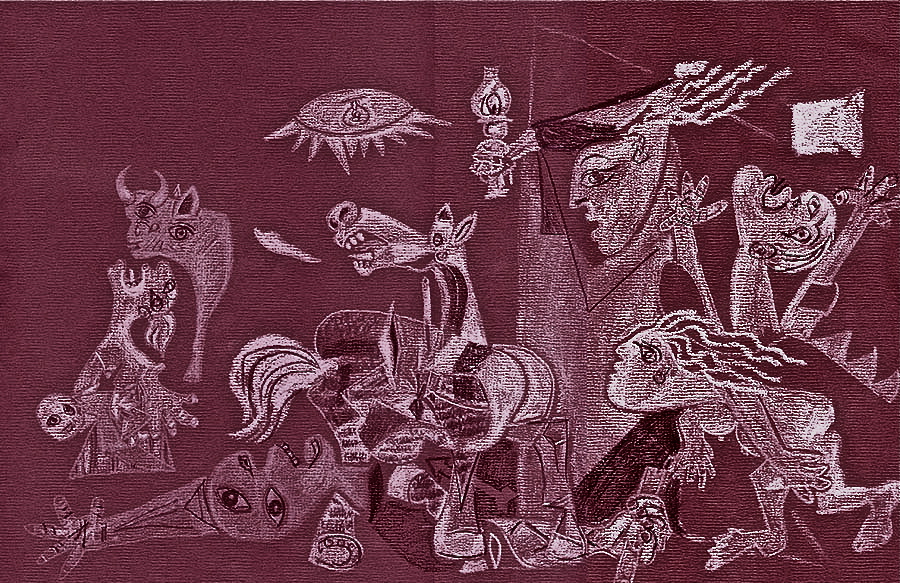
Homage to Picasso's Guernica (HD 2002)

But, which language? Which one language expresses all joyous, exhilarating, or traumatic experiences?

When Kashmiris are told to be precise in their language there are largely two positions involved: one, a sympathetic (if inadequate and self-censorious) one, which suggests that following ‘the convention’ will allow for legalistic interpretation and some form of retributive or ‘restorative’ justice. Often such a position traps itself in legal discourse, and by seeking to bottle people’s experiences into tight categories, fetishizes those categories, and in the end reduces the depth of traumatic experiences to mere data points on the grid of classification. This compliant and self-disciplining position forgets the origins of law in violence (and the inverse), and how ‘law’ serves to maintain ‘order’—which is, in other words, the systematized, legally endorsed structure of oppression. The peculiar claim to universalism (to create a universal system of law) that drives this position pays no heed to where, and for whom, these supposedly ‘universal’ categories of law are created, and what connection law has with power or ‘international’ law with the empire. Continue reading “On the ‘Precision’ of Language: Why the Term ‘Genocide’ is So Wrong, or Who Can Use the Term”