On Jan 21st, a group of student activists at Georgetown University provided guest speaker, General Patraeus, with an unexpected welcome, successfully interrupting his address by reading out the names and ages of those killed in the wars in Iraq and Afghanistan. In the process, they’ve reminded us of the power and necessity of dissent, which, in this case, was effectively achieved by less than a dozen remarkable students.
Category: Academe
Israeli Exceptionalism: A Grim Prognosis
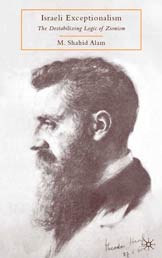 In the coming weeks we’ll be publishing reviews and responses to M. Shahid Alam’s new book Israeli Exceptionalism: The Destabilizing Logic of Zionism (New York: Palgrave Macmillan, 2009). Following is the first from political scientist Ahrar Ahmad.
Dr. Shahid Alam is primarily an economist and an educator. But, he is also a public intellectual, and often a lively polemicist, who writes with insight and conviction on issues dealing with culture, identity, religion, globalization, imperialism, and terrorism. But nothing stirs his passions as intensely as the issue of the Palestinians – their dispossession, marginalization, despair. His feelings are ardent, his language combative, his intellectual engagement prickly and zealous. It is largely this pre-occupation that has earned him a place in David Horowitz’s book on the Hundred Most Dangerous Academics in the US (an ignominy that he probably wears as a badge of honor). His latest book distills, clarifies and deepens much of his previous thinking on Zionism, the creation of the state of Israel, and the injustices inflicted on the Palestinians.
The trope along which this book is organized is the concept of “Exceptionalism” that is often claimed by the state of Israel, and sometimes by Jews themselves. To Alam this is nothing other than a rhetorical device, and a moral posture, to ensure the West’s indulgence and support, to protect Israelis from any criticism, and exempt them from standards and behavioral norms that apply to other peoples. This “exceptionalism” is derived from their Biblical covenants and the belief in their inherent “chosen-ness”, their wrenching history of suffering and persecution, their considerable achievements in science, philosophy and philanthropy, and their current status as a people allegedly besieged by Islamic fundamentalists, anti-Semitic bigots, and the barbaric and self-destructive Arabs. To question anything about Israel is tantamount to denigrating every aspect of its special status.
USACBI Statement on 1 Year Anniversary of ‘Operation Cast Lead’
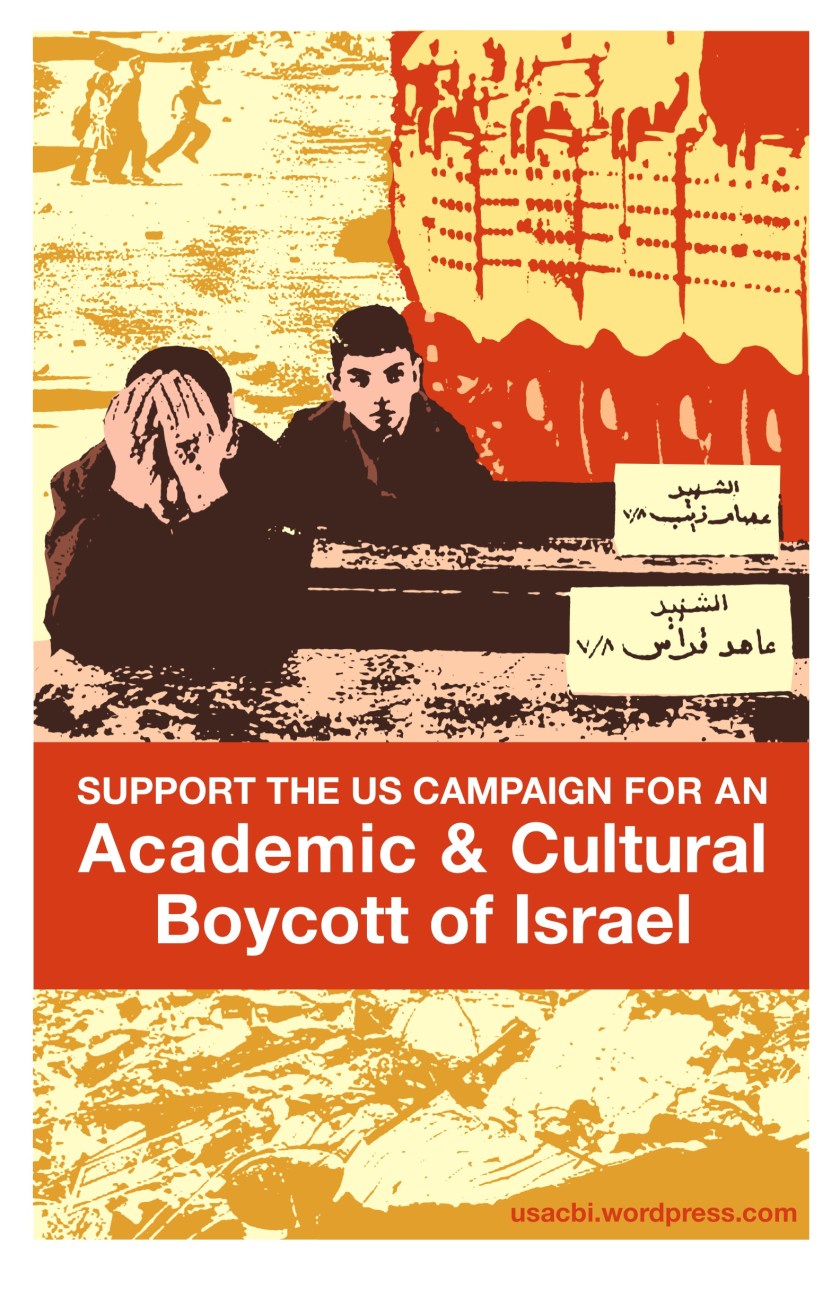
December 27, 2009 marks the one-year anniversary of the beginning of ‘Operation Cast Lead,’ Israel’s 22-day assault on the captive population of Gaza, which killed 1400 people, one third of them children, and injured more than 5300. During this war on an impoverished, mostly refugee population, Israel targeted civilians, using internationally proscribed white phosphorous bombs, deprived them of power, water and other essentials, and sought to destroy the infrastructure of Palestinian civil society, including hospitals, administrative buildings and UN facilities. It targeted with peculiar consistency educational institutions of all kinds: the Islamic University of Gaza, the Ministry of Education, the American International School, at least ten UNRWA schools, one of which was sheltering internally displaced Palestinian civilians with nowhere to flee, and tens of other schools and educational facilities.
While world leaders have tragically failed to come to Gaza’s help, civilians everywhere are rallying to show their solidarity with the Palestinian people, with anniversary vigils taking place this week in New York, Washington DC, Seattle, Portland, San Francisco, Boston, Los Angeles, and many more cities and towns in the US and world-wide.
Continue reading “USACBI Statement on 1 Year Anniversary of ‘Operation Cast Lead’”
PULSE: 20 Top Global Thinkers of 2009
On 30 November 2009 Foreign Policy magazine published its ‘Top 100 Global Thinkers’ list. We were naturally skeptical since the selection included Dick Cheney, General Petraeus, Larry Summers, Thomas Friedman, Bernard-Henri Lévy, David Kilcullen, Ayaan Hirsi Ali, Salam Fayyad, The Kagan Family (yes, all of them) and Ahmed Rashid among others. We don’t consider any of these people thinkers, let alone having global significance, and we couldn’t help but notice that the main thrust of all their work aligns with the global military and economic agenda of the US government. In response we asked twelve of our writers and editors to nominate their Top 20 global thinkers of 2009. Our criteria included choosing those who inspire critical thinking, as well as those who have been able to buck received wisdom and shape public debate. Always agreeing with their statements and positions was not a requisite, but in all cases our selections involved nominating those who have spurred people to challenge or enhance their own thinking in different ways. The following is our unranked list.
Update: See Foreign Policy’s response, our rejoinder, and our reflections on the debate. (Also see our 20 Top Global Media Figures of 2009)
Arundhati Roy
 The top nominee when it came to number of votes among PULSE contributors, Indian writer and activist Arundhati Roy is as much known for her non-fictional political work as she is for her award-winning fiction. She is a spokesperson of the alter-globalization movement and a critic of hegemonial US foreign policy, as well as vocal on behalf of the anti-nuclear and environmental movements both in India and abroad. She is also a staunch critic of the repressive Indian policies in Kashmir. Most recently a contributor to We Are One: A Celebration of Tribal Peoples (October 2009), Roy continues to be passionately engaged and eloquently outspoken in building a social movement towards developing alternatives. Her latest book is Listening to Grasshoppers: Field Notes on Democracy.
Struggles Against Commodification of the Mind
The free play of the mind has been managerialised. Holding our way of life to account has yielded to accountancy. The logic of the commodity has now penetrated into the sphere of human needs and nurture, breeding pathological symptoms there. In universities, as in transnational corporations, a largely disaffected labour force confronts a finance-obsessed managerial elite (Terry Eagleton, 2009).

November 17th marked the twentieth anniversary of the popular uprising in former Czechoslovakia, when thousands of students marched through the streets of Prague on International Students’ Day. Though officially sanctioned by the government, the occasion was used by the student movement to protest against the stale orthodoxy of the Czechoslovak regime, one of the last remaining Communist outposts in Central Europe. Hours later, when news spread of the violent suppression of the demonstration by security forces, the fate of the increasingly hollow regime was effectively sealed, as the event ushered in a remarkable period of popular mobilisation and mass civil disobedience which ultimately led to the regime’s downfall. Twenty years later, with the Czech student body thoroughly depoliticised, one had to look elsewhere however to find traces of the legacy of the International Students’ Day.
Continue reading “Struggles Against Commodification of the Mind”
C. Wright Mills Reconsidered

C. S. Soong’s Against the Grain is always thought provoking. Also check out this article on Mills’s enduring influence, and this obituary by Ralph Miliband from the New Left Review‘s May 1962 issue. (thanks Carlos)
Download program audio (mp3, 48.6 Mbytes)
C. Wright Mills liked to think big. His analyses of power elites, white collar workplaces, the Cuban Revolution, and potential sources of radical social transformation were influential with thinkers, activists, and concerned citizens in many parts of the globe. Daniel Geary describes Mills’s ideas and their impact on a number of social movements, especially the New Left.
The Self-Righteous Among Nations

Dr. Neve Gordon’s latest op-ed in the L.A. Times brought on the usual mind-boggling logical fallacies. Since Gordon wrote a book on the issue and many op-eds, that never received so much attention and public termination threats, for a moment there I thought that maybe – just maybe – this tempest in a teapot would turn into a tornado. My umbrella’s still dry, and again, the Israeli media forgot about the Boycott and returned to threatening Sweden.
Abusing Freedom of the Press to Further the Fascist Zionist Agenda
The Ha’aretz website published two articles on the matter, by Barak Ravid, both pretty much identical, both doing what they can to delegitimize Gordon, both missing the scoop again (a.k.a “Israeli dissent”). Let’s take a look at the titles: Continue reading “The Self-Righteous Among Nations”
The Essential Marcuse
Andrew Feenberg discusses his new collection of essays by Herbert Marcuse. The most influential radical philosopher of the 1960s, Marcuse’s writings are noteworthy for their uncompromising opposition to both capitalism and communism.
Memory, Inequality and Power: Palestine and the Universality of Human Rights

A month before the invasion of Iraq and less than a year before he tragically passed away, a frail Edward Said delivered this honorary lecture at UC Berkeley. It is Said’s most foreceful and passionate denouncement of Israel’s systematic destruction of Palestinian nationhood I have come across so far, a testament to a tireless voice of reason and humanism that is sorely missed in the academe and far beyond.
Voices of Dissent – Abbas Barzegar
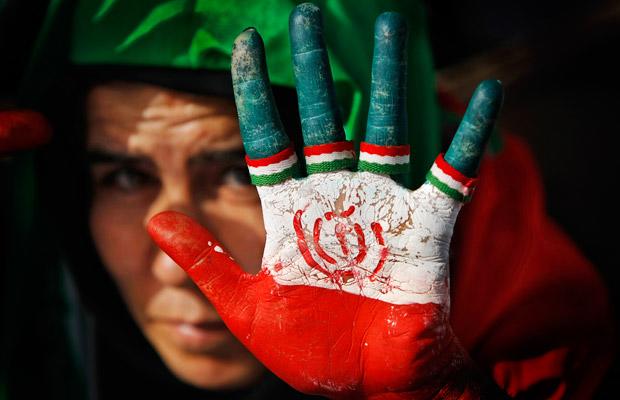
Media fantasies in Iran – Abbas Barzegar
It was only a matter of time before revolution in Iran, believed dissidents and media in the west. They were wrong
It’s not about the election, Ahmadinejad, or the even the protesters. The world has been captivated by the events in Iran because for many, Iran is to Islamism what the Soviet Union was to communism and presumably today we are somewhere near the fall of the Berlin Wall.
 P U L S E