Anatol Lieven discusses his new book Pakistan: A hard country, which I shall review here shortly.
Category: Pakistan
Pakistan- A Hard Challenge for International Governance
Anatol Lieven discusses Pakistan’s surprising degree of stability; International governance challenges; the role of the army and ISI; the drug trade; and Pakistan’s relationship with the U.S., Afghanistan, and other countries, including India, China, and Russia.
Anatol Lieven is chair of International Relations and Terrorism Studies at King’s College London, and a senior fellow at the New America Foundation. His next book, “Pakistan: A Hard Country,” will appear in April 2011.
Continue reading “Pakistan- A Hard Challenge for International Governance”
Risking it all: Trucks over the Lowari
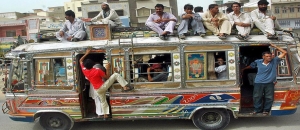
I was born in Chitral so I’ve travelled over this pass several times (part of my family still does). It is ironic to see the truck decorated with pictures of Benazir Bhutto since it was her father Zulfiqar Ali Bhutto who had first promised to build a tunnel and a safer road to connect Dir and Chitral. But that was over four decades back–and the promise never materialized. (Benazir also made a similar promise but proved no more eager than her father to deliver). I am shocked to see that things have actually gotten worse since my last trip.
United we stand
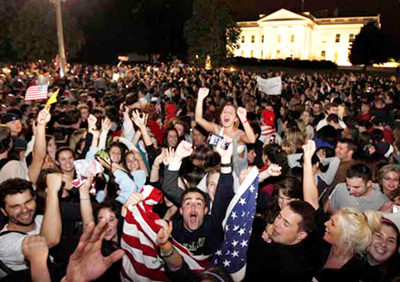 by Brenda Heard
News during the last couple of weeks has rumbled in to shake an already rickety balance of world order. Perhaps one of the most disturbing images accompanying those headlines, though, was not that of more bruised and bulleted bodies. Rather, the image was of what the Associated Press termed a ‘jubilant crowd’. As though they had just won the World Cup Final, Americans waved flags as they sang and chanted their patriotic celebration.
Osama Bin Laden, they had just been told, had been shot dead. After nearly a decade-long manhunt, he had finally been pounced upon in Pakistan. The crowd cheered. And when President Obama made the official announcement, he coaxed the nation to cheer the same; he concluded by quoting the American pledge of allegiance:
Let us remember that we can do these things not just because of wealth or power, but because of who we are: one nation, under God, indivisible, with liberty and justice for all’.
‘Indivisible’. In this one word lies the notion that has fed American policy for many, many years: united we stand—divided they fall.
Conversations with History: Anatol Lieven on Pakistan
Anatol Lieven is the author of the excellent America Right or Wrong. In the following interview he discusses his new book Paksitan: A Hard Country, which I shall review here shortly.
Conversations host Harry Kreisler welcomes Anatol Lieven for a discussion of his new book Pakistan: A Hard Country. Lieven emphasizes the important role of kinship in understanding society and the state in Pakistan. Discussing the military’s unique position as the preeminent national institution, he explains the sources of its power and prestige. Focusing on Pakistani national security thinking, he traces the perceived strategic threat posed by India, the role of Afghanistan in Pakistani strategy, the distinction between the Afghan and Pakistani Taliban, and the importance of Kashmir. He then proceeds to an analysis of the complex relationship between the United States and Pakistan. Lieven concludes with a discussion of the threat posed by Pakistan’s geographical location in the Indus valley and the long term implications of climate change for its future.
The Predators: Where is Your Democracy?
by Kathy Kelly

On May 4, 2011, CNN World News asked whether killing Osama bin Laden was legal under international law. Other news commentary has questioned whether it would have been both possible and advantageous to bring Osama bin Laden to trial rather than kill him.
World attention has been focused, however briefly, on questions of legality regarding the killing of Osama bin Laden. But, with the increasing use of Predator drones to kill suspected “high value targets” in Pakistan and Afghanistan, extrajudicial killings by U.S. military forces have become the new norm.
Just three days after Osama bin Laden was killed, an attack employing remote-control aerial drones killed fifteen people in Pakistan and wounded four. CNN reports that their Islamabad bureau has counted four drone strikes over the last month and a half since the March 17 drone attack which killed 44 people in Pakistan’s tribal region. This most recent suspected strike was the 21st this year. There were 111 strikes in 2010. The Human Rights Commission of Pakistan estimated that 957 innocent civilians were killed in 2010.
I’m reminded of an encounter I had, in May, 2010 ,when a journalist and a social worker from North Waziristan met with a small Voices for Creative Nonviolence delegation in Pakistan and described, in gory and graphic detail, the scenes of drone attacks which they had personally witnessed: the carbonized bodies, burned so fully they could be identified by legs and hands alone, the bystanders sent flying like dolls through the air to break, with shattered bones and sometimes-fatal brain injuries, upon walls and stone.
Beyond bin Laden
Tariq Ali, Fazwaz Gerges and Vali Nasr discuss Usama bin Laden’s assassination on Al Jazeera’s Empire with Marwan Bishara.
Osama bin Laden is dead. The world’s most wanted man has finally been killed after a hunt that lasted more than a decade, triggered global wars, and cost the lives of tens of thousands of people. What does it mean for US wars in the Muslim world? And will the US actions unleash a new wave of attacks around the world?
You People
 My contribution to the Journal of Postcolonial Writing’s Pakistan Special.
Seventeen years ago, as a very young man, I arrived in Karachi. Apart from six months in Beirut in my babyhood, this was my first time outside Europe. I didn’t know what to expect, although I had stereotypes from my British experience of what a Pakistani was (a Mirpuri, with brown skin and eyes, probably a cab driver).
The airport was spacious and anonymous, until the exit. Here tens of faces squashed against the glass doors, most of them cab drivers trying to make a personal connection. I was offered hashish in the cab, taken to an expensive hotel – which I refused – then to a hotel for cockroaches, but very cheap and very friendly. The man at the desk had black skin and blue eyes.
I liked Karachi. It was bustling, lively and engaging. The food was spicy and the weather was pleasantly hot. There appeared to be no social restraint on spontaneous conversation with strangers. It wasn’t Britain. I was pleased to find a word or two of Arabic helped greatly.
Three Cups of Hooey
UPDATE: ‘Three Cups of Deceit‘, Jon Krakauer’s extensive expose of Mortenson is now available for download (but only for a brief time, so hurry). Also check out Nosheen Ali’s article from the Third World Quarterly on the Mortenson saga and the discourse of humanitarianism. (via Mike Barker)
Fellow PULSEr Chase Madar calls this Missionary Imperialism. Once a critic of Donald Rumsfeld, he notes, Greg Mortenson had taken to touring the US with Pentagon officials stumping for the Afghan effort, portraying it as a Peace Corps project that just happens to have 130k armed soldiers attached.
An Élite Not Unlike Ours! Who’d Have Guessed?!
By Huma Dar
Rakhshanda Jal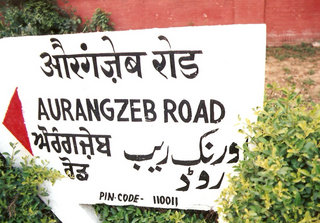 il writes in The Hindu, 27 February 2011, about “that elusive connect with India when she was least expecting it” on a visit to Karachi, Pakistan. The title of her piece is “A city not unlike home.”
I am always amused when Indians are surprised and taken aback by Pakistanis (whether in Karachi or Lahore or elsewhere) who “speak Urdu and English with almost equal aplomb” or by their “silk sarees and natty blazers” or by their possible cosmopolitanism!!! (Class is class, unfortunately, and the élite exhibit their privileges in similar ways all over the region!) Does it not, if just remotely, smack of the loaded “praise”: “Gee! Obama is so articulate!” — also known as “the racism of lowered expectation”? Why would Indians expect otherwise from their class-affiliates on the other side of the border? Or is it that Bollywood’s Pakistan-bashing fantasies are actually swallowed uncritically — hook, line, and sinker — even (or perhaps especially) by the educated Indians, eliciting “fears about Kalashnikov-toting Taliban and marauding Muhajirs.”
And by the way, Pakistanis are not all “tall, well-built, good-looking people,” especially under the normative definition of “good-looking” in South Asia (fair-skinned or with a “wheatish complexion”) — thank god for the latter! Sadly, the former two ascriptions, of course, too easily go awry given malnutrition due to poverty. Continue reading “An Élite Not Unlike Ours! Who’d Have Guessed?!”
 P U L S E