by Pothik Ghosh
A sharply combative polemic that hits the nail on the head and which must, for that reason, be hailed. However, I doubt that Chatterjee’s response, if at all he deigns to come up with one, will throw any new light on the matter, much less open new horizons. His intellectual orientation and theoretical presuppositions — which stem from his political complicity only to reinforce it – are simply incapable of that. Subalternity is a constitutive crisis of the horizon or structure of valourisation, measure, distribution and/or representation. (The operative word here is constitutive.) In such circumstances, to envisage politics in terms of affirmation of subalternity – which is precisely the theoretical and historiographical project of the Subaltern Studies collective – is to reproduce that structure and its constitutive lack or crisis. For, subalternity is the crisis of the structure of representation that is nevertheless sutured on to it. In other words, to envisage politics in terms of affirming subalternity is to reproduce the constitutive duality of the élite and the subaltern, and thus enable its continued extension through intensification. This is pretty much a continuation through intensification of the politics of passive revolution. Something the Subaltern Studies, and Chatterjee in particular, claimed to have critiqued — albeit only as one of its concrete historical moments or appearances — by precisely perpetuating its general political mode.

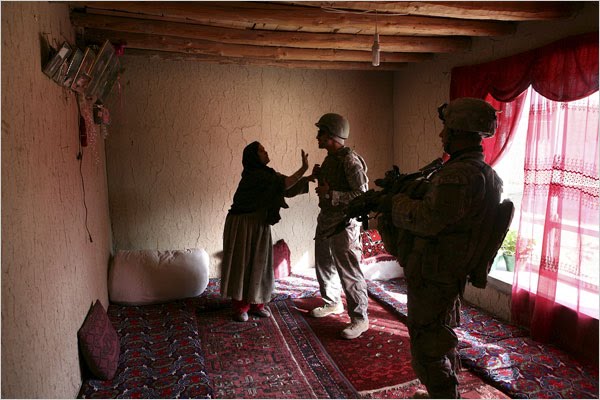 In Kabul, Afghanistan’s beleaguered capitol city, a young woman befriended me during December of 2010. She was eager to talk about her views, help us better understand the history of her country, and form lasting relationships. Now, she is too frightened to return a phone call from visiting westerners. The last time I saw her, during the spring of 2011, she was extremely anxious because, weeks earlier, U.S. Joint Special Operations Commandos (JSOC) had arrested her brother-in-law. The family has no idea how to find him. Once, someone working for the International Commission of the Red Cross called the family to say that he was still alive and in the custody of the International Security Assistance Forces, (ISAF). Numerous families in Afghanistan experience similar misery and fear after night raids that effectively “disappear” family members who are held incommunicado and sometimes turned over to Afghan National Police or the dreaded National Directorate of Security, (NDS).
 P U L S E