Rachid Ghannouchi’s letter from a Tunisian Prison

by Rashad Ali

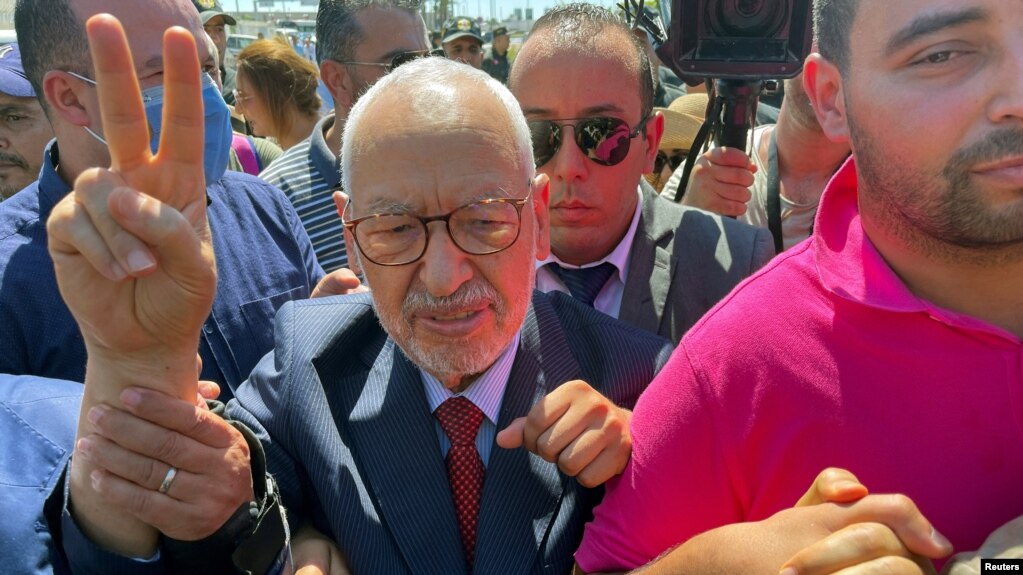
I recently attended a talk by Andrew March on his book On Muslim Democracy, which describes the journey from what he calls Sovereigntist Islamist Democratic ideas to post-sovereigntist and post-Islamist ideology of Shaykh Rashid Ghannouchi and the Ennahda Party. The evolution of Ghannouchi’s ideas, the struggle for democracy and human rights, and his transformation from Islamist ideologue to Muslim Democrat is arguably one of the most significant developments in contemporary Islamic political thought. 

The event was also attended by Ghannouchi’s close confidante, associate, and student Ahmed Gaaloul. He read out a letter which takes on greater significance in the context of Tunisia’s authoritarian turn and jailing of opposition figures, including Ghannouchi and Saed Ferjani, constraining the judiciary and imprisoning judges such as Bechir Akremi.

Prefacing the letter, Ahmed Gaaloul said that the letter was in response to a question about his advocacy for democracy and consensus, since it did not help him. Rather, he ended up imprisoned and no one stood with him. Doesn’t this mean that the values he calls for have failed, illustrated further by the crime to which the Palestinian people are exposed ?

Here is Ghannouchi’s letter in response:

Friday, February 16, 2024

I am in prison today because I called for the values ​​of national democracy, which is part of universal democracy, and because the conflict in Tunisia is a conflict between democracy and non-democracy. 

Some of the enemies of democracy rely on modernity as a basis to exclude Islamic opponents. We in Tunisia were founded on the values ​​of Islam, and we do not find any justification to exclude those who disagree with us or those who believe in Islam with a different vision, because we do not see that there is an official spokesman for Islam.

I am in prison because a significant portion of the so-called Tunisian modernists are non-democratic. They call for a democracy that is just for them, an exclusionary democracy. Whereas We are in a struggle for a Tunisia for all and for a democracy that includes everyone inside Tunisia and outside Tunisia.

The country today is governed by the dualism of good and evil, right and wrong, patriotism and treason. This is the essence of the coup of July 25, 2021: the monopoly of patriotism, the monopoly of Islam, and the monopoly of righteousness. Therefore, the existing regime is in a relentless war against democracy in all its meanings. This approach cannot bring Tunisians together because God created people different.

The current system sees difference as a curse, but we see it as a mercy.

Palestine exposed the shortcomings of democracy within the framework of the nation state. 

Democracy, as a mechanism, is one of the best mechanisms that the human political mind has produced for consensus and reaching settlements between differences and a way to resolve disputes away from violence.

But when democracy is confined to a particular group and is imprisoned within the trenches of nationalism, race, and color, its mechanisms break down in more than one case, especially in the face of major challenges such as the Palestine question.

The flaw, then, is not in the idea of ​​democracy, but in the idea of ​​the nation-state outside the framework of ethics and the values of equality for all human beings. There is no framework for ethics outside the framework of man as God’s khalifa / vicegerent on earth, the one who is entrusted to look after this world. Therefore, we demand democracy and add it to our understanding of Islam so that it emerges from the confines and the narrowness of the individual and the group to the vastness of humanity.”

The letter in Arabic:

هذه الرسالة جاءت ردا من الشيخ راشد على سؤال وجهته له وهو في سجنه قبل مداخلة مبرمجة في احدى الندوات المخصصة لتقديم الكتاب الاخير “المسلمون الديمقراطيون” مع اندرو مارش.

تمثل السؤال في ان وضعه هو في السجن وهو الداعي للديمقراطية والتوافق، لم يشفع له بل انتهى سجينا ولم يقف معه احد ألا يعني هذا ان القيم التي يدعو إليها فشلت خاصة في ضوء التناقض القيمي الذي يعيشه العالم في ضوء الاجرام الذي يتعرض له الشعب الفلسطيني والاخلال القيمية التي تعرفها المنظومة الغربية ما يشكك في منظومة قيمها وفي الديمقراطية. فكان رده في الرسالة التالية:

 الخميس 15 فيفري 2024

أنا في السجن اليوم لاني دعوت إلى قيم الديمقراطية الوطنية وهي جزء من الديمقراطية الكونية للإنسان ولأن الصراع في تونس هو صراع بين الديمقراطية و اللاديمقراطية .

إن أعداء الديمقراطية يعتمدون الحداثة كقاعدة لإقصاء الخصوم الإسلاميين، ونحن في تونس وجدنا تقريبا بسبب أننا انطلقنا من قيم الإسلام ولا نجد مبررا لإقصاء من يخالفنا أو من يؤمن بالإسلام برؤية أخرى، لأننا لا نرى أن هناك ناطقا رسميا باسم الإسلام . 

أنا في السجن لان قسما كبيرا من الحداثيين غير ديمقراطيين، هم يدعون الى ديمقراطية تخصهم ديمقراطية إقصائية . 

نحن في نضال من أجل تونس للجميع ومن أجل ديمقراطية تسع الجميع داخل تونس وخارج تونس .

البلاد محكومة اليوم بثنائية الخير والشر، الحق والباطل، الوطنية والخيانة، هذا هو جوهر انقلاب 25 جويلية 2021: احتكار الوطنية واحتكار الإسلام واحتكار الصلاح. لذلك النظام القائم هو في حرب لا هوادة فيها ضد الديمقراطية بكل معانيها. ولا يمكن لهذا المنظور ان يجمع التونسيين. لان الله خلق الناس مختلفين، هو نظام يرى الاختلاف نقمة أما نحن فنراه رحمة. 

إن فلسطين فضحت ليس الديمقراطية فقط وإنما الرؤية القومية للديمقراطية: nation state.

الديمقراطية ،كآلية، من أفضل ما أنتج العقل البشري السياسي من آليات للتوافق والوصول الى تسويات بين المختلفين وسبيل الى حسم الخلافات بعيدا عن العنف.

ولكن عندما حشرت وسجنت في خندق القومية والعرق واللون تعطلت آلياتها في أكثر من حالة خاصة أمام الامتحانات الكبيرة مثل امتحان فلسطين. 

الخلل اذا ليس في فكرة الديمقراطية ولكن في فكرة “الدولة القومية خارج اطار الاخلاق”، ولا إطار للأخلاق خارج إطار الانسان خليفة الله في الأرض لذلك نحن نطالب بالديمقراطية ونضيفها لإسلام يخرج من ضيق الإنسان (الفرد) إلى سعة الإنسانية.
Revolution, Reform or Restoration? Nadia Marzouki on Tunisia Today

Tunisia has been very dear to my heart since I went there in the spring of 2013, just two years after its uprisings, an event that shook the world. Although I’ve not been back in the three years since that memorable visit, I’ve followed Tunisian events with great interest from afar. I was thus thrilled to have the opportunity to interview the Tunisian scholar Nadia Marzouki when she was in Denver last month.

Marzouki, a Research Fellow at the Centre national de la recherche scientifique (CNRS) in Paris, is the author of L’Islam, une religion américaine? (Islam, An American Religion?) and co-editor of two books: Religious Conversions in the Mediterranean World (with Olivier Roy) and the forthcoming Saving the People: How Populists Hijack Religion (with Roy and Duncan McDonnell). Continue reading “Revolution, Reform or Restoration? Nadia Marzouki on Tunisia Today”

TERRORisms: Israel’s Colonialist Dialogue Comes to the Oslo National Theatre

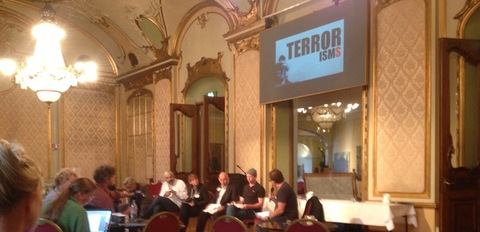
TERRORisms inaugural conference  in Oslo 2013
TERRORisms inaugural conference in Oslo 2013

There’s drama stirring in the Oslo National Theatre, but not the kind most cultural institutions expect. Under the auspiciousness of The Union of Theaters of Europe, the Oslo National Theatre has committed to a two-year project titled “TERRORisms”:

From 2013 to 2015, theatres from Oslo, Stuttgart, Belgrade, Tel Aviv, London and Reims will get closer to their TERRORisms. They will elaborate different points of view, exploring different aspects likely to determine fundamentally our societies… dealing with the issue of terrorism and its appropriation by artists.

I’ve just come back from Oslo, and to be honest, Norwegians- as individuals and as a society- didn’t strike me to be particularly “determined fundamentally” by “their” “terrorisms”. Admittedly, I’m not an expert on European contemporary art, but it doesn’t seem to me like there’s a lot of  artistic appropriation of terrorism being done in the European cultural sphere, and the notion is rather- let’s just say- foreign.

The Union of Theaters of Europe: The New Propaganda Front for Israel’s TERRORisms

Continue reading “TERRORisms: Israel’s Colonialist Dialogue Comes to the Oslo National Theatre”

The Jenin Jenin Amendment: Israel from Ethnocracy to Fascism

Last Monday, on the 6th of May, Israel’s Ministerial Committee for Legislation decided to approve the “Jenin Jenin Amendment” in a paramilitary hearing. The amendment [Hebrew] is an addition to the Israeli Defamation Law [Hebrew], stating that army personnel and the state can sue individuals, who expose army violence, for libel, without proving damages. The amendment comes as a reaction to Israel’s Supreme Court rejecting soldiers’ class action suit of defamation against actor/director Mohammad Bakri, for his documentary Jenin Jenin (watch it in full here), in which Palestinian testimonies describe their experiences of the 2002 massacre perpetrated by Israel’s army in the besieged refugee camp.

Continue reading “The Jenin Jenin Amendment: Israel from Ethnocracy to Fascism”

Just a normal democracy

Here is a news item from Israel, which is, we are assured in the West by many politicians, commentators, and lobbyists, a regular democracy, if not a multicultural paradise.

Nazareth Illit, which has recently come under threat of an Arab demographic takeover, now is headed to be the religious-Zionist capital of the lower Galilee…

The article goes on to describe various initiatives intended to boost the city’s Jewish population, as a response to an increase in the number of Palestinian citizens who have moved in, keen for a better standard of living. The projects, overseen by the town’s mayor Shimon Gapso, include the renovation of “an old school building to house 15 young families from the former Gush Katif yeshiva of Torat HaChaim” – in other words, former residents of a Gaza Strip colony.

Apparently, one of the other figures involved in these efforts is MK Uri Ariel, who in 2008 “called on the government to encourage Israeli Arabs to “willingly emigrate” from Israel and from large cities within it”. Another personality is Rabbi Hillel Horowitz, who spent years living in the Hebron area settlements.

The piece concludes by reprinting a message from Mayor Gapso that appears on Nazareth Illit’s website:

“It is time to call a spade a spade. Just as Ben-Gurion and Peres said in the 1950’s that the Galilee must be Jewish, we say the same about Nazareth Illit: It must retain its Jewish character. Our goal is to bring 3,000 families within five years… We have been in contact with various ideological groups, and we are definitely considering building a hareidi-religious neighborhood as well. The primary goal is to put the brakes on the demographic deterioration…”

Continue reading “Just a normal democracy”

What CNN forgot to mention about ‘the Middle East’s only democracy’

The following extracts are taken from an email update (4 Feb 2010) by Yeela Raanan for the Regional Council for the Unrecognized Villages in the Negev (they have a website here and a Wikipedia entry here):

On Tuesday this week the Government of Israel destroyed crops in the Bedouin village of Al-Mazraa. “Crops” hardly defines the one inch high wheat that the community has managed to grow in the desert land. The Bedouin farmers do not have water allocations like their Jewish counterparts, and are dependent on rain. The annual average is 2 inches of rain.. This year was a better year, but even on a good year the wheat does not grow tall enough to be harvested and is used as grazing for the sheep of the residents of this village – one of the poorest communities in Israel. But the government officials were not pleased that this year was blessed with rain – and re-plowed the land to make sure the meager crop will be destroyed. The excuse – the land is not owned by the residents of the village (the land is disputed land – historically belonging to the Bedouin, but the government claims it belongs to the state).  But the real reason is – they are Arabs. As Arabs – even though they are citizens of Israel – they are seen as our enemies.

And:

The village of Twail Abu-Jarwal was destroyed completely three times. On October 26th, January 6th and again on January 21st.

In the village of El-Araqib homes have been demolished four times! On October 29th – two tents, on December 7th – 7 huts, on January 6th and 21st two huts each time.

Continue reading “What CNN forgot to mention about ‘the Middle East’s only democracy’”

Noam Chomsky on the Economy and Democracy

Continue reading “Noam Chomsky on the Economy and Democracy”

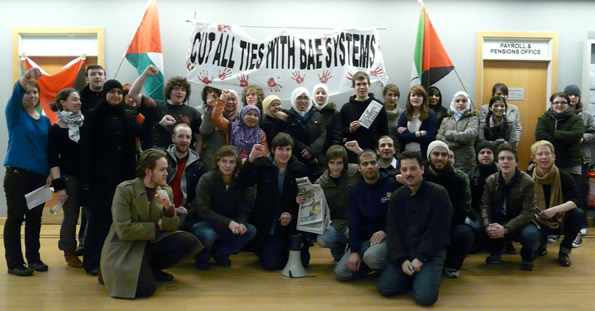
Victory for student movement: Strathclyde University to end complicity with Gaza conflict

Photo by Zuraeda Ibrahim

A vibrant and wonderful student movement has flowered a the Strathclyde University which has scored two major victories for peace and justice within this month. We at PULSE salute all the students, in particular Strathclyde Stop the War, Action Palestine, and the Strathclyde University Muslim Students Association (SUMSA) for their indispensable work. In today’s excellent guest editorial, Kim Bizzarri, who has himself lead from the front, reports on these successes and the prospects for future.

GLASGOW, February 21 – Students at Strathclyde University won the vote on Thursday to cut the university’s ties with arms manufacturer BAe Systems which supplied components used by the Israeli military in the recent massacre of Palestinian civilians in Gaza.

Students win majority support in historic AGM

The vote, which took place in relation to a motion submitted by a group of students to their Union’s General Meeting (AGM) – the student’s highest decision-making body – won with an overwhelming majority of the over 200 students who queued in the union’s corridors and stairs to participate in the event. Such a high student attendance had been unprecedented in any previous AGM, most of which failed in the past 10 years to even reach quorum.

Despite attempts by the Union’s administration to dilute the substance of the motion and have it voted upon by the conservative Student Representative Council (SRC) – who had already rejected a similar popular motion two years earlier given the uncomfortable position it placed the University vis-à-vis its corporate funders – the fervent group of passionate students were successful in galvanising sufficient support amongst their fellows to turn the motion into student policy.

Within weeks of occupying the McCance Building – heart of the University’s administration – the original 60 students involved in the occupation have already gained the support of a sizable number of their fellow students.

Continue reading “Victory for student movement: Strathclyde University to end complicity with Gaza conflict”