Some Unvarnished Truths About the US and Israel

by M. Shahid Alam

Was there ever a time when a leading organ of the US media could speak the unvarnished truth about the links between the United States and Israel?

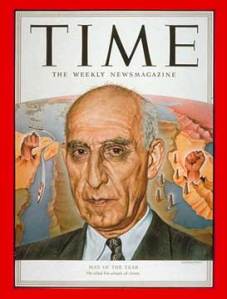
Consider this quote from Time magazine of January 1952, embedded in an article that explained its choice of Mohammed Mossadegh as its Person of the Year for 1951. It had no compliments for Mossadegh, the man who was spearheading his country’s bid to take back its oil resources from the British-owned Anglo-Iranian Oil Company. No surprise there.

Surprising, however, is Time’s candor on Israel. It minces no words. US support for the creation of Israel had alienated the Middle East: it had been a costly error, motivated not by national interest but petty considerations of presidential politics. Truman had supported the creation of Israel in order to court American Jewish votes. This was the plain truth: a US President had placed his electoral chances ahead of a vital national interest. Apparently, in those days, Time could write the plain truth without worrying about the tide of flak from the American Jewish community.

Continue reading “Some Unvarnished Truths About the US and Israel”
“Only the mood music has changed”: Tariq Ali on Obama’s presidency

OK… here’s the PULSE exclusive I’ve been working on. Hope you enjoy.

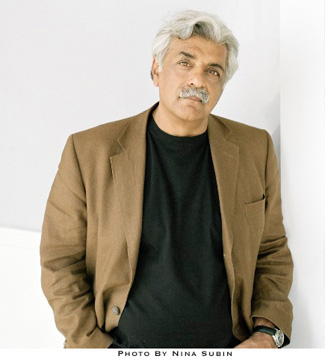
Is president Barack Obama the change America has been waiting for or is he another corporate Democrat representing elite interests?  According to Tariq Ali, very little has chanced between Obama and former president George W. Bush.  In his latest book “The Obama Syndrome: Surrender at Home, War Abroad,” Ali argues that Obama is carrying on the reckless policies of the Bush regime.  If Obama continues down this path, the Democratic Party not only face the prospect of the House & Senate in 2010 but also the presidency in 2012.  This should be a cause for concern.

I caught up with Ali during his American book tour and here’s what he had to say about the Obama presidency.

Where did the idea for this book emanate from? Why did you want to write a book about “The Obama Syndrome” and what does that refer to?

The idea occurred because I speak a lot on the United States. People ask me questions after each talk and increasingly in the past two to three years, the talk has been about Obama.  I thought a short book which essentially provided a balance sheet from the left on the mid-term would be a useful exercise. Given that he’s being attacked nonstop for being a socialist, a leftist, being a Muslim and all this nonsense that comes from the Tea Party-Fox Television alliance, I thought it was better to have a hard-headed realistic account about who the guy really is.  So my book is a critique of him, but it’s also by implication a very sharp critique of people who claim that everything Obama is doing is so radical that they can’t take it anymore.

Continue reading ““Only the mood music has changed”: Tariq Ali on Obama’s presidency”

Reese Erlich: “Stop using the word ‘terrorist'”

Defining what a terrorist is and isn’t is a major dilemma. What one may consider terrorism, another may consider resistance. So where does one draw the line? Reese Erlich tackles that topic in his latest book “Conversations with Terrorists: Middle East Leaders on Politics, Violence, and Empire.” Erlich is a veteran journalist who has covered U.S. foreign policy for decades. He has freelanced for National Public Radio, Radio Deutsche Welle, the Australian Broadcasting Corp. Radio, the Canadian Broadcasting Corp. Radio, and writes for The San Francisco Chronicle and The Dallas Morning News.
Drawing on firsthand interviews and original research, Erlich argues that yesterday’s terrorist is often today’s national leader and that today’s freedom fighter may become tomorrow’s terrorist. By branding all of American’s opponents as “terrorists,” it makes it more difficult to look beyond the individual or the political group and understand what they are really all about. I caught up with Erlich recently and here’s what he had to say.

Continue reading “Reese Erlich: “Stop using the word ‘terrorist’””

Zionist Dialectics: Past and Future

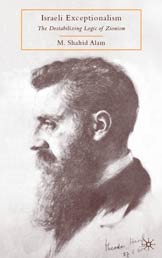
Excerpted from Israeli Exceptionalism (Palgrave: 2009).

by M. Shahid Alam

My God! Is this the end? Is this the goal for which our fathers
have striven and for whose sake all generations have suffered?
Is this the dream of a return to Zion which our people have
dreamt for centuries: that we now come to Zion to stain its soil
with innocent blood?”

Ahad Ha’am, 1921

This study has employed a dialectical framework for analyzing the destabilizing logic of Zionism. We have examined this logic as it has unfolded through time, driven by the vision of an exclusionary colonialism, drawing into its circuit – aligned with it and against it – nations, peoples, forces, and civilizations whose actions and interactions impinge on the trajectory of Zionism, and, in turn, who are changed by this trajectory.

It would be a bit simplistic to examine the field of interactions among the different actors in this historic drama on the essentialist assumption that these actors and their interests are unchanging. Instead, we need to explore the complex ways in which the Zionists have worked – and, often have succeeded – to alter the behavior of the other political actors in this drama: and, how, in turn, the Zionists respond to these changes. Most importantly, we need to explore all the ways in which the Zionists have succeeded in mobilizing the resources of the United States and other Western powers to serve their specific objectives.

Continue reading “Zionist Dialectics: Past and Future”

Feeling the Loyalty to the Jewish State of Israel

By Max Blumenthal and Joseph Dana

The Israeli Knesset is debating a bill proposed by David Rotem of the extreme right Yisrael Beiteinu party that would require all Israeli citizens to swear loyalty to Israel as a “Jewish and democratic state.” This bill is targeted at increasing pressure on the twenty percent of Israelis who are Palestinian citizens while forcing the ultra Orthodox Jewish minority who reject the legitimacy of any state not based on Jewish biblical law to accept Zionism. If passed in its proposed form, citizens unwilling to take the loyalty oath would be at risk of losing citizenship.

Continue reading “Feeling the Loyalty to the Jewish State of Israel”

Anna Baltzer: Palestinians “come second” at peace talks

This interview first appeared at iBrattleboro.com

Anna Baltzer on "The Daily Show"

A visit to the occupied territories of Palestine can change one’s perspectives forever. Such was the case of Anna Baltzer. Baltzer is a Jewish-American granddaughter of Holocaust survivors. In 2002, she was awarded a Fulbright scholarship to teach English in Ankara, Turkey and soon after volunteered with the International Women’s Peace Service in the West Bank. There she was exposed to the Israeli occupation of Palestine. She documented human rights abuses for the IWPS, returned to Palestine/Israel over the years, and published her experiences in a book called “A Witness in Palestine: A Jewish American Woman in the Occupied Territories.”

Baltzer is a leading human rights activist on the Mideast and travels across the country to raise awareness about the Israeli-Palestine conflict. Her appearance on “The Daily Show” with Palestinian human rights activist Mustafa Barghouti was instrumental in raising awareness about life under the Israeli occupation of the West Bank and Gaza. I caught up with Baltzer and we discussed several topics including her “The Daily Show” appearance; occupation myths; Israeli apartheid and the boycott, divestment, and sanctions campaign; and the Mideast peace talks in Washington, DC.

Continue reading “Anna Baltzer: Palestinians “come second” at peace talks”

Israel: A Failing Colonial Project

by M. Shahid Alam

Increasingly, despite its early military and political successes, Israel cannot for long endure as a colonial project. It must choose between wars – and destruction – or transition to a state for all its peoples.

In order to firmly secure its existence – as firmly as that is possible for any state – a settler state has to overcome three challenges. It has to solve the native problem; break away from its mother country; and gain the recognition of neighboring states and peoples. It can be shown that Israel has not met any of these conditions.

Consider Israel’s native problem. In 1948, in the months before and after its creation, Israel appeared to have solved its native problem in one fell swoop. It had expelled 80 percent of the Palestinians from the territories it had conquered. In addition, with the rapid influx of Arab Jews, Palestinians were soon reduced to less than ten percent of Israel’s population.

So, had Israel licked its native problem for good? Not really.

The Palestinians inside Israel pushed back with a high natural rate of growth in their numbers. As a result, despite the continuing influx of Jewish immigrants, the Palestinian share in Israel’s population has grown to above 20 percent. Increasingly, Jews in Israel see Israeli Arabs as a threat to their Jewish state. Some are advocating a fresh round of ethnic cleansing. Others are calling for a new partition to exclude areas with Arab majorities.

The Palestinians expelled from Israel in 1948 did not go away either. Most of them set up camp in areas around Israel – the West Bank, Gaza, southern Lebanon and Jordan. In 1967, when Israel conquered Gaza and the West Bank, it could expel a much smaller fraction of the Palestinians from these territories. In consequence, with more than a million additional Palestinians under its control, Israeli had recreated its native problem.

Continue reading “Israel: A Failing Colonial Project”

Reading Roger Cohen in the New York Times

Roger Cohen: Liberal ZionistM. Shahid Alam

Roger Cohen is the rare columnist at NYT who makes an occasional effort to bring some objectivity to the Israeli-Palestinian conflict. Yet, how far does his objectivity go?

Consider his piece of June 10, “Modern Folly and Ancient Wisdom.”

I have selected a few excerpts for comment.

First excerpt:
“Israel’s bloody interception of the Mavi Marmara and its motley crew was crass — another example of the counterproductive use of force — but nothing about it could justify the Turkish prime minister’s outrageous statement that the world now perceives “the swastika and the Star of David together (italics mine).”

Why does he speak of the “motley crew” on the Mavi Marmara? First, is ‘crew’ the appropriate word for the humanitarian activists on a ship bringing relief to people under blockade. ‘Crew’ has unpleasant connotations. Let us consult the Oxford English dictionary. Originally, it meant “an augmentation or reinforcement of a military force.” Now, by extension, it means “Any organized or associated force, band, or body of armed men.”

In addition, why is this a ‘motley’ crew? Does he mean heterogeneous? In fact, most were Turkish. Why then are they “motley?” The word has a bad odor. The OED concurs. Consider two entries in the OED. Entry one: “Of a thing or collection of things: composed of elements of diverse or varied character, form, appearance, etc. Freq. with implication of poor design or organization (italics added).” And entry two: Of a gathering or group of people: consisting of people of diverse or varied appearance, character, etc.; miscellaneous. Freq. depreciative (italics in the original).

Continue reading “Reading Roger Cohen in the New York Times”

Jeremy Scahill TKOs former NYC mayor Ed Koch on “Morning Joe”

First it was Glenn Greenwald, now it is independent journalist Jeremy Scahill.  Today on MSNBC’s “Morning Joe,” former New York City mayor Ed Koch tried to defend Israel’s actions for attacking the Mavi Mamara flotilla. Koch uttered complete nonsense and Scahill picked him apart piece by piece a la Greenwald vs. Eliot Spitzer. Here’s the debate they had. Koch couldn’t defend himself, resorted to interrupting, and even used  the ridiculous “Hamas Card” on Scahill. Scahill wasn’t buying it.

Later, Scahill had this to say about their off-the-air discussion (if you could call it that).

During the commercial break during my debate with Koch, the former mayor called me a “terrorist supporter.” I told him, “Say it on the air.” He didn’t.

To read Scahill’s account, click here.

Ultra Zionists Take Manhattan, and Demand the Holy Land

Indepedent journalist Max Blumenthal has just released his latest video.  This one deals Jewish extremists at a New York city rally that closely resemble members of the American Tea Party movement.

Blumenthal writes the following.

On April 25, over 1000 New York-area Jewish extremists gathered in midtown Manhattan to rally against the Barack Obama administration’s call for a freeze on construction in occupied East Jerusalem and to demand unlimited rights to colonize the West Bank. With Obama and top White House officials engaged in a charm offensive to repair their relationship with mainstream American Jewish organizations, speakers at the rally lashed out at the Jewish groups and Democratic politicians, warning that cozying up to Obama would endanger Israel and imperil their cherished settlement enterprise.

I’ll let Blumenthal’s video tell the rest.

Last year, Blumenthal, along with Joseph Dana, produced the famous “Feeling the Love in Jerusalem” video that was banned on YouTube and Huffington Post. He also produced “Bomb a Ghetto, Raise a Cheer,” a video documenting pro-Israeli teabaggers rallying in support of Operation Cast Lead. For more of Blumenthal’s works click here.