In the context of the current multiple arenas of war and occupation in Muslim-majority regions, the issues of gender and sexuality are vitally linked to the casus belli, both within and without academia. Such linkages, with a long and complicated genealogy thoroughly imbricated in the politics of colonization, decolonization, and neo-colonization, also indicate an obsessive desire to re-enact the “discovery narrative” or the “rescue narrative.” Examining current contestations in popular media – including recent articles written by Maureen Dowd, Naomi Wolf and Phyllis Chesler et al and the poster designed by Alexander Segert, which was integral to the success of the anti-minaret Swiss referendum – this essay investigates whether, how, and where the neoconservative, neoliberal, and the mainstream feminist discourses converge, diverge, and intersect.
Segert's Anti-Minaret Poster
by Huma Dar
In the context of the current multiple arenas of war and occupation in Muslim-majority regions, the issues of gender and sexuality are vitally linked to the casus belli, both within and without academia. Such linkages, with a long and complicated genealogy thoroughly imbricated in the politics of colonization, decolonization, and neo-colonization, theorized by Inderpal Grewal, Gayatri Spivak, Lata Mani, Leila Ahmed, Sherene Razack, Saba Mahmood, Sunera Thobani amongst others, also indicate an obsessive desire to re-enact the “discovery narrative” or the “rescue narrative.” Examining current contestations in popular media – including recent articles written by Maureen Dowd, Naomi Wolf and Phyllis Chesler et al and the poster designed by Alexander Segert, which was integral to the success of the anti-minaret Swiss referendum – I investigate whether, how, and where the neoconservative, neoliberal, and the mainstream feminist discourses converge, diverge, and intersect. I undertake to deconstruct the ongoing debates that obsessively revolve around the veil or the sexuality that is variously professed to be suppressed, annihilated, or even “discovered” beneath the veil by some liberal explorers.
This Memorial eve, culture in Israel took a turn to the right. Highly respected artist, Amir Bennayun, has written a song that can only described as messianic hateful state incitement and propaganda. Here it is in all its disgusting glory [lyrics below limited by my translation]:
I am reading Soldiers of Reason, Alex Abellas hagiographic account of the rise of the RAND Corporation in which he shows how ideas that originated with its mathematicians have by virtue of its proximity to power come to dominate such diverse disciplines as political science, international relations, philosophy, sociology, (even religious studies!) and economics (NB: for more on the subject, don’t miss Adam Curtis’s classic film The Trap). Prominent among them are systems analysis, game theory, and rational choice theory. The latter gave us everything from the arms race to the recent financial collapse. In his review of Robert Skidelsky’s Keynes: The Return of the Master, the new biography of John Maynard Keynes, Joseph Stiglitz writes:
We should be clear about this: economic theory never provided much support for these free-market views. Theories of imperfect and asymmetric information in markets had undermined every one of the ‘efficient market’ doctrines, even before they became fashionable in the Reagan-Thatcher era. Bruce Greenwald and I had explained that Adam Smith’s hand was not in fact invisible: it wasn’t there. Sanford Grossman and I had explained that if markets were as efficient in transmitting information as the free marketeers claimed, no one would have any incentive to gather and process it. Free marketeers, and the special interests that benefited from their doctrines, paid little attention to these inconvenient truths.
While economists who criticised the ruling free-market paradigm often still employed, as a matter of convenience, simple models of ‘rational’ expectations (that is, they assumed that individuals ‘rationally’ used all the information that they had available), they departed from the ruling paradigm in assuming that different individuals had access to different information. Their aim was to show that the standard paradigm was no longer valid when there was even this seemingly small and obviously reasonable change in assumptions. They showed, for instance, that unfettered markets were not efficient, and could be characterised by persistent unemployment. But if the economy behaves so poorly when such small realistic changes are made to the paradigm, what could we expect if we added further elements of realism, such as bouts of irrational optimism and pessimism, the ‘panics and manias’ that break out repeatedly in markets all over the world?
Joseph Stiglitz on Media Matters with Bob McChesney
Joseph Stiglitz on BookTV, interviewed by Lori Wallach of Public Citizen.
In Bil’in, the army remembers Bassem Abu Rahmeh by escalating to rubber bullets and live ammunition. A big ceremony was held with Fatah and the Fatah Youth marching band:
After a recent talk on racism and other illegitimate hierarchies at a diversity conference in Dallas, I received a letter from one of the people who had attended that asked “why you feel it necessary to perpetuate and even exacerbate the divisiveness of language when addressing a group of people assembled to learn how to live better together and be more accepting of differences?” He suggested that by being so sharply critical, I was part of the problem not the solution.
Calls for diversity and inclusiveness from people with privilege (such as a white man with a professional job living in the United States) are meaningful only when we are willing to address the systems and structures of power in which inequality and discrimination are rooted. But because such a critique strikes many people as too radical, crafting a response to those who want to avoid that analysis is crucial to the struggle for progressive social change. Below is my letter to him.
Conversations host Harry Kreisler welcomes historian, critic, and Pulitzer Prize-winning author Garry Wills for a discussion his new book, Bomb Power. Wills recalls his formative influences including his Catholic faith and education; William Buckley and the editors of The National Review; the Vietnam War protests; and the Civil Rights movement. He compares Obama to past presidents and explains why his support turned to criticism. He analyzes the impact of the atomic bomb on the U.S. constitutional system arguing that its development created a national security state characterized by an enlargement of Presidential power at the expense of other branches of government.
Today is the first year’s anniversary of Bassem Abu Rahmeh’s Death. I didn’t know Bassem, but I watched him die. It was only a few months after the Gaza massacre. Nobody cared for a dead Palestinian. Two weeks later I started going to Bil’in. I’ve been going every week ever since. I’ve met people I’ve come to care about. I’ve met Bassem’s friends, who welcome me in their home with a smile and embrace. His family, who have been shot and jailed. His fiance- a beautiful Israeli activist- whom I’ve come to love like a sister. I care about their life and I see them hurt.
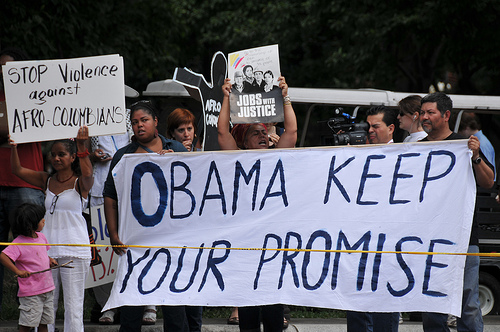
Another broken promise: Secretary Gates promotes US-Colombia Free Trade Agreement as a way to "reward" the Uribe government. Photo from Flickr user ZenaShots.
When asked in a Presidential debate why he opposed the US-Colombia Free Trade Agreement, Barack Obama framed his concerns with Colombia’s deplorable human rights record. Now that he is President and the labor movement is far more inconsequential, these concerns have evidently withered away. Yesterday, Secretary of Defense and Bush Administration carry-over Robert Gates was in Bogota expounding on the need to pay off America’s client state. As the Los Angeles Times reports:
Defense Department officials have favored the pact as a way to reward Colombia for its successful effort at beating back drug trafficking and the country’s insurgency…
“Colombia’s success against terrorists and narco-traffickers does offer a lot of opportunities for them to share their expertise,” Gates said. “We certainly would like to see . . . other countries take advantage of Colombia’s strengths.”
Yes, Colombia has done a smashing job of fighting people like this. Meanwhile, the United States Labor Education in the Americas Project informs us that Colombia remains the most dangerous place in the world for union organizers. More trade unionists have been assassinated in Colombia in the last six years than the rest of the world combined. As for those advances in human rights Gates mentions in the Times report, Colombia still has an impunity rate of 96% in the more than 2,700 worker’s-rights related murders that have been perpetrated in the last twenty years. Perhaps Amnesty International put it best when they reported on the threats facing human rights activists in the country: “Such hostility has been fomented by the Government, which appears to perceive human rights and security as mutually exclusive.”
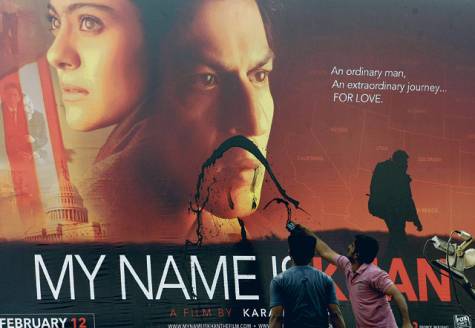
My Name is Khan, although narratively based mostly in the USA, has to be theorized within and around the framework of Bollywood; the Urdu-Hindi film history, and its transnational circuits of production, distribution, and consumption; Shahrukh Khan’s star narrative, and the determining context of the Indian political scene along with that in the US and its “war on/of terror.”
by Huma Dar
The Defacing of Khan: It's Not Easy Being Muslim in Mumbai or in Newark
My Name is Khan, although narratively based mostly in the USA, has to be understood and theorized within and around the framework of Bollywood; the Urdu-Hindi film history and its transnational circuits of production, distribution, and consumption; Shahrukh Khan’s star narrative, and the determining context of the Indian political scene along with that in the US and its “War on/of Terror.” Even prior to the Indian Partition in 1947, most Muslim artists had what Sa’adat Hasan Manto (1912-1955) mockingly called “shuddified” or Hinduized names – Dilip Kumar for Yusuf Khan, Madhubala for Mumtaz Begum Jahan Dehlavi (1933-1969), Meena Kumari for Mahjabeen Bano (1932-1972), or the more ambivalent (non-halal) Johnny Walker for Badruddin Jamaluddin Qazi (1923-2003) and Nargis for Fatima Rashid (1929-1981). At the contemporary moment, the biggest stars of the Urdu-Hindi film industry in India are Khans: Shahrukh, Salman, Aamir, Saif Ali et al. It might therefore be tempting to conclude that the Bombay film industry is indeed a level playing field. The Khans are all Muslims, at least nominally. Cinematically, they enact, with a few notable exceptions, Hindu characters. Culturally, the vigorous fanzines of Bollywood idolize them as comfortably suave denizens of metropolitan Bombay[Mumbai] with understated or unexpressed Muslimness — their Hindu wives, girlfriends, or mothers facilitating this imagined assimilation or passing. Of course, for regular, non-filmi (“film-related” in Urdu-Hindi) Muslim men, this assimilation through marriage to Hindu women is generally frowned upon and can have potentially fatal consequences.
My ruminations on My Name is Khan, like a typical Urdu-Hindi film, lengthy and replete with intermissions, are an entryway into not just the film as cinematic text, but also its complex and rich transnational contexts that must be read in tandem. In a series of six thematic posts, with this as the first, I will expand on:
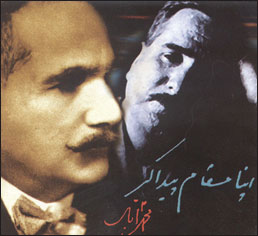
Note: In the Qur’anic account of man’s creation, God asks the angels to bow down to Adam; they bow down, except Iblīs. God banishes Iblīs but, granting his request, gives him the power to tempt and waylay humans except those who submit in sincerity to their Creator.
Gabriel
Old friend, how is your time spent in banishment?
Iblīs
In fire wrapped, pain-swept, surging, toiling, unbent.
Gabriel
At our heavenly summits, we often talk of you.
Should you repent, seek grace, give us the cue.