You can purchase Norman Finkelstein’s new book here.
Year: 2010
Putting the world at risk?
Gareth Porter, one of PULSE’s 20 Top Global Media Figures of 2009, on Al Jazeera’s Inside Story discussing Iran and the NPT.
Hillary Clinton, the US secretary of state, has warned that Iran’s nuclear ambitions are putting the world at risk. Have the NPT conferences become a platform to settle political accounts and an opportunity to lobby against adversaries? Does the treaty help rid the world of nuclear weapons or does it advocate maintaining the status quo? And will Obama’s nuclear undertakings help patch the gaps of the NPT?
Current State of Investigative Reporting
Newspapers across the nation are in serious trouble, pummeled by the recession, by declining revenue […]and readership, and by competition from round-the-clock online resources. Speaking at a reception marking the launch of the New England Center for Investigative Reporting at BU, Seymour Hersh, a Pulitzer Prize-winning journalist and an author, speaks about the current state of investigative reporting.Hosted by New England Center for Investigative Reporting on May 19, 2009.
Vodpod videos no longer available.
more about "Current State of Investigative Reporting", posted with vodpod
The Carnival at Novara and Unmasking of a Racist Regime
by Huma Dar
The police, in the northern Italian town of Novara, fined a 26-year-old Tunisian woman for wearing a black niqab; she was going to a mosque for the Friday prayers. According to the New York Times she was fined about $650 under a regulation introduced in January 2010. Apparently, Novara — a bastion of the xenophobic Northern League — “bans clothing in public that prevents identification by the police.”
Continue reading “The Carnival at Novara and Unmasking of a Racist Regime”
Avatar in the Real World – James Cameron on Indigenous Struggles
Ever since Bono declared his intention to “bring some sex appeal to the idea of wanting to change
the world” on the front pages of Vanity Fair, I’ve been suspicious of celebrity endorsements of struggles for social justice. James Cameron, the director of the brilliant Avatar, is an exception, however. In this interview on the Riz Khan show, Cameron speaks about his recent visit to Brazil and the resistance of local communities to the construction of the Belo Monte Dam, which threatens the destruction of the homeland of tens of thousands of people. In eminently sensible and respectful terms, he discusses his support for their struggle and his reaction to the way indigenous activists around the world have embraced the motif of the Navi struggle against corporate imperialism so masterfully depicted in Avatar. What is more, it seems his initial reluctance to acknowledge the parallels between the Navi and the Palestinian struggle is waning too.
Below the fold, you can find another recent IPS interview with Cameron where he further discusses the relationship between Avatar and and its appropriation by indigenous activists. (For previous PULSE posts on Avatar see the review by Kim Bizzari and Max Ajl’s response to Slavoj Zizek.)
Continue reading “Avatar in the Real World – James Cameron on Indigenous Struggles”
The Only Democracy in the Middle East: 30.04-01.05.2010
Four people arrested in Bil’in. As you can tell by the video’s last few minutes, as friend and journalist, Tommy Donnellan, is being carried off, the army knows that he is of the press. What do you call it when the authorities arrest the press, again?
Continue reading “The Only Democracy in the Middle East: 30.04-01.05.2010”
Clan, State, Islamic Polity
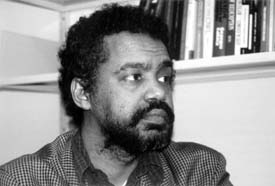
Could the root causes of the Arab-Muslim ‘malaise’ be cultural? That’s what journalist Brian Whitaker suggests in his book ‘What’s Really Wrong With the Middle East’. The thesis sounds suspicious, but Whitaker isn’t a cheap Orientalist, and he uses interviews with Arabs as his raw material. The key issues his informants keep pointing to are indeed the issues that, wherever you meet them, young Arabs complain about. These include an undue emphasis on submission and obedience in the education system, at work, and in the home, the social valorisation of conformity, and a corrupt public space.
The personal is the political. The problem in every sphere is one of overbearing authority, and it’s true that this is ultimately family-based, ultimately the result of overly-narrow personal identifications. In fact, I would argue that tribalism, nepotism, sectarianism, even forced marriage and honour killing, are all manifestations of the tyranny of the clan. And the tyranny of the clan is the result of bad governance.
Suicide Bombers
The Riz Khan show asks what motivates a person to sacrifice their own life in order to kill others. There are sensible answers from the venerable Robert Pape, Director of the Chicago Project on Security and Terrorism and author of Dying to Win: The Strategic Logic of Suicide Terrorism, and much twaddle from Farhana Ali, a particularly clueless terrorologist. If this stupid woman is serving as a ‘senior instructor for the US Afpak team’, then God help America and God help the people of ‘Afpak’. (I suspect Pape was thinking the same. His laughter at the end of the interview was eloquent).
Searching for Jake Sully in India’s Heartland
by Harsha Walia
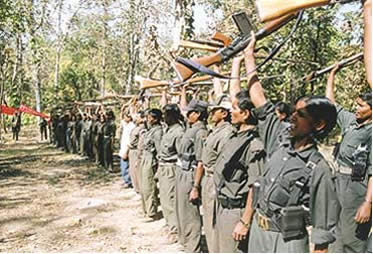 Building traditional irrigation systems, practicing forest conservation and cooperative farming, and providing educational and medical facilities in the isolated rural forests of India. This could apply to any NGO or charity, but is actually the work of armed Naxalite Maoists. In addition to community development, Naxalites have organized politically to self-govern and have claimed responsibility for numerous killings of government officials, security personnel, and alleged informers. Today, many of the Naxal cadres are Adivasis (tribal indigenous) and 40% are women. Naxalites have been operating since the 1970s in 20 states around the jungles of Central and Eastern India.
Naxalites recently made headlines as Indian Prime Minister Manmohan Singh declared them “the most serious internal threat to India’s national security” and unleashed Operation Green Hunt. Under Green Hunt 250,000 police, armed forces, and counter-insurgency teams have been deployed, while the US provides military intelligence and tactical guidance. The jungles are under a heavy siege: checkpoints, army patrols, helicopter missions, gunfire battles that kill 40 civilians per week. Based on the counterinsurgency model of soft power alongside military might (charity from the barrel of a gun), government-sponsored agencies are setting up rehabilitation camps for the 200,000 already-displaced villagers.
Continue reading “Searching for Jake Sully in India’s Heartland”
Atrocities in Afghanistan: A Troubling Timetable
by Kathy Kelly and Dan Pearson

Peace activists can hasten an end to the U.S. war in Afghanistan by demanding a timetable for U.S. military withdrawal. [A bill in the U.S. Congress] introduced by Representatives McGovern and Jones, requires such a timetable. In the Senate, a similar bill has been introduced by Senator Feingold. Arguments in favor of a timetable for withdrawal of U.S. forces from Afghanistan should include readiness to examine disturbing patterns of misinformation regarding U.S./NATO attacks against Afghan civilians.
It is worth noting that even General McChrystal acknowledges that U.S. forces have killed civilians who meant them no harm. During a biweekly videoconference with US soldiers in Afghanistan, he was quite candid. “We’ve shot an amazing number of people and killed a number and, to my knowledge, none has proven to have been a real threat to the force,” said General McChrystal. “To my knowledge, in the nine-plus months I’ve been here, not a single case where we have engaged in an escalation of force incident and hurt someone has it turned out that the vehicle had a suicide bomb or weapons in it and, in many cases, had families in it.”
Those families and individuals that General McChrystal refers to should be our primary concern. We should try to imagine the sorrow and horror afflicting each individual whose tragic story is told in the “timetable” of atrocities committed against innocent people. How can we compensate people who have endured three decades of warfare, whose land has been so ravaged that, according to noted researcher Alfred McCoy, it would cost $34 billion dollars to restore their agricultural infrastructure. We should notify our elected representatives that the $33 billion dollar supplemental funding bill sought by the Obama administration to pay for U.S. wars in Afghanistan and Iraq could be directed toward helping Afghanistan replant its orchards, replenish its flocks, and rebuild its irrigation systems. We should insist on an end to atrocities like those which follow.
Continue reading “Atrocities in Afghanistan: A Troubling Timetable”
 P U L S E