Kargas

The following is cross-posted from Lobelog.com. 
Iran’s Zahedan airport is located on a road named for Allama Iqbal, the great Indian philosopher whom Pakistan after partition adopted as its national poet. The shaheen, or eagle, features prominently in Iqbal’s poetry, as a symbol of vigour, dignity and daring. It is contrasted against the figure of the kargas, or vulture, which represents cunning, cowardice and ignobility. It is the latter appellation that the region frequently applies to the CIA drones which today menace the skies from Waziristan, Kandahar to Zahedan. But shaheen or kargas, they are both ferocious; and it is a feat to capture either. Small wonder then, that some in Iran see cause for celebration in the capture of CIA’s RQ-170 Sentinel drone, a stealth surveillance craft manufactured by Lockheed Martin.

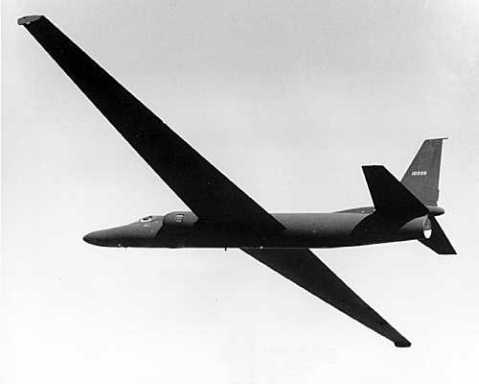
This is not the first time the CIA has delivered one of its most advanced aircraft for inevitable reverse engineering to its putative enemy. On April 9, 1960, people at the Zahedan airport watched anxiously as an aircraft with unusually wide wings approached from the north-east. The Lockheed U-2C was on a top-secret spying mission for the CIA, but its target was not Iran. Indeed, it was coming in to land after being chased by several fighter planes. Over the previous 8 hours, the plane had photographed four strategic Soviet military sites from an altitude of 70,000 feet, well out of the reach of the Russian MiGs and Sukhois. It embarked on its mission from the Badaber air force base 10 miles to the south of Peshawar.

Continue reading “Kargas”

The Other Pole

Rime Allaf has an unmissable piece in the Guardian. As a counterpoint to the sectarian war scenario we’re hearing so much about, Rime offers the other pole.

From 1946, spoiled by the US-sponsored coup of 1949 which first brought military rule to the region, Syria witnessed a shortlived parliamentary democracy, a vibrant civil society and a brief period of a free press, and it elected leaders whose names remain embedded in the national memory as examples of the Syria it can be, and it should be. While perhaps initially elitist in nature, unlike the current varied spectrum of opposition groups and revolutionary committees, it is a logical inspiration for the future.

The whole article is well worth reading. There are good observations on how the supposed fractiousness of the ‘opposition’ is not necessarily a bad thing, and important commentary on the future ramifications of Iranian miscalculations.

One major issue may change in the post-Assad era: relations with Iran and Hezbollah. The strategic alliance with Iran since the Islamic revolution flourished under Bashar al-Assad’s reign, especially following the invasion of Iraq, but Iranian support in repressing the current protests won’t easily be forgotten. Likewise, the Hezbollah leader Hassan Nasrallah’s support for the Syrian regime has incensed many, especially after his praise for every other Arab uprising; only last year, it would have been unimaginable to see Hezbollah’s flag burned in Syria, as it has been recently.

IAEA report shows Iran HAS NOT made decision to go nuclear

The hype about the latest IAEA report about Iran’s nuclear program was much more frightening than the actual content. Yesterday, Joseph Cirincione, the president of the Ploughshares Fund, an organization devoted to preventing the spread of nuclear weapons, informed a seemingly stunned Tony Birtley that most of what’s been revealed “is not new”.

Tony Birtley: What does it say that’s significant to you about the work that Iran is doing now?

Joseph Cirincione:
What’s significant actually is that there isn’t that much currently going on, almost all this work is pre-2003. It’s all old data. It all came from that laptop you referred to, the laptop of death, that was disclosed in 2004. There’s suspicions of some work and there’s evidence of some work still going on, particularly computer modelling, but there doesn’t seem to be any evidence of a crash program to build a warhead. That’s what’s so significant. It’s very clear from this report that Iran has not, HAS NOT, made a decision to go to a nuclear weapon, that a nuclear weapon is not imminent or inevitable and thus there’s still time to use diplomacy to convince Iran not to go ahead and build a nuclear weapon.

Thank You So Much

A message from the father of the murdered nine-year-old Ibrahim Shayban to Russia, China and Bashaar al-Asad.

The Russian and Chinese vetoes to protect the Syrian regime from UN Security Council condemnation are reminiscent of all those American vetoes to protect Israel. Both countries have their reasons for shielding the Syrian regime: Russia’s naval base at Tartus, discomfort over the way the Libya No Fly Zone slipped into more overt intervention, the fear that UN condemnation may one day focus on Russian abuses in Chechnya and Chinese abuses in Tibet and Xinjiang. But both countries should consider their own interests more creatively. Ultimately, their influence in Syria and the wider region will depend on their image in Syrian and Arab eyes. The Syrian regime will not be there for ever. The Syrian people will.

Iran is another state which has repeatedly shot itself in the foot since the Arab revolutions began, first by mischaracterising as Islamic uprisings the deposings of Mubarak, Bin Ali and Qaddafi, then by opposing the revolution which seems most similar to Iran’s in 79 – the Syrian revolution. Iran used to be popular in Syria even amongst many sectarian-minded Sunni Muslims. It used to be popular in the wider Arab region. This popularity was Iran’s best guarantee against marginalisation and even military attack from the region’s pro-Western forces. But its popularity has evaporated this year.

Back to Ibrahim. He was martyred while leaving a mosque in the Qaboon suburb of Damascus. His funeral was held today in Meydan, in the heart of the city. Here’s some footage. Apparently insecurity forces killed two of the mourners when they came out of the mosque into the street.

Commentators have been telling us that central Damascus remains quiet. It’s true that many areas have been quiet, either because the upper middle class inhabitants still support the regime or are sitting on the fence, or because of the overbearing police and mukhabarat presence on the streets. Damascus has certainly not slipped out of regime control, as Homs, Hama, Deir ez-Zor and Idlib sometimes have. Yet Damascus has been bubbling for a long time. Pro-regime commentators will say that Kafar Souseh (which has demonstrated frequently since Shaikh Rifa’i of the Rifa’i mosque was shot) is a suburb, not the city itself – which is true, if Camden Town isn’t part of London. Suburbs further out – like Harasta, Douma, Muadamiya – have been veritable war zones for months. Imagine if Streatham, Hackney, Tottenham and Ealing were in a state of war and commentators told us ‘London remains quiet.’ And Meydan and Rukn ad-Deen have witnessed frequent, large demonstrations, and savage repression. These places are as central as Chelsea and Kensington. Smaller, briefer demonstrations have occurred in high-class Malki, in Sha‘alaan, Shaikh Muhiyudeen, Baghdad Street, Muhajireen. You can’t get more central. The last place is within earshot of Bashaar al-Asad’s house. If the quietness of Damascus reassures the regime, I think they’d better start panicking.

Erdogan on Israel, Syria and Iran

Recep Tayyip Erdogan speaks to Freed Zakaria on CNN’s GPS. He has some strong words for Israel.

Continue reading “Erdogan on Israel, Syria and Iran”

The Wrong Side of History

impeccable

An interesting article in the Asia Times (republished in full after the break) states that “in recent weeks more and more former Iranian officials and academics have begun to speak out against the lack of complexity and nuance in Iran’s policy vis-a-vis the perceived deteriorating situation inside Syria.” The article also suggests that Hizbullah is rethinking its position. About time too.

The Asia Times continues: “talking to Iranian officials it appears that there is deep unease about the methods employed by the Syrian security forces which have allegedly killed up to 2,000 people since protests and violence erupted in March. In private, Iranian officials draw a comparison to how professionally Iranian security forces responded to widespread rioting and disorder in the wake of the disputed presidential elections of June 2009. They claim (with some justification) that the disorder was quelled with minimum loss of life.”

The article goes on to list reasons why Iran’s rulers expect the Asad regime to come out of the current unrest intact. Beyond an appreciation of the ruthlessness of regime violence, these include: “the divided nature of the Syrian opposition, the majority of whom hail from a Sunni Islamist pedigree. But deep down Iranian officials believe that Assad will survive because owing to his foreign policy posture and his impeccable anti-Zionist credentials, his regime is somehow more ‘connected’ to the deepest aspirations of his people, indeed the people of the region as a whole.”

Continue reading “The Wrong Side of History”

‘Iran got no nukes and US knows that’

Lucy Kafanov of RT interviews legendary journalist Seymour Hersh about his most recent article on Iran and the Obama administration’s attempts to discredit him.

Washington is ignoring its own intelligence because it is hell-bent on finding nuclear weapons that do not exist, Pulitzer-winning investigative journalist Seymour Hersh told RT.

Of Niqabs, Monsters, and Decolonial Feminisms

By Huma Dar

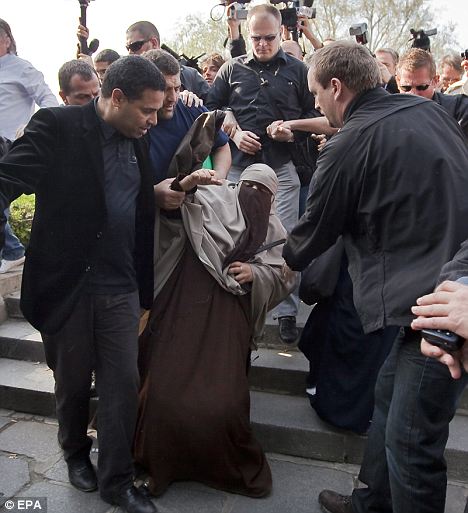
A woman in niqab being arrested in Paris, April 12, 2011, copyright EPA

Of Civilities and Dignities

On 22 June 2009, Nicolas Sarkozy, the French President, asserted that burqas (or the burqa-clad?) are “not welcome” in France, adding that “[i]n our country, we cannot accept that women be prisoners behind a screen, cut off from all social life, deprived of all identity” and that “the veils reduced dignity.” France’s Muslim minority is Western Europe’s largest Muslim minority, estimated at six-million-strong.  And this is just an approximation, as the French Republic implicitly claims to be post-race and post-religion via a prohibition on any census that would take into account the race or religion of its citizens. (This anxiety mirrors the brouhaha in Indian media àpropos the much-contested enumeration of OBCs or Other Backward Castes in the Indian census surveys of 2011, or the urgency to declare some spaces post-caste, post-feminist, and post-racist while casteism, patriarchy and racism continue unabated.)

Continue reading “Of Niqabs, Monsters, and Decolonial Feminisms”

Can anyone at the US State department spell ‘Irony’?

From the State Department’s 14 February 2011 daily press briefing.

MR. CROWLEY: Well, that – what has guided us throughout the last three months and guides us in terms of how we focus on Iran is the core principles – the Secretary mentioned them again today – of restraint from violence, respect for universal rights, and political and social reform. There is a – it is hypocrisy that Iran says one thing in the context of Egypt but refuses to put its own words into action in its own country.

QUESTION: How about other countries – Bahrain, Yemen, or Algeria, or Jordan? Why you are not talking about those countries and you are condemning what is happening in Iran?

MR. CROWLEY: Well, actually, in the other countries there is greater respect for the rights of the citizens.

14 February 2011