Nir Rosen on Western media fraud in the Middle East

Journalist and author Nir Rosen writes the following in an article for Al Jazeera about the myriad obstacles to the dissemination of truth in Western reporting on the Middle East:

Relying on a translator means you can only talk to one person at a time and you miss all the background noise. It means you have to depend on somebody from a certain social class, or sect, or political position, to filter and mediate the country for you. Maybe they are Sunni and have limited contacts outside their community. Maybe they are a Christian from east Beirut and know little about the Shia of south Lebanon or the Sunnis of the north. Maybe they’re urban and disdainful of those who are rural. In Iraq, maybe they are a middle class Shia from Baghdad or a former doctor or engineer who looks down upon the poor urban class who make up the Sadrists. And so in May 2003, when I was the first American journalist to interview Muqtada Sadr, my bureau chief at Time magazine was angry at me for wasting my time and sending it on to the editors in New York without asking him, because Muqtada was unimportant, lacking credentials. But in Iraq, social movements, street movements, militias, those with power on the ground, have been much more important than those in the establishment or politicians in the green zone, and it is events in the red zone which have shaped things.

Continue reading “Nir Rosen on Western media fraud in the Middle East”
Chase Madar: In defense of Bradley Manning

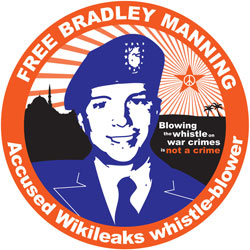
In this TomDispatch.com interview Civil rights attorney and PULSE contributor Chase Madar outlines the case against––and the defense on behalf of––the soldier who allegedly provided the documents for the latest WikiLeaks release as well as the now infamous “Collateral Murder” video, Private First Class Bradley Manning. Also, don’t miss Chase’s brilliant piece on Bradley Manning.

Of Niqabs, Monsters, and Decolonial Feminisms

By Huma Dar

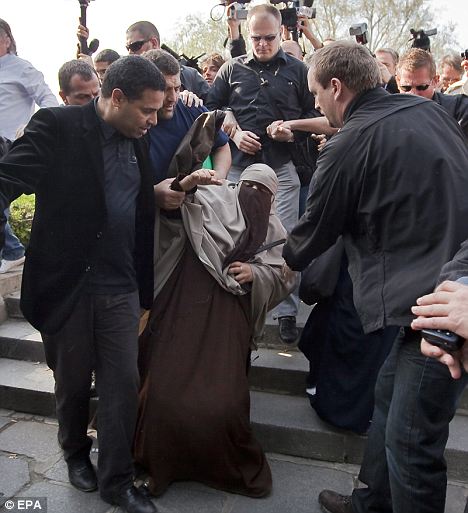
A woman in niqab being arrested in Paris, April 12, 2011, copyright EPA

Of Civilities and Dignities

On 22 June 2009, Nicolas Sarkozy, the French President, asserted that burqas (or the burqa-clad?) are “not welcome” in France, adding that “[i]n our country, we cannot accept that women be prisoners behind a screen, cut off from all social life, deprived of all identity” and that “the veils reduced dignity.” France’s Muslim minority is Western Europe’s largest Muslim minority, estimated at six-million-strong.  And this is just an approximation, as the French Republic implicitly claims to be post-race and post-religion via a prohibition on any census that would take into account the race or religion of its citizens. (This anxiety mirrors the brouhaha in Indian media àpropos the much-contested enumeration of OBCs or Other Backward Castes in the Indian census surveys of 2011, or the urgency to declare some spaces post-caste, post-feminist, and post-racist while casteism, patriarchy and racism continue unabated.)

Continue reading “Of Niqabs, Monsters, and Decolonial Feminisms”

Shoe thrower targets Iraq’s PM

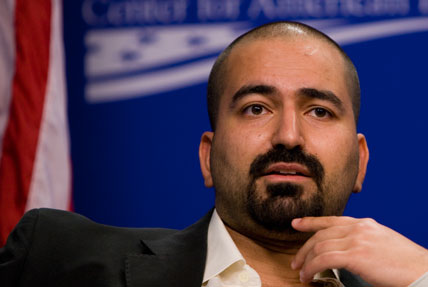
The great Muntadhr Al Zaydi is alive and kicking.

Protests have also been taking place in Iraq – as demonstrators there call for sweeping reforms. In their midst is Muntadhr Al Zaydi, the man known internationally for throwing a shoe at former US president George Bush.

He had to stay away from his country for months after serving jail time, but he is now back on the streets of Baghdad. He is on a mission that is again putting him at odds with authorities.

Al Jazeera’s Rawya Rageh explains.

The Quest to Dominate the Arab World

by Brenda Heard

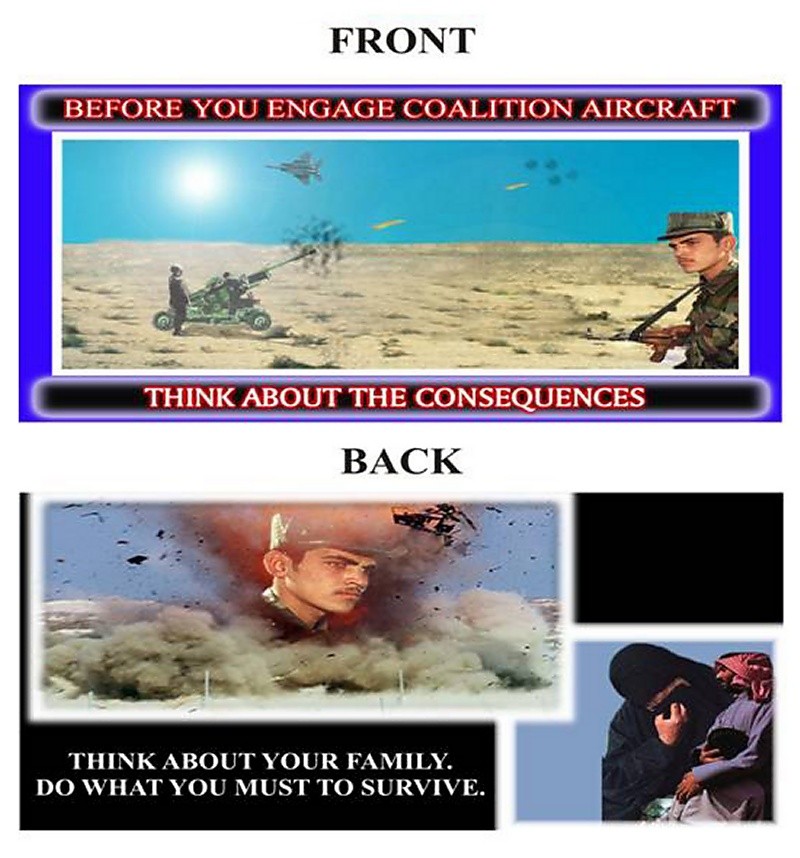
Sample leaflet dropped by US forces. See http://www.iwar.org.uk/psyops/resources/iraq/index.htm

‘Shock and Awe’—the phrase is back in the headlines. As we have watched the bombs bursting onto Libya over the past two days, we cannot help but recall the ‘Shock and Awe’ bombing of Iraq eight years ago this week. The phrase that defined that assault was launched into popular usage in January 2003 with the pre-invasion tremors from America. Now, eight years later, the media is divided over whether we are witnessing another blast of ‘shock and awe’. Having lost much of its original meaning, the phrase has taken on two identities. When used by political-military pundits, it euphemistically suggests a quick and clean campaign to eliminate evil forces. When used by the general public, it has settled into a synonym for ‘wow’.

In their prologue to the 1996 report Shock and Awe: Achieving Rapid Dominance [1], Harlan Ullman and James Wade spoke of  ‘a time when uncertainty about the future is perhaps one of the few givens’. Their solution? Control that future. America’s world supremacy in military power, coupled with its expanding technology industry, presented ‘an unusual opportunity’ to seize the power that had ‘tantalized and confounded’ war strategists throughout history: ‘destroying the adversary’s will to resist before, during, and after battle’.

As we now watch the global contest of wills playing out in the Middle East, it becomes painfully obvious that dominance, the end goal of ‘shock and awe’, will never be quick and clean. While the American stated objective of displacing Saddam Hussein was indeed met, eight years of angry and bloody chaos have darkened Iraq to an extent unforeseen in the sterile analyses of Ullman and Wade. And while the Americans cling to the strategic position they captured in Baghdad, the entire region has grown impassioned with resistance.

Continue reading “The Quest to Dominate the Arab World”

Should the No-Fly Zone Fly?

For those of you wondering what’s become of our informant in Tripoli, I’ve heard from a member of her family who lives here in Britain that she is physically safe but in a difficult emotional state – terrified and very tired. The internet is properly down now, and Human Rights Watch reports a wave of “arbitrary arrests and forced disappearances” throughout the capital.

To the west of Tripoli, the heroic city of Zawiya has fallen after Qaddafi’s forces bombed schools, hospitals, mosques and private homes. There are reports of random mass arrests there too. We can be sure that executions and torture are continuing on a massive scale. Further east, first Bin Jawad, then Ras Lanuf and now Brega have been reclaimed by the tyrant after heavy aerial bombardment. It seems that my earlier optimism was misplaced. The Libyan revolution risks drowning in blood. If it does, the larger Arab revolution may well grind to a temporary halt.

This worries me far more than the prospect of Western intervention, because the West is currently in no position to occupy or control Libya. The West’s economy is precarious to say the least, partly because of the adventures in Iraq and Afghanistan. In Iraq, the mighty American army was tied down and humiliated although no more than 20% of the people rose against the occupation at any one time, and despite the political incompetence and sectarian divisions of the resistance. In Afghanistan, NATO achieved the amazing feat of making the almost universally hated Taliban popular again. While the West squanders treasure and blood, China has signed the contracts to exploit Afghanistan’s resources.

Continue reading “Should the No-Fly Zone Fly?”

The Trials of Bradley Manning: A Defense

For the past seven months, US Army Private First Class Manning has been held in solitary confinement in the Marine Corps brig in Quantico, Virginia. Twenty-five thousand other Americans are also in prolonged solitary confinement, but the conditions of Manning’s pre-trial detention have been sufficiently brutal for the United Nation’s Special Rapporteur on Torture to announce an investigation.

Pfc. Manning is alleged to have obtained documents, both classified and unclassified, from the Department of Defense and the State Department via the Internet and provided them to WikiLeaks.  (That “alleged” is important because the federal informant who fingered Manning, Adrian Lamo, is a felon convicted of computer-hacking crimes. He was also involuntarily committed to a psychiatric institution in the month before he levelled his accusation.  All of this makes him a less than reliable witness.)  At any rate, the records allegedly downloaded by Manning revealed clear instances of war crimes committed by U.S. troops in Iraq and Afghanistan, widespread torture committed by the Iraqi authorities with the full knowledge of the U.S. military, previously unknown estimates of the number of Iraqi civilians killed at U.S. military checkpoints, and the massive Iraqi civilian death toll caused by the American invasion.

For bringing to light this critical but long-suppressed information, Pfc. Manning has been treated not as a whistleblower, but as a criminal and a spy.  He is charged with violating not only Army regulations but also the Espionage Act of 1917, making him the fifth American to be charged under the act for leaking classified documents to the media.  A court-martial will likely be convened in the spring or summer.

Continue reading “The Trials of Bradley Manning: A Defense”

America’s Wars in the Muslim World

Nir Rosen is the finest frontline reporter the US has produced in decades. He has just resigned from his position at the New York University after he came under fire from Israel lobby attack-dog Jeffrey Goldberg for making light of the recent attacks on CBS propagandist Lara Logan (comments for which he has since apologized). Following is a talk he gave recently at LSE about his new book Aftermath. (Also, don’t miss Ali Gharib’s excellent profile on Rosen.)

People Power in the Middle East

M. Shahid Alam

From his weekly perch at CNN, Fareed Zakaria, speculated last Sunday (or the Sunday before) whether George Bush could take credit for the events that were unfolding in Tunisia, whether this was the late fruit of the neoconservative project to bring ‘democracy’ to the Middle East.

It is quite extraordinary watching Zakaria – a Muslim born and raised in India, and scion of a leading political family – mimic with such facility the language of America’s ruling classes, and show scarce a trace of empathy for the world’s oppressed, despite his propinquity to them by reason of history and geography. He does have a bias for India, but here too he only shows a concern for India’s strategic interests, not the interests of its subjugated classes, minorities and ethnicities. This I offer only as an aside about how easy it is for members of the upper classes in countries like India, Pakistan or Egypt to slip into an American skin whenever that dissimulation offers greater personal advantages.

As a cover for deepening US control over the Middle East – here is the latest civilizing mission for you – the neoconservatives in the Bush administration argued that the Islamic world produces ‘terrorists’ because it lives under autocracies. To solve the ‘terrorist’ problem, therefore, the US would have to bring democracy to the Middle East. This demagoguery only reveals the bankruptcy of America’s political class. It is a shame when the President of the United States and his neoconservative puppet-masters peddle such absurdities without being greeted by squeals of laughter – and shouted down as hypocritical, as farcical.

Who has been the leading ally and sponsor these past decades of nearly all the despotisms in the Middle East – those of royal pedigree and others seeking to become royalties?

Regardless, the real plan of United States failed miserably. It was dispatched to its grave by a people’s resistance in Iraq, Afghanistan and Pakistan.

Continue reading “People Power in the Middle East”