It’s a story as old as the 21st century: A young NSA contractor with more access to classified information than they probably should have had leaks that information to the press, believing the public has a right to know that which their elected officials would never allow to see the light of day. That leaker’s identity is then revealed, the idealistic millennial facing a loss of liberty for doing that which they believed was a civic duty.
“In any other circumstances this would be an earthquake,” said Sen. Claire McCaskill, the top Democrat on the Homeland Security Committee.
But this story is missing that next crucial step: the leaker being lauded — controversially, but nonetheless — for their courage and assigned the label “whistleblower” by those who typically defend such people. Reality Leigh Winner is not Edward Snowden, it seems, outside of the bipartisan condemnation both have received (McCaskill herself condemned the leak, while right-wing media declares Winner a traitor). And while it’s still early, it appears this NSA contractor, who leaked a report documenting Russian efforts to hack local U.S. election officials, won’t be getting the book-and-a-movie hero treatment.
Winner, 25, was arrested June 6 just hours after The Intercept published a story on a top-secret NSA report it obtained detailing alleged efforts by Russian military intelligence to hack “a U.S. voting software supplier and more than 100 local election officials in the days before voters went to the polls” in November 2016, per The Washington Post.
“I think they’re going to try to make an example out of her because of the political climate right now,” said Reality’s father, Billie Winner-Davis.
That the Russian government was, allegedly, attempting to tamper with the infrastructure of the 2016 election itself — beyond just deploying “active measures” like selective leaks and partisan disinformation — wasn’t itself breaking news. It was reported last year that the FBI had spotted attempts to compromise voter registration databases, with U.S. intelligence officials attributing the intrusions to Moscow. But as Bloomberg added reported on June 13, the cyberattacks were “far more widespread” than publicly revealed, affecting “a total of 39 states.”
That’s a big revelation, “buttressed by a classified National Security Agency document recently disclosed by the Intercept.” Winner apparently believed the U.S. public has a right to know if the integrity of its elections has been compromised by a foreign government at a time when the campaign of a U.S. president — who rejects charges of Russian interference in the election as “fake news” from sore-loser Democrats — is being investigated for possibly colluding with that government.
But it’s not just Trump and his reactionary allies who suspect this Russia stuff is fake news.
As ABC News noted, on the March 22 edition of The Intercept’s podcast, Intercepted, founding editor Jeremy Scahill discussed “tremendous amount of hysterics” and “premature conclusions being drawn around all of this Russia stuff.”
“We still haven’t seen any evidence for it,” commented Glenn Greenwald, another founding editor.
We don’t know if Winner listened to that particular episode, but according to the federal complaint, she leaked the NSA report on Russian hacking, to one of the most prominently skeptical outlets, after emailing The Intercept and requesting “transcripts of a podcast.” (Scahill and Greenwald confirmed the FBI’s assertion that transcripts were requested, but said it was for another episode, with the former expanding on that in another podcast, calling her treatment “horrid”).
It makes sense that a woman with access to top-secret evidence of Russian electoral interference might think that evidence would be buried, given who is president, and a desire to share that evidence with the still-skeptical would explain Winner’s alleged decision to go to The Intercept and not a major newspaper.
But that lingering skepticism also explains why Winner is no hero — no Snowden — in the eyes of the skeptics. When the story first broke, Scahill, for example, stressed the need for caution, highlighting a section of The Intercept’s story noting the leaked report “does not show the underlying ‘raw’ intelligence on which the analysis is based.” Greenwald, likewise, said that while journalism “requires that document be published… Rationality requires it be read skeptically.”
“If the NSA asserts something, that’s proof enough for me,” he added, sarcastically, referring to the leaked report on Russia — skepticism not apparent with respect to NSA PowerPoint presentations on the agency’s surveillance capabilities. “They never lie or err[.] Rationality is about blind belief in official conclusions.”
Since Winner’s indictment, both Greenwald and Scahill have largely kept quiet on the matter. The outlet itself did respond in a June 6 statement, however, saying it had “no knowledge of the identity of the person who provided us with the document” (the government claims Winner was identified as the leaker after an Intercept reporter shared the NSA document with an intelligence official, revealing that it had been printed out).
On June 13, Greenwald and Schahill broke their silence, revealing that while their colleagues have been limited in what they can say, “We do not face these same constraints.” They then go on to identify several victims of Trump’s Department of Justice: themselves. Reporters, they wrote, had accepted “unproven FBI claims in a contested criminal case as Truth,” though in doing so they confirmed the FBI’s widely reported claim: that someone “appeared to request transcripts of a podcast” (it was ABC, not the FBI, that suggested one of those transcripts may have been for the episode in which the two discussed “all of this Russia stuff”).
Missing from the statement, which comments directly on the FBI’s alleged chain of events, is any comment on the FBI’s arrest (and the Trump Department of Justice’s detention) of an alleged NSA leaker. That’s a curious omission given that, by their own admission, there are no constraints on what they can say, or what emergency defense funds they can publicize.
Given the void, one is left with speculation: that a commentator like Greenwald, who believes there’s a “deep state,” “military-industrial complex” “war” against a “duly elected” president — fought with weaponized leaks about things the president and his staff have said and done, centering on this Russia stuff — is perhaps not convinced this deep state-adjacent leaker is a whistleblower at all.
What’s important for readers to know, to The Intercept’s founding editors, is that their publication’s alleged source was not motivated by their Russia skepticism, or at least not spurred by the transcript of one recorded expression of it. What’s conspicuously lacking is that express solidarity with a woman — source or not — who is accused of, and facing prison time for, releasing a report that revealed no raw intelligence or intelligence-gathering methods but demonstrated, for the skeptics, that at least the U.S. intelligence community’s internal assessments track with its public statements.
But that, again, may be unwelcome for those who have devoted a year to a nothing-to-see-here line. Julian Assange, the WikiLeaks founder who fled Sweden after being accused of sexual assault, hinted at that conflict when he nonetheless declared that, “Alleged NSA whistleblower Reality Leigh Winner must be supported.”
“It doesn’t matter why she did it,” he added, “or the quality [of] the report.”
To some it does. Liberal activist David Swanson, for instance, was skeptical Winner’s alleged revelations would convince any skeptics. “Hey, @theintercept, you want proof? I’ve got your . . . um, vague evidence-free ‘assessments.’ Take that!” Winner, as some see it, risked and lost her liberty to leak a report that — the NSA internally lying to itself, presumably in the hopes a leak would happen — only furthers a deep-state push for a new Cold War.
Evan Greer, a campaigner with the group Fight for the Future, believes something else may be at play. “There is something extremely gendered about the way Reality Leigh Winner has been treated by the media and public vs. Edward Snowden,” she posted on Twitter. While many are focused on blame or exculpation for her arrest, “where’s the [conversation] about how Reality is brave as fuck [and] took a tremendous risk to expose something she thought the public needed to know?”
That conversation has been buried before it could begin by those with the platforms capable of starting it. In these times, we not only need more whistleblowers, but a new and better commitment to defending them, not waiting for the pundits once on the front lines to lead the charge again. Young idealists can do more than just leak what older generations wish to hide; they can and will lead the fights to which others, for reasons of dated ideology or ego, are unwilling to contribute.
They seem to get that.
“To hold a citizen incommunicado and indefinitely while awaiting trial for the alleged crime of serving as a journalistic source should outrage us all,” said Edward Snowden, 33, in a statement that was ignored by those to whom he leaked.
Charles Davis is a writer in Los Angeles, California.
 Since I’ve started the Let’s Talk About Genocide series, over four years ago, the discussion around Israel in the context of the crime of genocide has grown substantially. And while many scholars, journalists, and human rights defenders have embarked on the arduous task of examining
 The following is an excerpt from an interview with me and my collaborator Nader Hashemi that will be published soon by the excellent online magazine
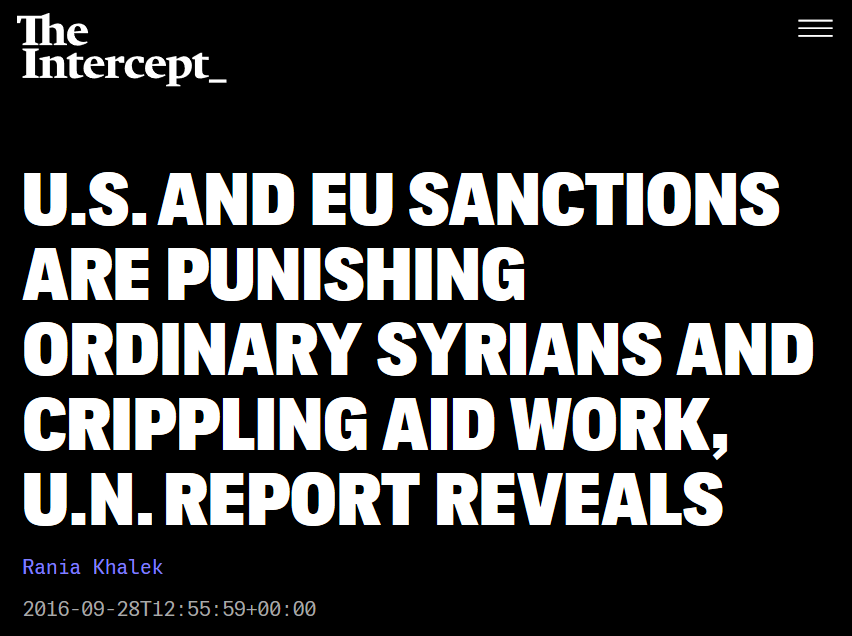

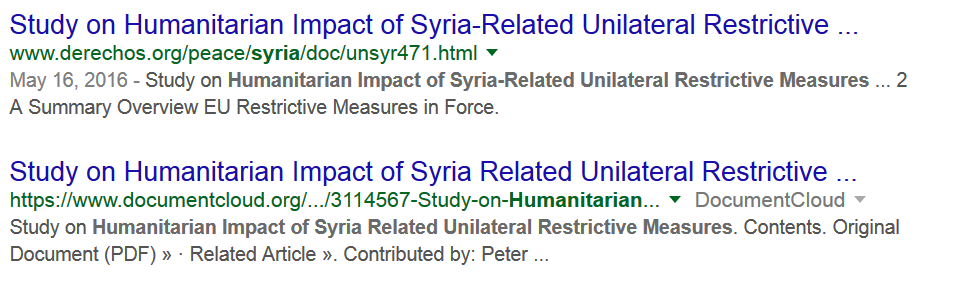 That this is not a “U.N. report,” as The Intercept states in its headline, or a “United Nations” assessment, as Khalek states in her lede, is buried all the way back on page three of this banker’s assessment: “The views expressed are entirely those of the author and should not be considered to constitute any official statement.”

 P U L S E