Lemmy takes on the Banksters:
Get Back in Line
Lemmy takes on the Banksters:
Lemmy takes on the Banksters:
By Huma Dar
Rakhshanda Jal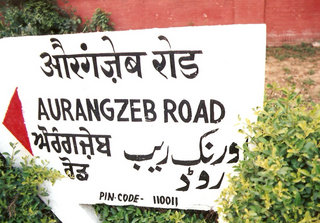 il writes in The Hindu, 27 February 2011, about “that elusive connect with India when she was least expecting it” on a visit to Karachi, Pakistan. The title of her piece is “A city not unlike home.”
I am always amused when Indians are surprised and taken aback by Pakistanis (whether in Karachi or Lahore or elsewhere) who “speak Urdu and English with almost equal aplomb” or by their “silk sarees and natty blazers” or by their possible cosmopolitanism!!! (Class is class, unfortunately, and the élite exhibit their privileges in similar ways all over the region!) Does it not, if just remotely, smack of the loaded “praise”: “Gee! Obama is so articulate!” — also known as “the racism of lowered expectation”? Why would Indians expect otherwise from their class-affiliates on the other side of the border? Or is it that Bollywood’s Pakistan-bashing fantasies are actually swallowed uncritically — hook, line, and sinker — even (or perhaps especially) by the educated Indians, eliciting “fears about Kalashnikov-toting Taliban and marauding Muhajirs.”
And by the way, Pakistanis are not all “tall, well-built, good-looking people,” especially under the normative definition of “good-looking” in South Asia (fair-skinned or with a “wheatish complexion”) — thank god for the latter! Sadly, the former two ascriptions, of course, too easily go awry given malnutrition due to poverty. Continue reading “An Élite Not Unlike Ours! Who’d Have Guessed?!”
 A few weeks ago, while I was in al-Araqib after the 11th ethnic cleansing attempt (yesterday was the 15th), I was interviewed by the Israeli Channel 10 culture editor, about Vanessa Paradis’ cancellation of her performance in Israel. Only one of the sentences I uttered in the 15-minute interview was included in the segment, and the rest is somewhere on the Channel 10 editing floor. So in an act of preservation, I’d like to paraphrase a part of the interview:
Channel 10 culture editor: “OK, so Vanessa Paradis canceled, do you really think anybody cares?”
Myself: “You came all the way to al-Araqib to ask me that, I think it’s pretty effective.”
Flying is one of the safest modes of travel — i.e., unless you are flying a Boeing 737 NG. As the following investigation by Tim Tate reveals, the FAA and Boeing have been covering up serious structural flaws with this most widely used model. Next time you are on a 737, just hope that the manufacturers have read Arthur Miller’s All My Sons.
Air travel is a question of trust, but a People & Power investigation asks what happens when that trust is shaken.
Finally, something stirs.
Tens of thousands of students are protesting against plans by the British government to raise university tuition fees, smashing windows and lighting fires in London, the capital. Wednesday’s protest near the houses of parliament is the largest street demonstration in the country since the government announced tough austerity measures to curb public deficit. Students attempted to force their way into the party headquarters of David Cameron, the prime minister, forcing the building to be evacuated.
by Huma Dar
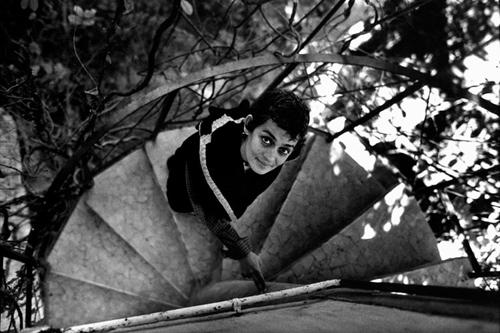
At a groundbreaking seminar, ‘Azadi: The Only Way,’ organized by the Committee for the Release of Political Prisoners (CRPP) in New Delhi, India, on October 21st, 2010, the minutes record that Arundhati Roy, the prize-winning author of The God of Small Things, asserted that
[Kashmir] has never been an integral part of India and the Indian government recognised it as a disputed territory and took it to the UN on its own accord. In 1947 we were told that India became a sovereign democracy. But it became a country as per the imagination of its colonizer, and continued to be a colonizer even after the British left the country. Indian state forcibly or deceitfully annexed the North-East, Goa, Junagarh, Telangana, etc… the Indian state has waged a protracted war against the people which it calls its own. Who are the people it has waged war against? The people of North-East, Kashmir, Punjab, etc. This is an upper caste Hindu state waging a continuing struggle against the people. Continue reading “Manufacturing Consent and Violence: Azadi, Arundhati, Hindutva Terror, and Indian Media”

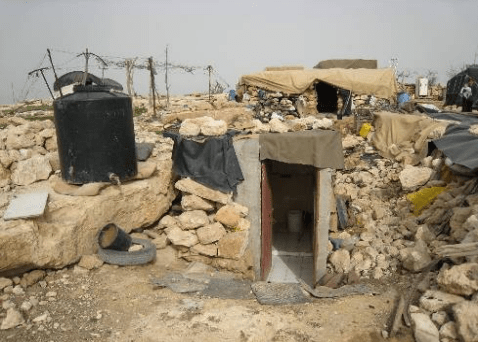
Water in Israel is probably one of the most blatant faces of apartheid. As reports like the Amnesty International report of 2009, “Troubled Waters” and the B’tselem website coverage of the issue, “The Water Crisis” show us, Israel’s resources are invested in water theft/access denial from Palestinians. But water in Israel is not just a substance of life, for those who can’t have it, it’s a tradable commodity, for those who’ll never miss it.
Water resources in Israel are all state-owned. Naturally- as is usually the case within the militaristic, nationalistic Israel- the state will allocate these resources to serve its “national needs”. Water theft is a good example of “negative” policy, which is so obviously discriminatory, violent and inexcusable, that the only way to sell it to the public is not to mention it at all. True to form, when cave- dwelling Palestinians are kicked out of their caves and their harvesting canisters (on the cave roof?) are destroyed [“Troubled Waters”, p.2], there’s no Israeli media around to record it, spin it and dish it. “Positive” policy, however, is always easy to sell. After all, we “dried the swamps and made the wilderness bloom”, and the environmental devastation of swamp drying still isn’t being taught in schools.
Remember The Constant Gardener? John le Carre’s superb novel, later filmed by Fernando Meirelles, was about Western pharmaceutical giants using Africans as guinea pigs for testing drugs before they are introduced into markets. Here it is in reality:
The world’s pharmaceutical giants stand accused of using people in India as guinea pigs for their new medical products – sometimes even without their consent. And Human rights groups say those who do know what’s happening, often don’t get a full explanation of the dangers they face.
 We may like or dislike capitalism, but surely we all know how it works. Right? Wrong. Today, most arguments about capitalism are dominated by free-market ideology and unfounded assumptions that parade as ‘facts’. This lecture in which Ha-Joon Chang will talk about his new book 23 Things They Don’t Tell You About Capitalism| tells the story of capitalism as it is and shows how capitalism as we know it can be, and should be, made better.
Ha-Joon Chang is a professor in the faculty of politics and economics at Cambridge University where he has taught since 1990. In addition to numerous articles in journals and edited volumes, he has published seven authored books (three of them co-authored) and eight edited books (six of them co-edited). His most recent books include Bad Samaritans: Rich Nations, Poor Policies and the Threat to the Developing World (2007), Kicking Away the Ladder – Development Strategy in Historical Perspective (2002), which won the 2003 Myrdal Prize, Restructuring Korea Inc. (with Jang-Sup Shin, 2003), Globalization, Economic Development and The Role of the State (2003), and Reclaiming Development – An Alternative Economic Policy Manual (with Ilene Grabel, 2004). His writings have been translated into 13 languages.
Continue reading “23 Things They Don’t Tell You About Capitalism”
OK… here’s the PULSE exclusive I’ve been working on. Hope you enjoy.
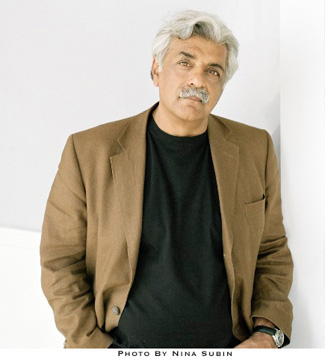 Is president Barack Obama the change America has been waiting for or is he another corporate Democrat representing elite interests? According to Tariq Ali, very little has chanced between Obama and former president George W. Bush. In his latest book “The Obama Syndrome: Surrender at Home, War Abroad,” Ali argues that Obama is carrying on the reckless policies of the Bush regime. If Obama continues down this path, the Democratic Party not only face the prospect of the House & Senate in 2010 but also the presidency in 2012. This should be a cause for concern.
I caught up with Ali during his American book tour and here’s what he had to say about the Obama presidency.
Where did the idea for this book emanate from? Why did you want to write a book about “The Obama Syndrome” and what does that refer to?
The idea occurred because I speak a lot on the United States. People ask me questions after each talk and increasingly in the past two to three years, the talk has been about Obama. I thought a short book which essentially provided a balance sheet from the left on the mid-term would be a useful exercise. Given that he’s being attacked nonstop for being a socialist, a leftist, being a Muslim and all this nonsense that comes from the Tea Party-Fox Television alliance, I thought it was better to have a hard-headed realistic account about who the guy really is. So my book is a critique of him, but it’s also by implication a very sharp critique of people who claim that everything Obama is doing is so radical that they can’t take it anymore.
Continue reading ““Only the mood music has changed”: Tariq Ali on Obama’s presidency”
 P U L S E