The Jenin Jenin Amendment: Israel from Ethnocracy to Fascism

Last Monday, on the 6th of May, Israel’s Ministerial Committee for Legislation decided to approve the “Jenin Jenin Amendment” in a paramilitary hearing. The amendment [Hebrew] is an addition to the Israeli Defamation Law [Hebrew], stating that army personnel and the state can sue individuals, who expose army violence, for libel, without proving damages. The amendment comes as a reaction to Israel’s Supreme Court rejecting soldiers’ class action suit of defamation against actor/director Mohammad Bakri, for his documentary Jenin Jenin (watch it in full here), in which Palestinian testimonies describe their experiences of the 2002 massacre perpetrated by Israel’s army in the besieged refugee camp.

Continue reading “The Jenin Jenin Amendment: Israel from Ethnocracy to Fascism”

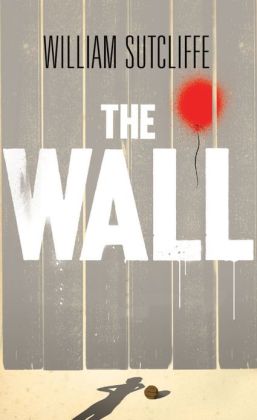
The Wall

wallThis review was published at the Independent.

Joshua lives in a brand new town called Amarias. He shares his brand new house with his mother who, since his father’s death in battle, has been “like a pane of glass riddled with cracks that was still somehow sitting there in the frame,” and also with tree-killing Liev, the “anti-father” whose cloying unpleasantness is a great pleasure to read.

One day, chasing a lost football and propelled by an overbearing curiosity, Joshua discovers a tunnel which leads under a wall to an entirely different world – one containing both danger and kindness, and a beguiling young girl. As storytellers from CS Lewis to Philip Pullman know, there’s something archetypal about holes in walls opening onto entirely unexpected realms; and tunnels to wonderland have been evoking rebirth since ancient cave painters squeezed through crevices to make their sacred art. William Sutcliffe employs all this rites-of-passage symbolism with a very light touch, and crafts his novel with sustained suspense.

The new world is not named (not until page 80 is it called “the Occupied Zone”; and the words ‘Israel’ and ‘Palestine’ are never mentioned) – in this way the book avoids being self-professedly ‘political’ – yet the place is described with great accuracy and atmospheric precision. An “aftertaste of violence is hanging in the air, like a bad smell.” The houses are close-packed, unpainted, unfinished. The shops spill onto cracked streets which are “both enticingly alive and strangely depressing.” Those who know will recognise “the mournful wail of a solo voice backed by violins” as the Egyptian diva Um Kalthoum, but Joshua doesn’t know. He doesn’t even speak the language, though the inhabitants speak his.

Amarias, on his side of the wall, with its lawns and pools and rows of identical houses, is clean and fresh “as if a magic spell has conjured it up out of thin air.” Once Joshua has tasted forbidden knowledge, the town, and the fact that no-one around Joshua seems to recognise the absurd ephemerality of its situation, become darkly surreal.

Continue reading “The Wall”

Israel: Morality and History, Arnold J. Toynbee

In a public debate in Montreal, the famous historian Professor Arnold Toynbee defends his positions on Israel, from  an Israeli diplomat, Dr. Yaacov Herzog, who unfortunately also chairs the meeting.

The debate was held on January 31, 1961 at the Bnei Brith Hillel House at McGill University, before an audience of students, faculty and news reporters.

Continue reading “Israel: Morality and History, Arnold J. Toynbee”

Saturday Night Live does the Hagel Hearings

For some reason, SNL did not broadcast this.

Upheaval in Souls, Bodies, Imaginations

Christopher Lydon of the wonderful Radio Open Source interview joins the great Lebanese novelist Elias Khoury for a stimulating discussion on art, politics and literature.

CAIRO — Elias Khoury is the sort of novelist we rely on to tell us what is going on. Himself of Lebanese and Christian antecedents, he wrote Gate of the Sun (1998), a stylized and much-admired fictional account of the Palestinian naqbah or “catastrophe” from 1948 to the infamous Sabra and Shatillah massacres in Lebanon in 1982. Writing, he remarks, is his means of discovering his ignorance and overcoming it.

A Response to Jacky Terrasson’s Agent, Christophe Deghelt, about the Red Sea Jazz Festival

Note: I don’t speak French, I’m responding to a Google Translate version of the original post, so I’ll refrain from my usual special attention to semantics, in order not to dwell on what may be a technical mistake in translation.

Jacky terrasson with manneger Christophe Deghelt

Last Wednesday, Jacky Terrasson’s agent, Christophe Deghelt, responded to the massive campaign to boycott the Israel state sponsored Red Sea Jazz Festival (more details on the government and corporate connections of the festival in this article). Since thought did actually go into this post, I think we in the BDS movement should respond. So here it is, point-by-point. I hope this furthers public discussion, as BDS so often does, because just like Christophe Deghelt, this is a “debate that I hold dear”.

On Notions of  War, Peace, and Popular Struggle

Continue reading “A Response to Jacky Terrasson’s Agent, Christophe Deghelt, about the Red Sea Jazz Festival”

Spirituality, Stanley Jordan, and BDS

Update: On January 6, Stanley Jordan has cancelled his collaboration with the Red Sea Jazz Festival, joining a long line of artists combining their ethics, politics, and spirituality. Joy Harjo, still has not made a public statement rethinking her stance on the issue.

Note: Stanley Jordan is scheduled to perform in the Red Sea Jazz Festival between 17-19 of January. Although, after much deep soul searching, he has written a statement that he intends to continue as scheduled (below), in our political reality, we don’t give up until the Jazzist plucks the first guitar string in front of a segregated audience.
For your convenience, the rest of the international artists performing in the festival are listed at the end of this article.

Stanley Jordan

I’m a Spiritual Atheist. I never knew you could capitalize that phrase, but thank DOG, the internet is a wondrous place:

SPIRITUAL ATHEISTS are people who are:
1) ATHEISTS
Spiritual Atheists do not believe in the existence of an entity external to the universe that supposedly created and rules the universe… Spiritual Atheists generally recognize the word “God” as a personal name that has been given to the collective personality of the infinite and eternal universe… Even so, many Spiritual Atheists are extremely reluctant to make use of the word “God”, due to the extreme desecration it has suffered by traditional Theists and Atheists alike.

2) SPIRITUAL
Spiritual Atheists believe that the entire universe is, in some way, connected; even if only by the mysterious flow of cause and effect at every scale. Therefore, Spiritual Atheists generally feel that as they go about their lives striving to be personally healthy and happy, they should also be striving to help the world around them be healthy and happy! (“Wholistic Ethics”)

There are many people in the world like me. Some are atheists, some are theists. I respect all’s choices and love me a good theological debate, but to me, the most important piece of information in the above quote is “generally feel that as they go about their lives striving to be personally healthy and happy, they should also be striving to help the world around them be healthy and happy!”. This is also the first time I’ve heard the phrase “Wholistic Ethics”, I have my critique of it (and also have a critique of trying to unite atheists who define themselves as spiritual), but that would derail the conversation from what I really want to talk about: What does spirituality have to do with politics? Continue reading “Spirituality, Stanley Jordan, and BDS”

Israel 2012, The Question of a Nation: What Does Culture Have to Do with Politics? (Part 2)

Earlier this week, I found a message in my inbox by an Israeli, who’s a Jazz musician, who’s paying gig was canceled because of a successful BDS movement campaign to get Swedish Jazzist, Andreas Öberg, to cancel his gig in the Eilat Red Sea Jazz Festival. Usually, the extent of my response, when I get unsolicited mail from angry Israelis, is to take a screenshot and add it to my “Love Letters” albums on my Facebook profile. Call it an artistic form of exhibiting political repression, racism and sexism, if you will (but what does culture have to do with politics, I wonder…). This time, however, since we’re not talking about your typical angry Red Hot Chili Peppers fan, but someone who has lost a paying gig. I think it merits a response (even though, as I will argue below, I am actually not the address for cultural worker grievances).

You Don’t Know Me and I Don’t Know You

Continue reading “Israel 2012, The Question of a Nation: What Does Culture Have to Do with Politics? (Part 2)”

Israel 2012, The Question of a Nation: What Does Culture Have to Do with Politics?

For more information on how Israel is using this face to mask its evil, go to http://www.no2brandisrael.org/

The interesting thing about Israel is that its government and registered citizens have a wonky spatial perception, which feeds off itself: In Israel, you’re not in the state, the state is in you. Due to this cyclical perception, along with the “standard” “nation branding” (a marketing lie on to itself, and that sick capitalist perception of a state- a geographic territory with obligations and responsibilities towards its respective inhabitants- as a product which is on the market for sale), known as Brand Israel, much of Israel’s propaganda is based on the blurring of the lines between the individual and the state (and army).

As a BDS activist, whose main focus is cultural boycott, I’ve come up against a very common Israeli claim (individuals, small business, and government officials) that “culture has nothing to do with politics”. Most commonly it comes in the form of a puzzled “rhetorical” question: “What does culture have to do with politics?!” As if asking this question closes the discussion, because it’s so obvious that art, music, books, films, theater and dance are a pure form of entertainment that has no intellectual, political, anthropological value. As if cultural products aren’t bought and sold as commodities and status indicators.

Shuki Weiss Promotion and Production Ltd. in the Service of the State of Israel

Continue reading “Israel 2012, The Question of a Nation: What Does Culture Have to Do with Politics?”