A new report by Who Profits maps the involvement of the Israeli wine industry in the occupation of the West Bank and the Syrian Golan Heights and traces some of the ways in which it masks this involvement. For this purpose, this report surveys the Israeli wine industry, maps the vineyards and wineries in the occupied territory and traces the connections between the main Israeli wine producers and this settlement industry.
He filled up the tank before he left Kuwait City, filled it again at Qurriyat near the Saudi-Jordanian border. He stopped a couple of times for sandwiches and crisps, otherwise kept on driving through the flat desert with stereo playing and air conditioning humming. They waved him through the crossings after he’d waved his genuine Rolex and his heavy silver rings at them. Including border stops, the journey took eighteen hours. These days the world’s a small place, which is one of the Prophet’s Signs of the Hour – distances will disappear before the end comes.
Dusk was falling on Damascus when he arrived. Fumes rose from the minibuses and paraffin heaters and from people’s cigarettes and swirled up to meet the thickening night. Green lights and minarets shook on either side, and there were potholes in the asphalt. He didn’t bother checking into his hotel. He wanted to get straight to business.
He drove towards the mountain, through the centre of town. He followed a highway along the bed of a gorge. Here at last the barren melted against the power of potential fertility. A gurgling stream rushed beside the road, and there were trees and restaurants, sometimes dining rooms fatly bridging the water. He pulled in at a building more contemporary than the rest, a tall building fronted in metal and dark mirrors.
Gwynne Dyer’s War is a seven part miniseries, released in 1983, that explores the evolution of war from the bronze age to the Napoleonic era, from the World Wars to the nuclear age. The film has a broad scope, funded by The National Film Board of Canada, it was shot in ten countries, features six national armies, and contains interviews with many veterans and military specialists, including the infamous Bomber Harris.
Dyer himself has a strong military background: he served in the Canadian, American and British navies as a reserve officer; taught military affairs at the Canadian Forces College in Toronto; and for four years was a senior lecturer in war studies at Sandhurst, Britain’s Royal Military Academy. One suspects that, at least at one time, Dyer must have been relatively enthusiastic about the military, but through his understanding of the consequences of a war between great powers has become anti-war, recognising that such a confontation would inevitably escalate to nuclear war, threatening all life on the planet.
The premier episode defines the milestones along the road to total war: the birth of nationalism, conscription, the mobilization of large armies; the invention of the machine gun, tank and atomic bomb; and the deliberate killing of civilians. Paintings and visual material from archives around the world complement interviews and Mr. Dyer’s commentary, which sums up modern warfare, from Napoleon to Nagasaki.
The series was broadcast in 45 countries and the episode The Profession of Arms was nominated for an Academy Award.
You must have seen this article by Alan Kuperman doing the rounds over the past 24 hours. Nevermind the fact that Kuperman is a ‘bomb-Iran’ neocon hardliner, many are referencing it to dismiss the enormity of the situation in Libya. Kuperman begins with some strong declarative statements which he says are based on Human Rights Watch findings.
EVIDENCE IS now in that President Barack Obama grossly exaggerated the humanitarian threat to justify military action in Libya. The president claimed that intervention was necessary to prevent a “bloodbath’’ in Benghazi, Libya’s second-largest city and last rebel stronghold.
But Human Rights Watch has released data on Misurata, the next-biggest city in Libya and scene of protracted fighting, revealing that Moammar Khadafy is not deliberately massacring civilians but rather narrowly targeting the armed rebels who fight against his government.
Misurata’s population is roughly 400,000. In nearly two months of war, only 257 people — including combatants — have died there. Of the 949 wounded, only 22 — less than 3 percent — are women. If Khadafy were indiscriminately targeting civilians, women would comprise about half the casualties.
Revealing figures — which seem to leave absolutely no room for doubt. Except Kuperman’s analysis bears little relation to the report he is referencing. First he performs some deductive reasoning based on the estimates of one interviewee and tries to pass it off as the conclusions of HRW. He then inverts the actual conclusions of HRW to claim that ‘Moammar Khadafy [sic] is not deliberately massacring civilians.’ He then proceeds with an impressive kamikaze act declaring in no uncertain terms that Qaddafi is ‘narrowly targeting the armed rebels who fight against his government.’
A woman in niqab being arrested in Paris, April 12, 2011, copyright EPA
Of Civilities and Dignities
On 22 June 2009, Nicolas Sarkozy, the French President, asserted that burqas (or the burqa-clad?) are “not welcome” in France, adding that “[i]n our country, we cannot accept that women be prisoners behind a screen, cut off from all social life, deprived of all identity” and that “the veils reduced dignity.”France’s Muslim minority is Western Europe’s largest Muslim minority, estimated at six-million-strong. And this is just an approximation, as the French Republic implicitly claims to be post-race and post-religion via a prohibition on any census that would take into account the race or religion of its citizens. (This anxiety mirrors the brouhaha in Indian media àpropos the much-contested enumeration of OBCs or Other Backward Castes in the Indian census surveys of 2011, or the urgency to declare some spaces post-caste, post-feminist, and post-racist while casteism, patriarchy and racism continue unabated.)
WALTHAM, MA- Today (Wednesday) Omar Barghouti, one of the leading founders of the Boycott Divestment and Sanctions (BDS) movement, presented at Brandeis his new book BDS: Boycott Divestment and Sanction: The Global Struggle for Palestinian Rights. The event was hosted by Brandeis Students for Justice in Palestine (BSJP) and Haymarket Books.
Here are two slightly differing takes on accusations that the protests in Syria have an overly Sunni and anti-minority character. First, from someone in Damascus:
There are claims that the Ismailis weren’t part of these protests but actually al-Salamiya was one of the first towns in Syria to protest after Daraa, then other areas followed.
In Banias last Friday, the Sheikhs invited an Alawite speaker to address the protesters.
I find the word “Islamist” quite problematic. I mean, in Syria many are religious, but Islamists? what does that even mean? They want to impose an Islamic state? Doesn’t that mean that the Syrian people would be supportive of the Ikhwan’s ideology? What’s interesting is that many disapprove of the regime AND the Ikhwan’s ideology, so we’re talking about conservative Muslims not Islamists, conservative when it comes to their daily lives and when it comes to their daughters, but when we talk about Islamists, we’re talking about a political discourse that wants to turn Syria into an Islamic state, a discourse that we haven’t heard thus far in any of these protests, nor from Sheikhs of Banias, Douma and Homs, who addressed the president with a statement and clear demands.
The asinine commentary issuing from some leftist quarters, the wild-conspiratorial ramblings, the incapacity to handle dilemmas — all of this would be amusing if it weren’t for the slanders and falsehoods which have so quickly ossified into conventional wisdom. Over half a century after Richard Hofstadter wrote his famous essay it appears the paranoid style still thrives in the politics of both the left and right. The western leftists’ answer to liberation struggles elsewhere is to project their own impotence and assume that there must be a grand conspiracy at play. How else could ordinary people take charge of their own lives and refuse to be silenced and repressed? No, they must be Al Qaeda, or CIA agents, or both — as figures such as Alexander Cockburn, Edward Herman and John Pilger have imperiously declared (relying on a report by West Point’s Counter Terrorism Center no less–never mind that it is a dubious outfit run by neoconservative terrorologists). What better way to divest yourself of moral dilemmas? Blame the victims!
There is a good reason why radicals of the left often find it so easy to turn into radicals of the right. Both are possessed of a Manichean worldview governed by absolutes, free of moral dilemmas, disdainful of ambiguity. This kind of simple-mindedness is the prerogative of those who are either completely powerless and thus free of responsibility, since their actions are of no consequence, or of the absolutely powerful, whose actions are beyond accountability. The rest of us, alas, are doomed to a world where the choices are rarely as simple as between ‘good’ and ‘bad.’
Jeffrey Blankfort has some apt comments:
Also, check out Stephen Shalom’s commentary on Sheikh Hassan Nasrallah’s speech on Libya.
As the 17th February commemorates the memory of the fallen victims of the Abu Salim prison massacre, when over 1200 prisoners were brutally executed, the 7th April is also known as one of those days that witnessed some of the worst abuses of human rights in Libyan history. On 7th April 1976, Qaddafi ordered the persecution and public execution of Libyan university students who were suspected of opposing the regime. The same month of the same year also commemorates Qaddafi’s physical liquidation campaign against Libyan dissidents inside and outside Libya.
Today I called a family member in Libya and she told me that the living conditions and the level of terror in Tripoli are indescribable. People go to the gas stations, wait for hours, and when their turn comes, they may be unlucky and find none left. There is no money in banks anymore. Every time she goes to the bank, they keep telling her the same thing: that there is no money. People barely go out, and what’s worse is that there are many elderly and babies who must receive weekly treatment in clinics. The critical living conditions of Tripoli are disrupting its economic life gravely, as Malta stopped a fuel ship on its way to west Libya, preventing it from making its delivery in accordance with the UN blockade.
 A new report by Who Profits maps the involvement of the Israeli wine industry in the occupation of the West Bank and the Syrian Golan Heights and traces some of the ways in which it masks this involvement. For this purpose, this report surveys the Israeli wine industry, maps the vineyards and wineries in the occupied territory and traces the connections between the main Israeli wine producers and this settlement industry.
 You must have seen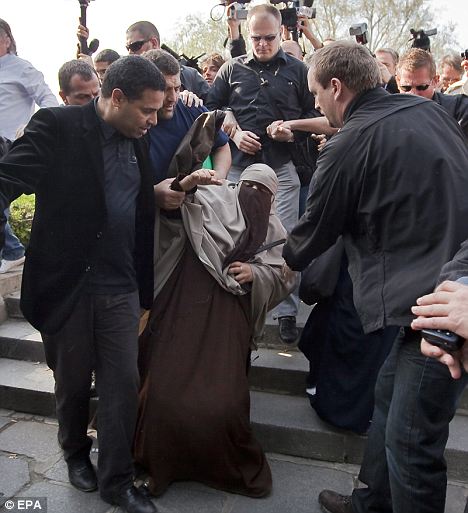
 A- Today (Wednesday) Omar Barghouti, one of the leading founders of the Boycott Divestment and Sanctions (BDS) movement, presented at Brandeis his new book
 P U L S E