From “Islamist Watch” to Islamic Mimbar: the Politics of Hypocrisy

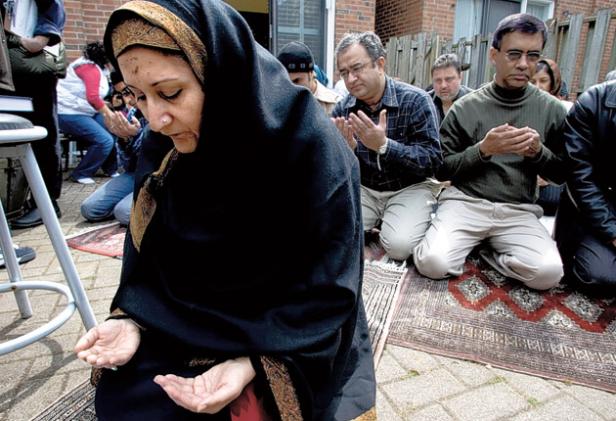
Raheel Raza leads a group of Muslims in prayer in Canada

By Huma Dar

On Thursday, June 10, 2010, Jerome Taylor, the Religious Affairs Correspondent of The Independent posted an article headlined, “First Woman to Lead Friday Prayers in UK.” Two-thirds of the way down this article, we find that:

“Ms Raza’s appearance in Oxford is a repeat of a similar prayer session in 2008 which was led by Amina Wadud, an American-born convert and Muslim feminist. But this is the first time a Muslim-born woman will lead a mixed prayer service in Britain.”

Continue reading “From “Islamist Watch” to Islamic Mimbar: the Politics of Hypocrisy”

Voices of Everyday Muslim Americans in the Aftermath of the Flotilla Attack

News of Israel’s brutal attack on a flotilla of ships carrying humanitarian aid into Gaza seems to have moved even this generally apathetic world. As the reactions of global leaders, activists, lawyers, journalists, academics and other public figures saturate the media, hope builds that growing political pressure will have the effect of ending, at long last, Israel’s inhumane blockade of Gaza.

The events of last week also present us with an opportunity to pause and to reflect upon why this attack -in particular- has captured our imaginations more powerfully than previous instances of Israeli aggression.

In search of answers, I decided  to talk to everyday Muslim Americans about the events of last week, asking each of them how they felt about the recent flotilla attack and what, if any hope, the event held for a better future. I interviewed this diverse group of New Yorkers over a period of two days, and my accounts include the voices of a shop clerk, a business owner, wait-staff, an immigration lawyer, a photographer, a retired journalist, bankers, engineers, and a number of students.

What I learned in listening to their narratives is that the flotilla attack – which has largely been produced by the media as a critical moment of rupture – is for many Muslim Americans, an event that indicates not rupture, but continuity: the continuity of Israeli brutality and injustice, and the continuity of Palestinian despair.

Continue reading “Voices of Everyday Muslim Americans in the Aftermath of the Flotilla Attack”
The Carnival at Novara and Unmasking of a Racist Regime

by Huma Dar

The police, in the northern Italian town of Novara, fined a 26-year-old Tunisian woman for wearing a black niqab; she was going to a mosque for the Friday prayers.  According to the New York Times she was fined about $650 under a regulation introduced in January 2010.  Apparently, Novara — a bastion of the xenophobic Northern League — “bans clothing in public that prevents identification by the police.”

Continue reading “The Carnival at Novara and Unmasking of a Racist Regime”

Clan, State, Islamic Polity

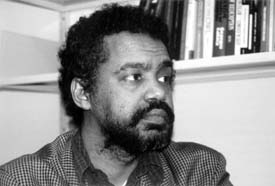
Abdelwahab el-Affendi

Could the root causes of the Arab-Muslim ‘malaise’ be cultural? That’s what journalist Brian Whitaker suggests in his book ‘What’s Really Wrong With the Middle East’. The thesis sounds suspicious, but Whitaker isn’t a cheap Orientalist, and he uses interviews with Arabs as his raw material. The key issues his informants keep pointing to are indeed the issues that, wherever you meet them, young Arabs complain about. These include an undue emphasis on submission and obedience in the education system, at work, and in the home, the social valorisation of conformity, and a corrupt public space.

The personal is the political. The problem in every sphere is one of overbearing authority, and it’s true that this is ultimately family-based, ultimately the result of overly-narrow personal identifications. In fact, I would argue that tribalism, nepotism, sectarianism, even forced marriage and honour killing, are all manifestations of the tyranny of the clan. And the tyranny of the clan is the result of bad governance.

Continue reading “Clan, State, Islamic Polity”

Outing the Muslimness, Finally: Some Viewing (and Hearing) Pleasures (The King is Out: Part VI)

The King is out: he is irreversibly a Muslim. His name is Khan: pronounce it correctly please. Long Live the King!

by Huma Dar

[Read Part I Part II Part III Part IV Part V]

Rizwan Khan Offering His Namaz

[I]n one scene I wanted to have just a half open door and I wanted to be shown saying namaz once. We couldn’t take that shot. Then we put that bit where I say the prayer: Nasrun minal lahe wah fatahun kareeb (God give me strength to win) [sic] [Victory is Allah’s, and the opening/victory is close] which is my own prayer too. I don’t think we should intellectualise entertainment.  See the fun of it.

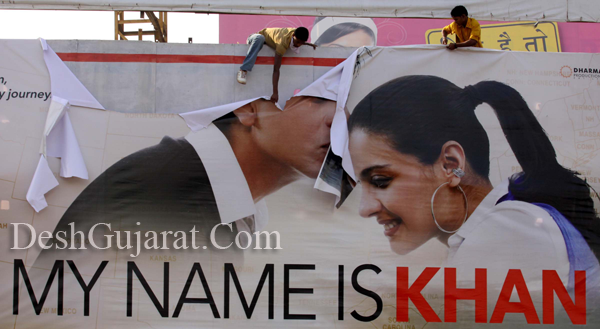
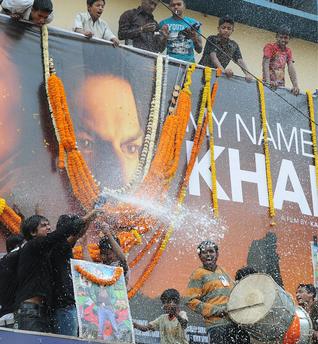
This is how Shahrukh Khan describes his experience working in the film Chak De! India (Dir: Shimit Amin, 2007).  With apologies to King Khan for discarding his proposal to not “intellectualize” films, yet taking due “fun” in it, I argue that it is only in My Name is Khan (Dir: Karan Johar, 2010) that the King finally comes “out” as a Muslim.  No “half open door” is needed.  This coming out affords particular visceral pleasures to an audience (or at least a large section of it spread across the globe) long resigned to seeing SRK endlessly and persistently marked by the specifically filmic variety of Hinduness practiced in Bollywood: doing various pujas and aartis at different Hindu temples, or adorning his spouses’ hair-parting with sindhoor and smearing his own forehead with tilaks.  This performative Hinduization of Shahrukh Khan in Urdu-Hindi cinema is unrelenting precisely due to the dogged presumption of SRK’s Muslimness that is not easily obscured.  “In my films I have been going to temples and singing bhajans; no one has questioned that,” (my emphasis) SRK exclaims in the same interview.  No one “questions” the diegetic (filmic) Hinduness of SRK; it is expected and mandatory.  With the increasing and explicit polarization in India since 1990s, the anxiety around Muslimness is such that it requires perpetual masking: an iterative performance of Hinduness, secular or otherwise.  When the mask slips off, the performance is momentarily paused – as when SRK plays a Muslim character in a film and critiqued the anti-Pakistani politics of Indian Premier League (IPL) – Hindutva activists target SRK’s suburban Bombay home, Mannat, with massive demonstrations (See the earlier Part II for more).[1]

Continue reading “Outing the Muslimness, Finally: Some Viewing (and Hearing) Pleasures (The King is Out: Part VI)”

The Price of Translating a Narrative and its Context (The King is Out: Part V)

Karan Johar falteringly attempts to fashion a cinematic alliance of sorts between African-Americans and South Asians — very unusual in the Bollywood context and more so for Karan Johar, himself — but fails to seize the radical politics embedded. One wishes that the spirit of this song was continuously re-thought, re-energized, re-contextualized, re-translated. A revolution that stops moving, stops “revolving,” is nothing but an aborted one.

by Huma Dar

[read Part I Part II Part III Part IV]


In an interesting twist, Karan Johar’s My Name is Khan displaces or translates (one original meaning of “translate” is to bear or carry across from one place to another) the convoluted and complex, determining context from India, with a specific genealogy, on to the US.  The post-9/11 circumstances provide some unfortunate resonances, yet much of the untranslated/untranslatable context results in the particular aporias of the filmic text.  Even beyond Mandira’s furious and irrational directive to Rizwan Khan, he has to go around saying his name is Khan and “he is not a terrorist” because in that originary terrain of imposed defensiveness there is not much space for a “Muslim name” (besides certain limited spheres), leave alone for “My Name is Khan, and I am an American.”  This latter, more “affirmative” alternative to the “apologetic” cinematic version, is proposed by Suad Abdul-Khabeer in her excellent critique of the film.

Continue reading “The Price of Translating a Narrative and its Context (The King is Out: Part V)”

A Suitable Boy, “Decent” People, and Names that Pass (The King is Out: Part IV)

by Huma Dar

[read Part I Part II Part III]

Ripping Apart the King, Separating Him from Kajol

In the second half of the film, My Name is Khan (2010), Karan Johar shows that Rizwan Khan’s wife, Mandira (played by Kajol) is on a personal journey to obtain justice for her son and accountability from the perpetrators of a hate crime.  It is thus ironic that Mandira’s own negligence towards Rizwan Khan (played by SRK) and the lack of accountability for making him set off on an ostensibly unfeasible mission, albeit in a fit of grief and anger, is not problematized at all in the film.  A mission that might very well have remained unfulfilled but for Rizwan Khan’s Herculean efforts, his unusual talents and disabilities, and a string of exceptional circumstances.  Rizwan Khan, given his Asperger’s syndrome, “fear of new places,” and his Muslimness (actively practiced), would have been equally, if not more, susceptible to the kind of hate crime that victimized Mandira’s son.  After the initial outburst at the place of death, Mandira had had enough time to re-think  the consequences of her angry directive to Khan, yet she never apologizes to Khan.  Here too, the immediate context of Bollywood, the multiple Hindu-Muslim marriages amongst the stars of Bombay, and the general lack of acceptance of such marriages in mainstream India are crucial to keep in mind.

Continue reading “A Suitable Boy, “Decent” People, and Names that Pass (The King is Out: Part IV)”

Placating the gods of Citizenship: the Ritual Sacrifice (The King is Out: Part III)

The obligatory declaration of cinematic patriotism for Indian Muslims necessitates a continuous performance of “loyal citizenship” invariably through offering the sacrifice of a “disloyal” one. This leaves little space for critical engagement with the nation and the state.

by Huma Dar

[read Part I Part II]


King Khan and his divinity

The obligatory declaration of cinematic patriotism for Indian Muslims (discussed in Parts I and II earlier) necessitates a continuous performance of “loyal citizenship” invariably through offering the sacrifice of a “disloyal” one. This leaves little space for critical engagement with the nation, the state, and the unending wars.  An example of this ritual performance is the sequence in My Name is Khan where Rizwan Khan, played by Shahrukh Khan (SRK), reports the “doctor” in the Los Angeles Masjid to the FBI.  How do we know the “bad” doctor is an al-Qaeda member or a terrorist?  Dr. Faisal Rahman does indeed talk about his “blood boiling” at the oppression of the Muslim Ummah in Iraq, Afghanistan, Palestine, Chechnya, Kashmir et al and even exhorts the handful of audience in a completely open space inside the Masjid to “join him and do something.”  The details of that “something” are never revealed.

Continue reading “Placating the gods of Citizenship: the Ritual Sacrifice (The King is Out: Part III)”

Shahrukh Khan and the Pound of Flesh: the Cost of Stardom (The King is Out: Part II)

by Huma Dar

[read Part I]

Shahrukh Khan (SRK) has a long history of playing the fraught field (of the Indian context) with flawless diplomacy, perhaps even overplaying the field.  In early 2002, precisely during the days of the state-sponsored anti-Muslim pogroms in Indian Gujarat, the then Indian Prime Minister Atal Bihari Vajpayee, from BJP (a Hindu Nationalist party), released an MTV-esque album,Samvedna [Sensitivity]. Widely broadcast on Doordarshan, the State-owned television channel, as well as on Indian-American programs (at least in the San Francisco Bay Area), the video features Vajpayee reciting his Hindi poetry while Jagjit Singh, the ghazal singer, sings in tune.  The album is prefaced by the rhapsodizing words of Javed Akhtar — another famous Muslim from Bollywood, narrated by Amitabh Bachhan.

Continue reading “Shahrukh Khan and the Pound of Flesh: the Cost of Stardom (The King is Out: Part II)”

“Veil in the Time of War” or “Veilin’ the Time of War”

In the context of the current multiple arenas of war and occupation in Muslim-majority regions, the issues of gender and sexuality are vitally linked to the casus belli, both within and without academia. Such linkages, with a long and complicated genealogy thoroughly imbricated in the politics of colonization, decolonization, and neo-colonization, also indicate an obsessive desire to re-enact the “discovery narrative” or the “rescue narrative.” Examining current contestations in popular media – including recent articles written by Maureen Dowd, Naomi Wolf and Phyllis Chesler et al and the poster designed by Alexander Segert, which was integral to the success of the anti-minaret Swiss referendum – this essay investigates whether, how, and where the neoconservative, neoliberal, and the mainstream feminist discourses converge, diverge, and intersect.

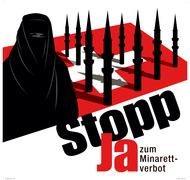
Segert's Anti-Minaret Poster

by Huma Dar

In the context of the current multiple arenas of war and occupation in Muslim-majority regions, the issues of gender and sexuality are vitally linked to the casus belli, both within and without academia.  Such linkages, with a long and complicated genealogy thoroughly imbricated in the politics of colonization, decolonization, and neo-colonization, theorized by Inderpal Grewal, Gayatri Spivak, Lata Mani, Leila Ahmed, Sherene Razack, Saba Mahmood, Sunera Thobani amongst others, also indicate an obsessive desire to re-enact the “discovery narrative” or the “rescue narrative.”  Examining current contestations in popular media – including recent articles written by Maureen Dowd, Naomi Wolf and Phyllis Chesler et al and the poster designed by Alexander Segert, which was integral to the success of the anti-minaret Swiss referendum – I investigate whether, how, and where the neoconservative, neoliberal, and the mainstream feminist discourses converge, diverge, and intersect.  I undertake to deconstruct the ongoing debates that obsessively revolve around the veil or the sexuality that is variously professed to be suppressed, annihilated, or even “discovered” beneath the veil by some liberal explorers.

Continue reading ““Veil in the Time of War” or “Veilin’ the Time of War””