CulturEscapes and the Moral Duty of BDS Today


The neutral Switzerland is about to host a yearly Culturescapes festival. Every year the festival focuses on a different country. This year- the most successful for cultural boycott, yet- it just had to play into Desmond Tutu’s hands and focus on Israel.

A Word about Culture

Culture is a word I’ve been hearing a lot lately. Israel’s Brand Israel campaign is focusing on PR apartheid; Hiding it’s atrocities as best it can, and highlighting it’s “advantages”:

In the Ministry of Foreign Affairs, 6 niches were identified in which Israel has a relative advantage… The 6 niches through which it is planned to promote Israel, in the world, are environment (with an emphases on desert agriculture); Science and technology (medicine, internet and hi-tech); Culture and art; Human variety and tradition; lifestyle and leisure culture; Tikun Olam [=Fixing the world] (support of populations of special needs).

Continue reading “CulturEscapes and the Moral Duty of BDS Today”

An Élite Not Unlike Ours! Who’d Have Guessed?!

By Huma Dar

Rakhshanda Jalil writes in The Hindu, 27 February 2011, about “that elusive connect with India when she was least expecting it” on a visit to Karachi, Pakistan.  The title of her piece is “A city not unlike home.”

I am always amused when Indians are surprised and taken aback by Pakistanis (whether in Karachi or Lahore or elsewhere) who “speak Urdu and English with almost equal aplomb” or by their “silk sarees and natty blazers” or by their possible cosmopolitanism!!! (Class is class, unfortunately, and the élite exhibit their privileges in similar ways all over the region!)  Does it not, if just remotely, smack of the loaded “praise”: “Gee! Obama is so articulate!” — also known as “the racism of lowered expectation”?  Why would Indians expect otherwise from their class-affiliates on the other side of the border?  Or is it that Bollywood’s Pakistan-bashing fantasies are actually swallowed uncritically — hook, line, and sinker —  even (or perhaps especially) by the educated Indians, eliciting “fears about Kalashnikov-toting Taliban and marauding Muhajirs.”

And by the way, Pakistanis are not all “tall, well-built, good-looking people,” especially under the normative definition of “good-looking” in South Asia (fair-skinned or with a “wheatish complexion”) — thank god for the latter!  Sadly, the former two ascriptions, of course, too easily go awry given malnutrition due to poverty. Continue reading “An Élite Not Unlike Ours! Who’d Have Guessed?!”

Thus Alone, and Always, Have People Resisted Tyranny: Remembering Faiz on his Birth Centenary

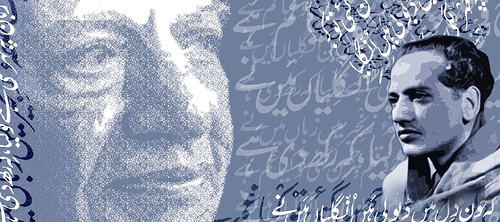
Today is the first birth centenary of Faiz Ahmed Faiz: one of South Asia’s most beloved radical Urdu poets. Today is also, just two days after Mubarak’s resignation as a result of the inspiring revolution in Umm al-Duniya, Mother of the World, Egypt; and almost a month after Tunisia’s courageous revolution. How ecstatic would Faiz have been today?!

by Huma Dar

Today is the first birth centenary of Faiz Ahmed Faiz: one of South Asia’s most beloved radical Urdu poets.  Today is also, just two days after Mubarak’s resignation as a result of the inspiring revolution in Umm al-Duniya, Mother of the World, Egypt; and almost a month after Tunisia’s courageous revolution.  How ecstatic would Faiz have been today?!  Faiz, who had lived in Beirut, in exile from Pakistan — when ruled by the US-bolstered military dictator, General Zia-ul Haq.  Faiz, who wrote a beautiful lullaby for a Palestinian child, and a poem for those who were martyred outside their beloved Palestine.  Faiz, whose poem commonly mis-titled, “Ham Dekhenge,” is a battle-song for people fighting for social justice from Sindh, Pakistan to Kashmir to Chhattisgarh, India.

The title of this particular poem of Faiz is in Arabic: “Wa Yabqaa Wajhu Rabbika.”  It is most often brushed aside as it does not fit the simplistic profile of the “avowed atheist” assigned to Faiz.  Being a socialist does not preclude belief in Islam, but this nuance is lost on many who cannot easily imagine Faiz being a Muslim, leave alone leading a prayer in the mosque of his ancestral village, especially given the subtle Islamophobia that pervades élite political and literary discourses, both within and without South Asia.  For some, even more difficult “to reconcile [is] the glowing tribute [that Faiz wrote] to Muhammad Ali Jinnah,” but this has to do with the rigorous demonology of Jinnah, the founder of Pakistan, in Indian historiography, and the hegemonic status of India and Indian academics, even those who vigorously critique nationalisms of all kinds, within South Asian Studies.

Continue reading “Thus Alone, and Always, Have People Resisted Tyranny: Remembering Faiz on his Birth Centenary”

PULSE’s Top 10 Global Thinkers of 2010

In response to the curious choices in Foreign Policy magazine’s ’Top 100 Global Thinkers’ list last year, we decided to publish our own. In 2010, Foreign Policy‘s selections were even more abysmal: among others it included Robert Gates, Ben Bernanke, Hillary Clinton, David Cameron, Thomas Friedman, Ahmed Rashid, Ayaan Hirsi Ali, Bjorn Lomborg, Richard Clarke, Madeleine Albright, Salam Fayyad…and John Bolton! Would anyone outside FP’s editorial board confuse them for a thinker? Once again, it appears FP chose based on the alignment of an individual’s work with the global military and economic agenda of the US government. We therefore asked our writers and editors to nominate once again their own top 10 global thinkers. The following list was the result. (Also see our Top 10 Media Figures of 2010)

Tony Judt

A towering intellect, a moral giant, a master of prose, and an outstanding historian, Tony Judt did what only the greatest of thinkers do: he constantly evolved. More significantly, he never succumbed to orthodoxies, he was always on the edge. In his later years, he also outgrew his middle-of-the-road liberalism to adopt principled, at times radical, positions on war and capitalism. He also jettisoned his youthful Zionism to emerge as the proponent of a single binational state in Palestine. In 2006 he was the only mainstream figure to come to the defence of Mearsheimer & Walt for their groundbreaking London Review essay. He later excoriated Israel as the ‘country that wouldn’t grow up.’ He was also the author of Postwar, an elegant and expansive history of Europe since 1945. We mourn his loss.

Chalmers Johnson

An exemplary scholar, Chalmers Johnson metamorphosed from a hardline Cold Warrior into one of the most formidable critics of US militarism, mapping America’s expanding imperium of bases and spotlighting the fraying edges of its republic. His 2000 book Blowback was as prophetic as his subsequent books The Sorrows of Empire and Nemesis were prescient. His longtime JPRI associate Steve Clemons has described him as the ‘acknowledged godfather of the conceptualization of the “developmental state“’ and as ‘an apostate and heretic in the field of political economy’ in the neoliberal hive at the University of Chicago. Johnson was also a literary critic, a skill he deftly used in his later writings to show how the imperial imagination was reflected in the language of metropolitan literature. His departure  has greatly impoverished the intellectual world.

Continue reading “PULSE’s Top 10 Global Thinkers of 2010”

Some Unvarnished Truths About the US and Israel

by M. Shahid Alam

Was there ever a time when a leading organ of the US media could speak the unvarnished truth about the links between the United States and Israel?

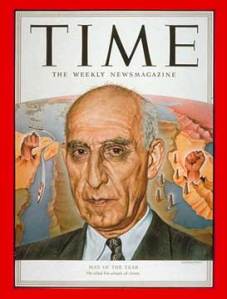
Consider this quote from Time magazine of January 1952, embedded in an article that explained its choice of Mohammed Mossadegh as its Person of the Year for 1951. It had no compliments for Mossadegh, the man who was spearheading his country’s bid to take back its oil resources from the British-owned Anglo-Iranian Oil Company. No surprise there.

Surprising, however, is Time’s candor on Israel. It minces no words. US support for the creation of Israel had alienated the Middle East: it had been a costly error, motivated not by national interest but petty considerations of presidential politics. Truman had supported the creation of Israel in order to court American Jewish votes. This was the plain truth: a US President had placed his electoral chances ahead of a vital national interest. Apparently, in those days, Time could write the plain truth without worrying about the tide of flak from the American Jewish community.

Continue reading “Some Unvarnished Truths About the US and Israel”

The Money and Media Election Complex

John Nichols joins Bob McChesney on this week’s Media Matters to discuss their recent article published in The Nation magazine, November 29th, 2010 edition. Call and comment or ask a question this Sunday, November 28th on WILL AM580.
Nichols are McChesney are authors of The Death and Life of American Journalism: The Media Revolution That Will Begin the World Again.

The US Democratic Party Debacle and the Demise of the Left-Center Left: A Worldwide Trend

by James Petras

Introduction

The November 2, 2010 electoral debacle of the Democratic Party in the US cannot be solely ascribed to the failed policies of President Obama, the Congressional leadership or their senior economic advisers. Nor is the demise of what passes for the American “center-left” confined to the US – it is a world-wide pattern, expressed in countries as diverse as Greece, Portugal, Spain, Great Britain and Japan.

The central question is why the left-center left governing parties are everywhere in crisis and will be for the foreseeable future?

The Left-Center Left: Past Winners, Present Losers

In the past leftist parties had been the beneficiaries of capitalist crises: Incumbent conservative regimes, which had presided over economic recessions or had been held responsible for military debacles, were ousted from power by leftist parties prepared to make large-scale, long-term public investments, funded by progressive taxes on wealth and capital, and to impose austerity programs on the rich and wealthy.

In contrast, today the left/center-left (L-CL) regimes preside over crisis-ridden capitalist economies and administer regressive socio-economic policies designed to promote the recovery of the biggest financial and corporate enterprises while rolling back wages, social programs, pensions and unemployment benefits.

As a result, the L-CL has become the prime political loser in the current economic crisis, reaping hostility and rejection from the great mass of its former working class and salaried supporters.

Continue reading “The US Democratic Party Debacle and the Demise of the Left-Center Left: A Worldwide Trend”

“Only the mood music has changed”: Tariq Ali on Obama’s presidency

OK… here’s the PULSE exclusive I’ve been working on. Hope you enjoy.

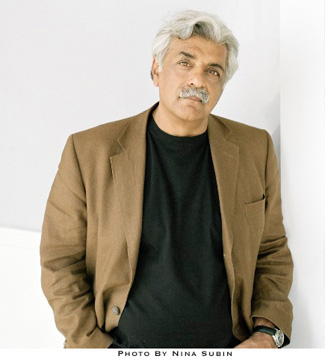
Is president Barack Obama the change America has been waiting for or is he another corporate Democrat representing elite interests?  According to Tariq Ali, very little has chanced between Obama and former president George W. Bush.  In his latest book “The Obama Syndrome: Surrender at Home, War Abroad,” Ali argues that Obama is carrying on the reckless policies of the Bush regime.  If Obama continues down this path, the Democratic Party not only face the prospect of the House & Senate in 2010 but also the presidency in 2012.  This should be a cause for concern.

I caught up with Ali during his American book tour and here’s what he had to say about the Obama presidency.

Where did the idea for this book emanate from? Why did you want to write a book about “The Obama Syndrome” and what does that refer to?

The idea occurred because I speak a lot on the United States. People ask me questions after each talk and increasingly in the past two to three years, the talk has been about Obama.  I thought a short book which essentially provided a balance sheet from the left on the mid-term would be a useful exercise. Given that he’s being attacked nonstop for being a socialist, a leftist, being a Muslim and all this nonsense that comes from the Tea Party-Fox Television alliance, I thought it was better to have a hard-headed realistic account about who the guy really is.  So my book is a critique of him, but it’s also by implication a very sharp critique of people who claim that everything Obama is doing is so radical that they can’t take it anymore.

Continue reading ““Only the mood music has changed”: Tariq Ali on Obama’s presidency”

Feeling the Loyalty to the Jewish State of Israel

By Max Blumenthal and Joseph Dana

The Israeli Knesset is debating a bill proposed by David Rotem of the extreme right Yisrael Beiteinu party that would require all Israeli citizens to swear loyalty to Israel as a “Jewish and democratic state.” This bill is targeted at increasing pressure on the twenty percent of Israelis who are Palestinian citizens while forcing the ultra Orthodox Jewish minority who reject the legitimacy of any state not based on Jewish biblical law to accept Zionism. If passed in its proposed form, citizens unwilling to take the loyalty oath would be at risk of losing citizenship.

Continue reading “Feeling the Loyalty to the Jewish State of Israel”

Rocking the Boat: A Brief History of Anti-Migrant Hysteria in Canada

In November, 76 Tamil refugees escaped Sri Lanka on a rusty freighter. They arrived in Victoria, where they were met by Royal Canadian Mounted Police (RCMP) and Canadian Border Services Agency (CBSA) officials, who promptly jailed them for three months on allegations of terrorism. It would be fully half a year before the CBSA would admit that it had never had any evidence… In 2008, the federal and provincial governments were forced to issue apologies for the Komagata Maru. Now, two years later, if those words are to mean anything, we cannot afford to repeat history: let them stay.

by Fathima Cader

"MV Sun Sea" Uncredited Photo at: http://www.edynews.com/top-news/18-almost-500-sri-lankan-migrants-are-in-canadian-custody.html

They’re at it again.

In November, 76 Tamil refugees escaped Sri Lanka on a rusty freighter. They arrived in Victoria, where they were met by Royal Canadian Mounted Police (RCMP) and Canadian Border Services Agency (CBSA) officials, who promptly jailed them for three months on allegations of terrorism. It would be fully half a year before the CBSA would admit that it had never had any evidence.

By then, however, it was too late: anti-Tamil and anti-refugee hysteria had spread like wildfire. Now, mere weeks after that most tepid of mea culpas from the CBSA, the hysteria greeting the Tamil MV Sun Sea passengers is worse. As with the Ocean Lady, these migrants will be detained in Maple Ridge jails before their refugee claims are considered. The Conservatives have begun to create new rules to treat refugees who arrive by boat differently from others. Meanwhile, Paul Fromm, the infamous neo-Nazi, has been receiving uncritical coverage in mainstream media with his demands that the migrants be sent back.

As the paranoia grows ever more heightened, it becomes increasingly important that we resist it. The universal rights of safety and mobility must be upheld, not only for the Sun Sea migrants, but for all people fleeing violence.

Continue reading “Rocking the Boat: A Brief History of Anti-Migrant Hysteria in Canada”