At an old bookshop that I frequently visit, I recently found a book titled Vidal in Venice, a glossy coffee-table hardback about the history, architecture and culture of Venice, illustrated with superb artwork and photography. The book was a companion edition to a series of documentaries Gore Vidal wrote and presented in 1985 for Channel 4 about the city he calls ‘perhaps the most beautiful cliche on earth.’ Thanks to the wonders of youtube, today I was able to find it and here it is in its entirety.
Category: History
American Holocaust: The Destruction of America’s Native Peoples
The American Holocaust is the topic of the following lecture by David Stannard, professor and chair of the American Studies Department at the University of Hawaii. Specifically, he examines the manufactured controversy in discussing the history of Native Americans with the terms genocide and holocaust.
During the course of his argument, Stannard criticises modern day apologists for the genocide of Native Americans including Christopher Hitchens and Benny Morris. Morris, in particular, for his justification of the ethnic cleansing of Palestinians using the example of the American Indians: quoting Morris, “[t]here are circumstances in history that justify ethnic cleansing,” he adds “[e]ven the great American democracy could not have been created without the annihilation of the Indians. There are cases in which the overall, final good justifies harsh and cruel acts that are committed in the course of history.” Or as he also, rather disturbingly, put it, “You can’t make an omelet without breaking eggs. You have to dirty your hands.” Therefore the terms and significance given to the crimes against the Native Americans also take on international importance as the example of America is used to justify current and, perhaps, future crimes against humanity.
Continue reading “American Holocaust: The Destruction of America’s Native Peoples”
Of Niqabs, Monsters, and Decolonial Feminisms
By Huma Dar
Of Civilities and Dignities
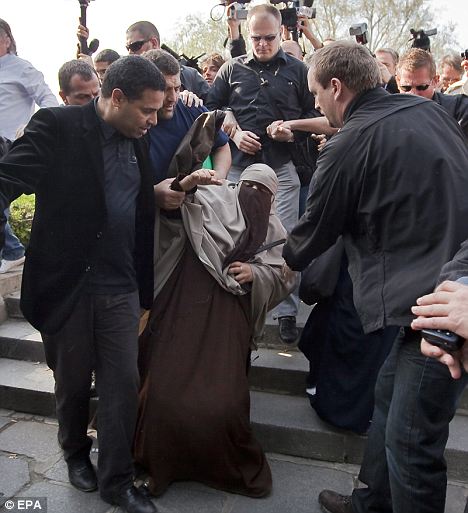
On 22 June 2009, Nicolas Sarkozy, the French President, asserted that burqas (or the burqa-clad?) are “not welcome” in France, adding that “[i]n our country, we cannot accept that women be prisoners behind a screen, cut off from all social life, deprived of all identity” and that “the veils reduced dignity.” France’s Muslim minority is Western Europe’s largest Muslim minority, estimated at six-million-strong. And this is just an approximation, as the French Republic implicitly claims to be post-race and post-religion via a prohibition on any census that would take into account the race or religion of its citizens. (This anxiety mirrors the brouhaha in Indian media àpropos the much-contested enumeration of OBCs or Other Backward Castes in the Indian census surveys of 2011, or the urgency to declare some spaces post-caste, post-feminist, and post-racist while casteism, patriarchy and racism continue unabated.)
Continue reading “Of Niqabs, Monsters, and Decolonial Feminisms”
An Élite Not Unlike Ours! Who’d Have Guessed?!
By Huma Dar
Rakhshanda Jal il writes in The Hindu, 27 February 2011, about “that elusive connect with India when she was least expecting it” on a visit to Karachi, Pakistan. The title of her piece is “A city not unlike home.”
I am always amused when Indians are surprised and taken aback by Pakistanis (whether in Karachi or Lahore or elsewhere) who “speak Urdu and English with almost equal aplomb” or by their “silk sarees and natty blazers” or by their possible cosmopolitanism!!! (Class is class, unfortunately, and the élite exhibit their privileges in similar ways all over the region!) Does it not, if just remotely, smack of the loaded “praise”: “Gee! Obama is so articulate!” — also known as “the racism of lowered expectation”? Why would Indians expect otherwise from their class-affiliates on the other side of the border? Or is it that Bollywood’s Pakistan-bashing fantasies are actually swallowed uncritically — hook, line, and sinker — even (or perhaps especially) by the educated Indians, eliciting “fears about Kalashnikov-toting Taliban and marauding Muhajirs.”
And by the way, Pakistanis are not all “tall, well-built, good-looking people,” especially under the normative definition of “good-looking” in South Asia (fair-skinned or with a “wheatish complexion”) — thank god for the latter! Sadly, the former two ascriptions, of course, too easily go awry given malnutrition due to poverty. Continue reading “An Élite Not Unlike Ours! Who’d Have Guessed?!”
Pakistan: A Deficit of Dignity
M. Shahid Alam
Pakistan’s rulers and ruling elites may well be thinking that the wave of people’s indignation that started in Tunisia and is now working its way through Egypt, Jordan and Yemen will never reach them. Perhaps, they are telling each other, ‘We are safe: we are a democracy.’
The Arabs who are pouring into the streets of Tunisia, Egypt, Jordan and Yemen are not protesting only against their dictatorships. Simultaneously, they are also protesting against governments that have sold their dignity and bartered the honor of their country. Nearly, all the Arab rulers are self-castrated eunuchs in the courts of foreign powers, who have turned their own countries into police states, and who jail, maim, torture and kill their own people to please their masters.
The Arabs are venting their anger against elites who have stymied their energies by turning their societies into prisons. In complicity with foreign powers, these elites have ruled by fear, blocking the forward movement of their people because this movement collides with the imperialist ambitions of Israel and the United States.
It is true that Pakistan has had ‘elected’ governments alternating with military dictatorships. Increasingly, however, these governments, whether civilian or military, have differed little from each other. The priority for both is to keep their power and US-doled perks by doing the bidding of the United States and Israel.
Starting in the early 1990s, Pakistan hurriedly embraced the neoliberal paradigm that emanated from Washington. Hastily, successive ministers of finance and privatization – all of them IMF appointees – went about dismantling Pakistan’s industries, selling off for a song its state-owned enterprises, and empowering Pakistan’s elites to engage in unchecked consumerism.
People Power in the Middle East
M. Shahid Alam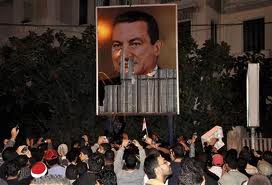
From his weekly perch at CNN, Fareed Zakaria, speculated last Sunday (or the Sunday before) whether George Bush could take credit for the events that were unfolding in Tunisia, whether this was the late fruit of the neoconservative project to bring ‘democracy’ to the Middle East.
It is quite extraordinary watching Zakaria – a Muslim born and raised in India, and scion of a leading political family – mimic with such facility the language of America’s ruling classes, and show scarce a trace of empathy for the world’s oppressed, despite his propinquity to them by reason of history and geography. He does have a bias for India, but here too he only shows a concern for India’s strategic interests, not the interests of its subjugated classes, minorities and ethnicities. This I offer only as an aside about how easy it is for members of the upper classes in countries like India, Pakistan or Egypt to slip into an American skin whenever that dissimulation offers greater personal advantages.
As a cover for deepening US control over the Middle East – here is the latest civilizing mission for you – the neoconservatives in the Bush administration argued that the Islamic world produces ‘terrorists’ because it lives under autocracies. To solve the ‘terrorist’ problem, therefore, the US would have to bring democracy to the Middle East. This demagoguery only reveals the bankruptcy of America’s political class. It is a shame when the President of the United States and his neoconservative puppet-masters peddle such absurdities without being greeted by squeals of laughter – and shouted down as hypocritical, as farcical.
Who has been the leading ally and sponsor these past decades of nearly all the despotisms in the Middle East – those of royal pedigree and others seeking to become royalties?
Regardless, the real plan of United States failed miserably. It was dispatched to its grave by a people’s resistance in Iraq, Afghanistan and Pakistan.
Sudan: History of a Broken Land
As the people of southern Sudan prepare to vote in a referendum that may see them secede from the North, Al Jazeera maps the turbulent history of a country on the verge of a momentous decision.
Manufacturing Consent and Violence: Azadi, Arundhati, Hindutva Terror, and Indian Media
by Huma Dar
At a groundbreaking seminar, ‘Azadi: The Only Way,’ organized by the Committee for the Release of Political Prisoners (CRPP) in New Delhi, India, on October 21st, 2010, the minutes record that Arundhati Roy, the prize-winning author of The God of Small Things, asserted that
[Kashmir] has never been an integral part of India and the Indian government recognised it as a disputed territory and took it to the UN on its own accord. In 1947 we were told that India became a sovereign democracy. But it became a country as per the imagination of its colonizer, and continued to be a colonizer even after the British left the country. Indian state forcibly or deceitfully annexed the North-East, Goa, Junagarh, Telangana, etc… the Indian state has waged a protracted war against the people which it calls its own. Who are the people it has waged war against? The people of North-East, Kashmir, Punjab, etc. This is an upper caste Hindu state waging a continuing struggle against the people. Continue reading “Manufacturing Consent and Violence: Azadi, Arundhati, Hindutva Terror, and Indian Media”
A History of Significant Moments
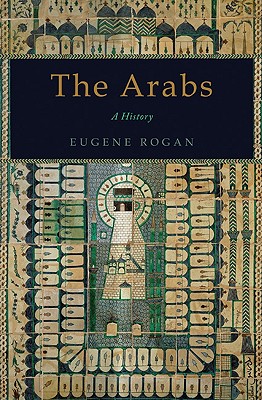 How many Britons are aware of the British-Iraq war of May 1941? Not many. Yet such past wars are the producers of today’s reality. People in Iraq remember. If Westerners don’t remember the past they will inevitably fail to understand the present moment.
The urge to remind the reader so as to better contextualise the present is the laudable motive energising Eugene Rogan’s “The Arabs. A History,” which covers the last five hundred years.
The history starts in 1516 with the Ottoman defeat of the Mamluk slave-elite, the regime which in previous centuries had repelled Mongols and Crusaders from the Arab heartlands. The Mamluks weren’t Arabs, but they’d ruled from Arab capitals. Now power moved to Istanbul, which makes the moment a good place to begin. From the 1516 collapse in Cairo until the present day, many key decisions governing Arab life have been made in foreign cities. Rogan calls the process “the cycle of subordination to other people’s rules.”
In the early years, Ottoman rule “in the Arab provinces was marked by great diversity and extensive autonomy.” Sulayman’s perspicacious laws, public building projects and reasonable prosperity followed. But the global centre of gravity was shifting, and the long decline set in.
Myth and Memoricide: Shlomo Sand’s “Invention of the Jewish People”

This review essay was published at The Drouth.
A nation is “a group of persons united by a common error about their ancestry and a common dislike of their neighbours.” Karl Deutsch.
“I don’t think books can change the world, but when the world begins to change, it searches for different books.” Shlomo Sand.
Our Assumptions About Israel
Here is what we in the West, to a varying extent, whether we are religious or not, assume about the Jews and Israel:
The Jews of the world, white, black and brown, are the sons of Abraham, Isaac and Jacob. Moses, after leading the Jews out of Egyptian enslavement, gave them laws. Emerging from the desert, the Jews conquered the promised land of Canaan, which became Judea and Israel, later the mighty kingdom of David and Solomon. In 70CE the Romans destroyed the temple at Jerusalem and drove the Jews from their land. A surviving Jewish remnant was expelled when Muslim-Arab conquerors colonised the country in the 7th Century. And so the Jews wandered the earth, the very embodiment of homelessness. But throughout their long exile, against all odds, the Jews kept themselves a pure, unmixed race. Finally they returned, after the Holocaust, to Palestine, “a land without a people for a people without a land.”
This story has been told again and again in our culture. Today we find bits of it in Mark Twain and Leon Uris, in Hollywood’s output and in church pulpits, and of course in the mainstream news media. American Christian Zionists – devotees of the Scofield Bible – swear by it, and swear to support Israel with all the power of their voting block until the Risen Christ declares the apocalypse.
Continue reading “Myth and Memoricide: Shlomo Sand’s “Invention of the Jewish People””
 P U L S E